Thermochemical Analysis of the Devil's Milkshake
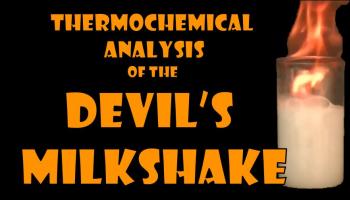
A year ago I stumbled across a fun way to present the reaction between calcium metal and water. Check it out (including a video explanation): The Devil's Milkshake.
Ca(s) + H2O(l) → CaO(s) + H2(g) Equation 1
It is very easy to carry out the reaction. Simply add calcium metal to water, wait for bubbles to form, and then light the ensuing bubbles on fire. The bubbles are filled with hydrogen gas, which react with oxygen in the atmosphere to form water:
2 H2(g) + O2(g) → 2 H2O(g) Equation 2
The formation of calcium oxide causes the contents of the water to turn a milky white color. This color change, coupled with the fiery bubbles at the top of the fluid prompted the nickname of “The Devil’s Milkshake” for this reaction. I find it to be a great experiment for the Halloween season.
It turns out it is very simple to use this reaction to estimate the enthalpy of the reaction between calcium metal and water (Equation 1). By doing so you can introduce your students to quantitative concepts in thermochemistry. You can see how I have done this in the video below.
Video 1: Thermochemical Analysis of the Devil's Milkshake, Tommy Technicium YouTube Channel, 10/28/2020
As you can see, the heat equation (Q = mc∆T), enthalpy of reaction, and standard enthalpy of formation are all topics that are touched upon in this presentation. This experiment is simple enough that I think students can perform it on their own as a laboratory experiment. If doing so, it should be stressed that the hydrogen gas generated in this experiment reacts explosively with atmospheric oxygen. As a result, flames must be kept away from the reaction as it proceeds.
Happy Halloween!

Tom Kuntzleman
I have taught science at all levels from Kindergarten through upper division undergraduate. Member of ACS, AACT.