


The Sanctity of the (Electronic) Balance
Michael Jansen | Thu, 05/20/2021 - 16:16

We were converted; we saw the light. No more playing with a balance. Reverence, dude. Without a balance we got nuthin’.


 |
 |
 |
 |
 |
 |
 |
 |

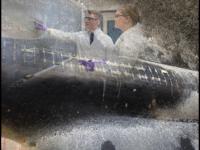


We were converted; we saw the light. No more playing with a balance. Reverence, dude. Without a balance we got nuthin’.
Interested in building a healthy sense of belonging for students in chemistry class and laboratory? In encouraging students to form study groups that lead to friendships post-chemistry class? Try the Study Group Selfie.
After teaching the concepts and calculations for acid and base strength, concentration, percent ionization, and pH I noticed many of my students were struggling to make meaningful connections between these calculations.This lesson was created to strengthen the understanding of the relationships between these concepts and skills.
Grades should provide feedback to students, parents, and teachers as to the progress students are making toward learning targets. Meaningful grades require good assessment practices. Erica Posthuma presented a ChemEd X Talk on May 11th, 2021, providing an overview of effective assessment design. She discussed writing and communicating learning goals, developing targeted questions and prompts, and scoring using a standards-based approach. You can watch the edited recording of Erica's Talk here.
Beautiful, metallic mirrors of copper or silver can easily be formed in test tubes. Simply add the appropriate metal salt to a test tube, and heat! These reactions should be performed in a fume hood.
Boredom needs no explanation; we were all (Chemistry) students. A bored student is not an engaged student, and likely not a student who wants to learn. How can we make our lessons more engaging?
To help introduce students to organic nomenclature in a way that clearly summarizes the patterns that exist in the IUPAC system, a series of paper tools were developed. The paper tool in this activity can be used to introduce the IUPAC naming of major classes of organic compounds. These paper tools are easy to print and distribute to every student each semester.
In order to teach chemistry effectively, we must ascertain what our students are thinking about chemistry and make a decision regarding what to do with what we learn. Formative assessment questions provide a useful lens into students' minds regarding what they are thinking about chemistry. Let us consider then, how categorizing formative assessment questions could help us plan out our classes more deliberately, in order to better design purposeful written formative assessments that align with our curricular goals.


