Chemical Mystery #8: Go Blue!
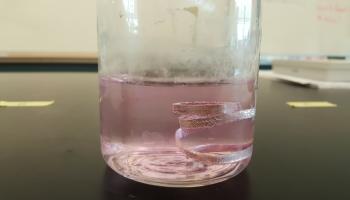
Addition of a white solid to a green solution causes the solution to separate into some truly beautiful colors...
My plans for the introduction of the periodic table for my chemistry course. Resources include a document that I use to help students with vocabulary and key points as well as my recommendation for a Target Inquiry activity to use with your students.
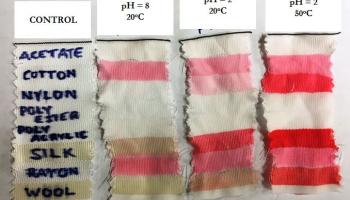
Red dye #40 found in strawberry Kool-Aid and various cloth fibers can be used in a very simple experiment that can teach students about intermolecular forces. A video is included that describes the experiment and analysis of results.
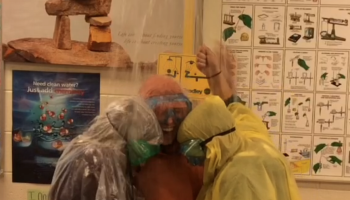
Undergraduates Need a Safety Education is the title found in the commentary section of the September 2016 Journal of Chemical Education. It is written by Robert H. Hill Jr and it explains the lack of safety education in chemistry curriculum. As I read this, I thought back to my safety education that prepared me for my role as a high school chemistry teacher and felt I was very fortunate to have had an undergradutae class that was specifically designed to teach chemical safety.
This school year my district is launching a 1:1 Chromebook initiative. 6th and 9th graders will receive their Chromebooks next semester as part of the rollout. In the meantime, I continue to have access to my Chromebook cart from the Blending Learning pilot I participated in last school year. My goal is to incorporate even more tech use when appropriate; so far, I have increased Chromebook use in my classroom for things like warm up questions, EdPuzzles, and quizzes. My experience with quizzes has been especially interesting.
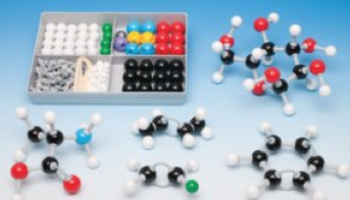
In a previous post I talked about an equation balancing lab that I have been doing with my students involving building molecular models. This time I would like to focus on another lab that I have developed for my model kits.
College Board offers an excellent online resource for teachers and students. It's not free, but my school district pays the bill. AP Insight provides curriculum outlines, teaching ideas and resources, student handouts, and digitally-graded assessments.
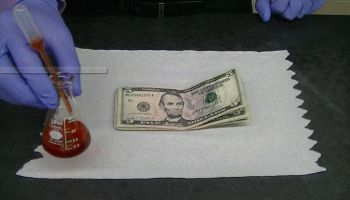
Is it possible to use materials found in high school chemistry labs to extract and subsequently detect cocaine on dollar bills? Let me know what you think after reading this blog post!
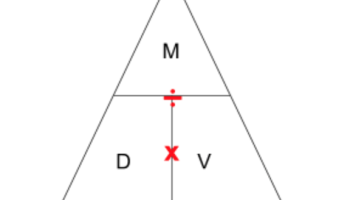
Like most chemistry teachers, one of the first things I go over in the beginning of the year is unit conversions. Students come into my class with all sorts of prior knowledge concerning unit conversions; some good, some bad and some downright ugly.
This exercise is intended as an ice-breaker for a first or second class meeting. It also serves as an introduction to physical & chemical properties and application of the macro/micro/symbolic representations of chemical phenomena. Finally, it also provides a framework to mention many of the topics to be covered in a general chem first semester course.