
Dear Readers,
Chemical Education Xchange (ChemEd X) was introduced December 2012—our official announcement was published in the Journal of Chemical Education. Though our primary focus has been to support high school chemistry teachers, we know that many of our readers are teaching at other levels of education and in a variety of situations. In an effort to better serve our growing community, we have a plan in place to broaden the scope of ChemEd X to two-year college teachers. The first step in this vision is bringing on Scott Donnelly, a professor at Arizona Western College, as the Two Year College Editor (TYC). In Scott's first blog post, he introduces himself and offers his educational philosophy. Look for an official rollout of the Two Year College component of ChemEd X over the coming months. I am looking forward to hearing from, learning from and collaborating with the TYC community.
Cheers,
Deanna
Element of the Month - SulfurIn honor of the International Year of the Periodic Table: A familiarity with the chemistry of some of the elements more commonly encountered in everyday life is a valuable learning experience for all students. Sulfur is the fourth in this series of elements to be discussed as part of the Element of the Month.
|
sulfur.png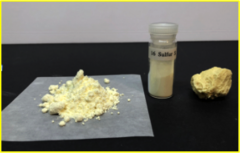 Samples of Elemental Sulfur
|
|
what-are-you-doing-after-ap-chemistry-exam.png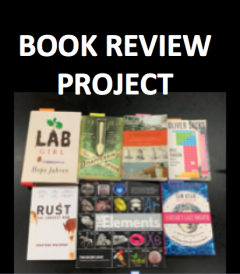 Books for the Book Review Project
|
What Are You Doing After the AP Chemistry Exam? - A Book Review ProjectThe author shares how she developed a book review project for her AP students with the help of the ChemTwitter community. |
|
Measuring Surface Tension to Investigate Intermolecular ForcesLike most concepts in chemistry, intermolecular forces takes a bit of imagination and critical thinking to fully comprehend and apply when explaining a variety of situations. The author introduced IMFs this year by focusing on a more data-to-concepts approach. |
measuring-surface-tension-investigate-intermolecular-forces.png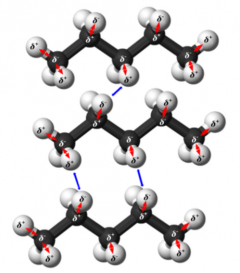 model of pentane
|
|
chemical-mystery-15-leaky-cup.png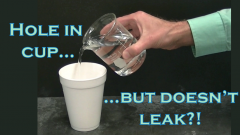 Chemical Mystery #15
|
Chemical Mystery #15: The Leaky CupWatch the video below and see if you can use your chemical knowledge to figure out how this experiment is done. See the Solution to Chemical Mystery #15. |
|
Lewis Dot, VSEPR Shape, Polarity and Intermolecular Forces Activity SheetDetermination of Lewis Dot structures and visualization of the shapes of molecules using VSEPR theory is an example of an abstract concept that students often find difficult to learn. The author uses a single worksheet/packet that her students can add to as they cover Lewis dot structures, resonance, VSEPR shapes, polarity, and intermolecular forces. |
||
women-untold-lawrence-tech-student-produced-film-celebrates-diversity-and-inclusion-stem.png Women Untold promotional poster
|
Women Untold: Lawrence Tech Student-Produced Film Celebrates Diversity and Inclusion in STEMLawrence Technological University’s Marburger STEM Center recently collaborated with students enrolled in the Media Communications Program to develop a new 30-min student film,Women Untold, which celebrates the important contributions of three women of color in STEM (science, technology, engineering and mathematics). |
|
Chemical Mystery #16: A Red, White, and Blue Chemistry Trick for You!Watch the video and see if you can figure out how red, white, and blue colors can all be made from the same chemical solution! |
is_it_science.png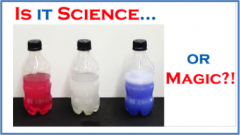 Red, White & Blue Bottle Mystery
|
|
chemed_2019.png ChemEd 2019
|
Join Us For ChemEd 2019!ChemEd 2019 will take place in Naperville, IL at North Central College. The conference is scheduled for July 21 through July 25, 2019. ChemEd X will be there with a booth in the exhibit hall. Many of our lead contributors will be presenting at the conference as well. |
|
JCE 96.06 June 2019 Issue HighlightsThe June 2019 issue of the Journal of Chemical Education is now available online to subscribers. Be sure to check out Mary Saecker’s round-up of the whole June issue along with related articles from the archives. Erica Jacobsen shares highlights from the June 2019 issue of the Journal of Chemical Education of special interest to our ChemEd X community in her Especially JCE: June 2019 column. |
especially-jce-june-2019.jpg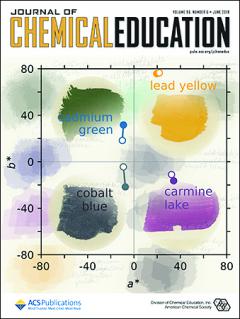 June 2019 Cover of JChemEd
|
|

We hope you enjoy the content mentioned here and other content at ChemEd X. If you find ChemEd X content useful, please consider purchasing a subscription to help support ChemEd X using our online store. In addition to supporting the free content we make available, you will also get access to our complete video collection and other titles to help in teaching and learning chemistry. If you would like to contribute content, begin with the contribute page. For other questions or comments, please use our contact form.