Science Practice: Constructing Explanations and Designing Solutions

Constructing explanations and designing solutions in 9–12 builds on K–8 experiences and progresses to explanations and designs that are supported by multiple and independent student-generated sources of evidence consistent with scientific ideas, principles, and theories.

Summary

Constructing explanations and designing solutions in 9–12 builds on K–8 experiences and progresses to explanations and designs that are supported by multiple and independent student-generated sources of evidence consistent with scientific ideas, principles, and theories. Construct and revise an explanation based on valid and reliable evidence obtained from a variety of sources (including students’ own investigations, models, theories, simulations, peer review) and the assumption that theories and laws that describe the natural world operate today as they did in the past and will continue to do so in the future.
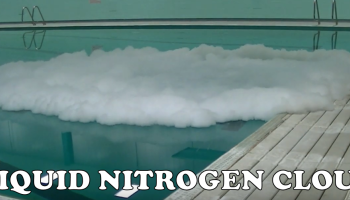
Liquid Nitrogen Cloud
// Friday, July 26, 2019 Tom Kuntzleman
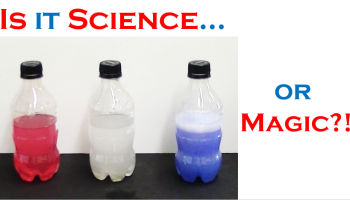
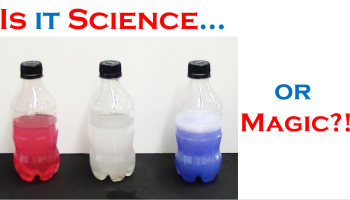
One of my favorite experiments to conduct is the liquid nitrogen cloud. As long as you can get some liquid nitrogen, it is incredibly easy to carry out. All you have to do is pour some hot water into liquid nitrogen and a massive cloud results. Check it out (also, be sure to check out the video posted further below):
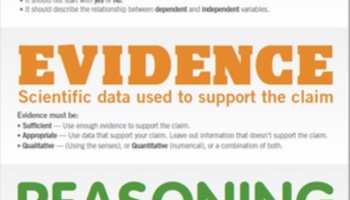
Claim Evidence Reasoning sign from Activate Learning
// Thursday, June 20, 2019 Stephanie O'Brien
In this activity your students will be introduced to the concepts of claim, evidence and reasoning. The activity is POGIL- like in nature in that no prior knowledge is needed on the part of the students. 
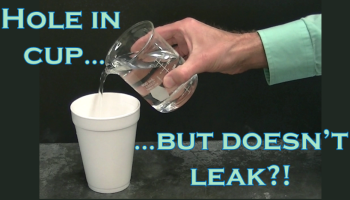
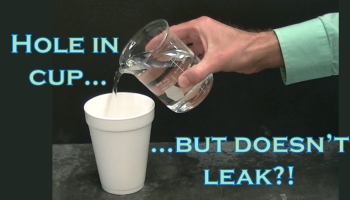
Water is poured from a beaker into a styrofoam cup
// Monday, May 27, 2019 Tom Kuntzleman
How can water be held in a cup that has a hole in the bottom of it? Watch this video and find out the explanation for Chemical Mystery # 15, The Leaky Cup!  
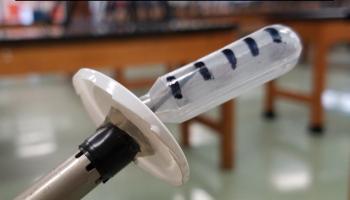
disposable pipet rocket on a piezo lighter
// Wednesday, May 22, 2019 Dustin_Williams
There is a lab that is called something like “The Mole Rocket Lab” or  “Micro Rockets”. Some of you may be familiar with the lab, but I wanted to write this post to share it with teachers who may not be aware of it. 
A cup full of water...but it doesn't leak!
// Thursday, May 16, 2019 Tom Kuntzleman
Time for a new chemical mystery! Watch the video below and see if you can use your chemical knowledge to figure out how this experiment is done.
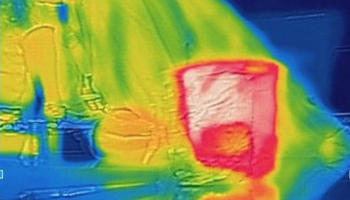
IR camera image of student and beaker at lab counter
// Tuesday, April 30, 2019 Lauren Stewart
This past school year, I had the opportunity to participate in the AACT Science Coaches program. When I applied for the program, I expected to be partnered with a professor, probably someone who had been in academia for quite awhile. I thought that this person could share their research with my students and maybe help me with some content questions.
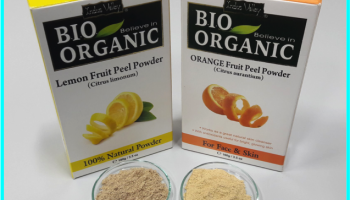
boxes of lemon and orange peel powder
// Monday, April 15, 2019 Andrea Amato
In this article, I would like to introduce a procedure which involves the removal of copper from a solution through a process known as biosorption. I covered something similar in a previous ChemEd X blog1, but in this article I will be running the experiment by using a different analytical method.
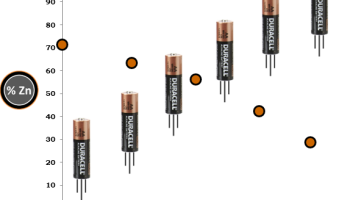
Bouncing batteries
// Friday, April 5, 2019 Tom Kuntzleman
Did you know there is a simple test you can do to see if an alkaline battery is fresh or dead?1,2 All you need to do is bounce the bottom of a battery onto a hard, flat surface. If the battery is fresh it won’t bounce very well. If the battery is dead, it will bounce very high. Check it out in the video.3