Physics

Bucket launch
// Thursday, January 12, 2017 Tom Kuntzleman
A favorite experiment of mine is the bucket launch. My students and I recently tried two variations on this experiment. Watch the video below and see if you can explain the differences we observed.
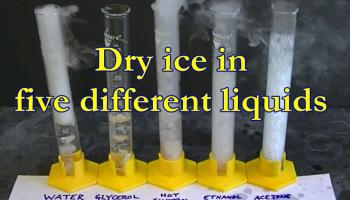
Dry ice in five different liquids
// Sunday, January 1, 2017 Tom Kuntzleman
I recently posted a video on Twitter of an experiment my students were conducting in class. I thought I’d blog about the experiment, since it seemed to generate a lot of interest.
Cloud formed when dry ice is placed in water
// Sunday, December 4, 2016 Tom Kuntzleman
Have you ever wondered where the cloud comes from when dry ice is placed in water? Consider the answer returned in my browser when I Googled the phrase “How does the dry ice cloud form”:
LightBuckets.com
// Tuesday, October 25, 2016 Chad Husting
Most chemistry teachers I know do flame tests with their students. It ties in well with many topics, is colorful and the kids enjoy seeing the colors and burning stuff. There are many applications. For years I always mentioned that astronomers use the idea of the flame test.
Smithsonian April 2013
// Sunday, March 27, 2016 Hal Harris
Brian Greene is not only one of the foremost theoretical physicists/cosmologists, but he also has a talent for explaining some of the most difficult and abstract concepts in physics to those outside of his field.
AMTA
// Wednesday, July 8, 2015 E Posthuma
The American Modeling Teachers Association (AMTA) website is the official source for information on Modeling InstructionTM (MI).  Whether you are an experienced Modeler or simply interested in learning more about MI, I encourage you to visit the newly redesigned site and check out the availabl

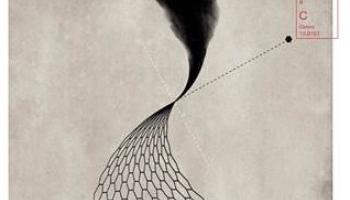
Material Question
// Friday, January 23, 2015 Hal Harris
If you are teacher of chemistry, you probably already know something about graphene, the first and only two-dimensional material.  As you probably know, graphene consists of a single layer of the familiar graphite carbon hexagons that we teach about in introductory courses.
// Thursday, August 7, 2014 Melanie Anastasio
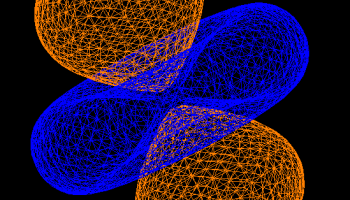
The Higgs boson is one of our era’s most fascinating scientific frontiers and the key to understanding why mass exists. The most recent book on the subject, The God Particle, was a bestseller.
// Monday, October 28, 2013 Deanna Cullen
The MOSART tests are designed to measure understanding of science concepts. The name, MOSART, stands for: Misconceptions-Oriented Standards-based Assessment Resources for Teachers