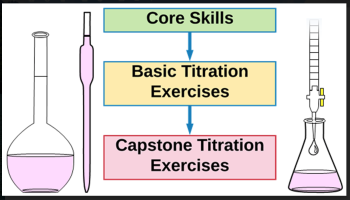
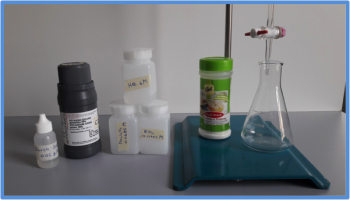
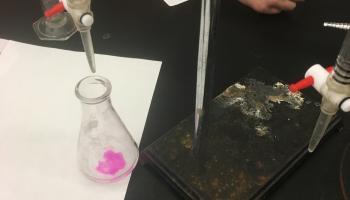
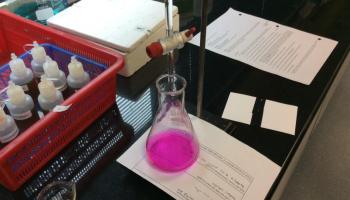
Titration and volumetric analysis are analytical techniques in which the amount or concentration of a particular substance present in a sample is determined using measured volumes of appropriate reagents.
Molecular kits are a large investment for a chemistry classroom and often they only get used once a year during a VSEPR activity. My students love to play with molecular kits as it reminds them of building with LEGOS.
In this article, I would like to introduce a procedure which involves the removal of copper from a solution through a process known as biosorption. I covered something similar in a previous ChemEd X blog1, but in this article I will be running the experiment by using a different analytical method.
A few years ago, the faculty in our department at Slippery Rock University of Pennsylvania decided to switch to an atoms first approach to the General Chemistry course.
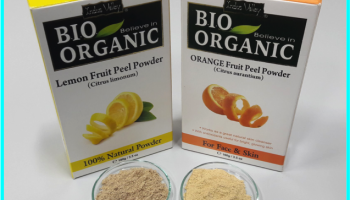
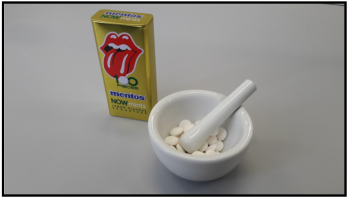
Citric acid is a weak tricarboxylic organic acid. It is highly soluble in water and, once it dissolves in that, it shows weak acidity but a strongly acidic taste which affects sweetness and provides a fruity tartness for which it is widely used to complement fruit flavors in the food and beverage industry.
A few months ago I was searching the internet, looking for a better way to teach stoichiometry to my pre-AP chemistry students. While my methods of dimensional analysis “got the job done” for most students, I would still always lose students and many lacked true understanding of what was happening in the reaction.
ChemEd X recently made a Call for Contributions soliciting input regarding the big ideas being put forth by organizations like AP. The first thing that came to mind was a lab I modified that is centered around making connections between topics. Admittedly, this lab is not a "big idea" per se.
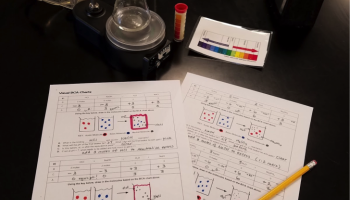
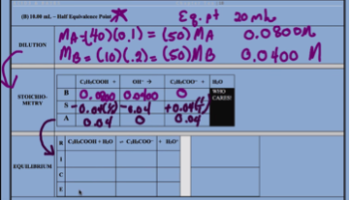
I recently stumbled across a blog about the use of BCA (Before Change After) tables for stoichiometry written by Lowell Thomson. I was thrilled to discover ChemEd Xchange! I wanted to share my journey, spurred on by my students, into the extensive use of the BCA