concentration

matter per volume

text: "Solutions INB" over flasks of solutions
// Tuesday, April 18, 2023 Nora Walsh
This is a relatively short unit in my course and as a result, I only use two spreads for it. I have two fully developed spreads to share, with optional bonus material you could add on to the first and an alternative layout for the second that includes colligative properties.
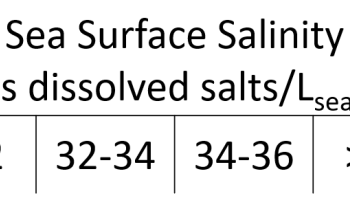
sea surface salinity values
// Sunday, June 12, 2022 Scott Donnelly
This is the third blog post of the seawater-oceanic shipping series. Like the previous two posts (first and second) this classroom activity:
text over bottles of food dye: Titration with Food Dyes
// Sunday, November 28, 2021 Tom Kuntzleman
Recently, Anne Schmidt and I published an article together in the Journal of Chemical Education.1 The article outlines a titration activity that students can carry out at home using only store-bought items. The objective of the activity is to determine the amount of Mg(OH)2 in milk of magnesia.
male student looking at laptop screen
// Wednesday, May 5, 2021 Michael Jansen
​Good day, gentle readers: I’ll be honest. In spite of the Pollyanna-ish pronouncements of education gurus—and the shareholders of Zoom—online Chemistry teaching is far less than ideal. I get it: we’re doing our best inside a set of rules that none of us asked for. What can we do? A lot.
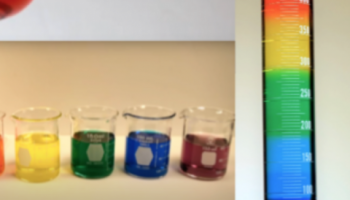
collage of 4 images constructing a sugar density column
// Tuesday, March 23, 2021 Nick Thomas
Demonstrating the densities of various liquids (oils, alcohol, detergent, syrup, etc.) in a tall glass container is a popular at-home science activity described on many websites.1-3 Colored sugar solutions of varying concentrations can similarly be layered to illustrate density and generally require the lower density solutions to be care
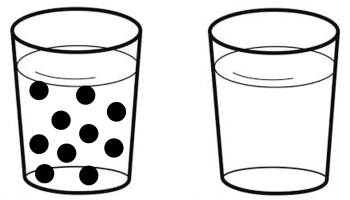
2 glasses containing solutions, one has particulate level modeling
// Tuesday, April 14, 2020 ACCT Admin
The “Exploring Concentration” formative assessment (FA) asks students to make their “ideal” Kool-aid solution and to make variations of their recipe to explore the different variables of concentration. This FA targets chemical control by allowing students to experience the processes and effects of changing concentration.