Outreach

Outreach includes chemists and professionals working with teachers to bring real world applications into the classroom, high school students presenting for younger students, groups doing demonstrations or offering tables of activities for school children or the general public, etc.

Assassin's Bottle title card
// Tuesday, September 16, 2025 • Tom Kuntzleman
The disappearing rainbow1 is a wonderful chemistry demonstration previously featured here on ChemEdX.2-4 In this experiment, a colorless solution of NaOH is poured into a row of flasks, each containing a different acid–base indicator.
Picture Perfect Chemistry title preview image
// Saturday, October 19, 2024 • Tom Kuntzleman
Josh Kenney, Melissa Hemling, and I just published an article in the October 2024 Journal of Chemical Education. The article describes inquiry-based activities that highlight the chemistry behind “No-Mess” picture-coloring books.1 Well, it turns out that our timing is impeccable.
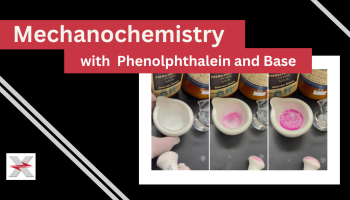
Mechanochemistry with Phenolphthalein and Base preview image with three mortar pestles grinding phenolphthalein
// Wednesday, July 24, 2024 • Dean Campbell
Phenolphthalein has been used extensively as a pH indicator.1 Although the compound actually can exhibit multiple color transitions, it is best known for turning from colorless to pink in aqueous solution as the pH is raised above 8.3.1 The equilibrium associated with this transition is shown in Figure 1.
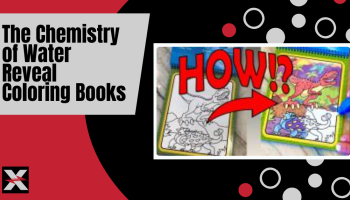
The Chemistry of Water Reveal Coloring Books preview image with picture of water reveal dinosaur book
// Tuesday, July 16, 2024 • Tom Kuntzleman
A variety of interesting coloring books are available on the market that use water as a coloring agent.1 When water is applied to the pages of these books, colors seem to appear like magic. When the water evaporates, the colors disappear. This allows the pages of these books to be colored over and over again.
Exploring Color Separation in Salting-Out Experiments preview image with image showing color changes from green to blue over yellow
// Saturday, May 4, 2024 • Tom Kuntzleman
In “salting out” demonstrations, a mixture of water and an organic liquid separates into two layers upon addition of an inorganic salt.1-4 Typically, acetone or various alcohols are used for the organic liquid, while NaCl, Na2CO3, or K2CO3 are used as the salt.