As a chemistry teacher of ten years there is one unit I used to enjoy but as time has gone on it now feels like a huge task....the unit on the nomenclature of ionic and covalent compounds. Currently, in the state of Michigan, it's not a specific state standard that aligns with the Next Generation Science Standards so it has become “extra” content;
I’m not a fan of asking students to memorize rules or laws for the sake of memorizing rules or laws. There has to be a point—a reason, or at least a decent "this hits home” example of the rule or law.
Stay with me . . .
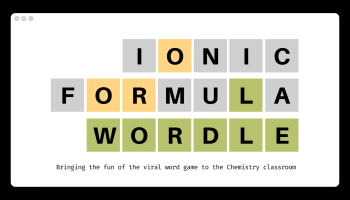
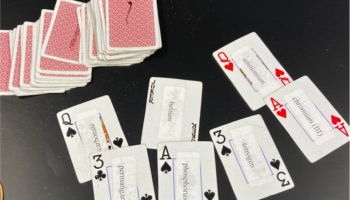
I am always looking for little activities to fill those "dead spaces" during the school day like passing times, when some students finish early, or when there is not enough time before the bell to start the next activity.
Chemical bonding is a pivotal topic in chemistry classes that can be overwhelming for students and teachers alike - so much to teach, so many ways that it can be overwhelming! On November 4th, 2021, Nora Walsh shared her unit covering chemical bonding and naming in this ChemBasics Talk.
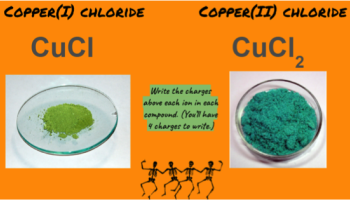
While students usually do well with naming binary ionic compounds of fixed charge, many students struggle with naming ionic compounds that contain ions of variable charge. Common mistakes include:
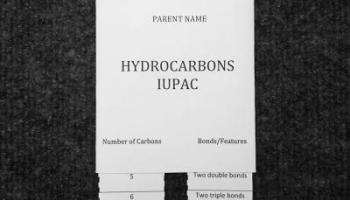
Organic nomenclature is usually taught as part of any introduction to organic chemistry. To help introduce students to organic nomenclature in a way that clearly summarizes the patterns that exist, a paper tool for naming hydrocarbons was developed.
Materials
Materials: