Global Warming

Teaching metric system with climate change
// Sunday, January 12, 2025 Tom Kuntzleman
There’s some recently published research on climate change1 that you can easily incorporate into your next lesson on metric conversions and unit analysis. The article gives a report on ocean heat content (OHC) measurements.
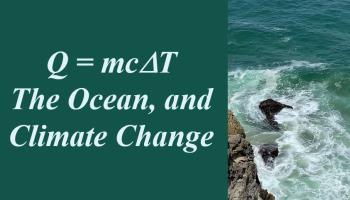
Text: Q = mcDT  The Ocean and Climate Change
// Friday, October 16, 2020 Tom Kuntzleman
For the past few years when I’ve been covering introductory concepts in thermodynamics, I’ve made a connection to climate change. My students and I calculate the energy that has been gained by Earth’s oceans as heat, using the following equation that is familiar to students of introductory and general chemistry:
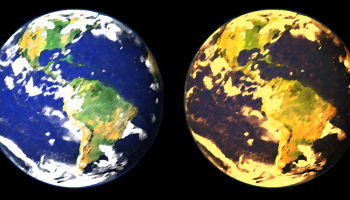
Cool Earth, Hot Earth
// Tuesday, March 26, 2019 Tom Kuntzleman
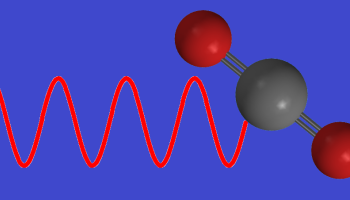
With Earth Day approaching, you might want to try out the experiment published in the Journal of Chemical Education.1 It outlines a fantastic way to demonstrate the warming influence that atmospheric CO2 has on our planet. I followed the procedure and offer a video of the results.2
Crush a can with chemistry
// Sunday, June 5, 2016 Tom Kuntzleman
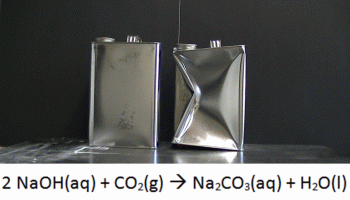
In Chemical Mystery #6, I used chemistry to crush a metal can. To do so, concentrated sodium hydroxide solution (about 35% NaOH by weight) was added to a can that was almost completely filled with carbon dioxide gas. The can was then sealed. The carbon dioxide gas in the can reacted with the added sodium hydroxide: