The Search for the Final Element
Have you ever wondered what is the theoretically largest possible value for the atomic number of an element? Using some introductory physics and algebra, you can get your students thinking about this idea.
Are kids learning? Given the time it takes to implement and grade the activity, do I get a lot of "educational moments" out of it? Does it fit into the culture of the classroom? Is there a great deal of "conceptually rich" material in the activity that students can build on? I believe that two activities I tried this week fit the bill.
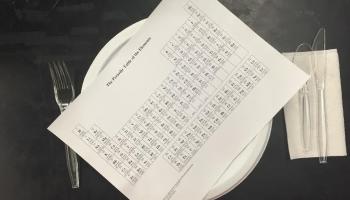
I love the periodic table. I love the order, the stories, the trends and patterns, the people who made it. I love how it can be used. I love that it is the ultimate cheat sheet for a scientists or a student taking chemistry. I love the different types of periodic tables that exist. My love for this table is pretty evident.
It was Oregonians only (lucky me!) for PBS’s limited release of The Mystery of Matter: Search for the Elements in fall 2014. A national premiere is now at hand—mark your calendar for your local station’s broadcast.
During our “Periodic Table and Periodicity" unit, we take about 3 days to learn the content and another 3-4 days to practice the content (more for Chemistry 1, less for Honors). One way that I have my students review the content is by playing a board game that I recreated from an NSTA conference a few years ago.
Science is creative; it requires new ideas, new patterns, and new solutions to old problems. A deep understanding of the periodic table is the most critical knowledge in chemistry. I want my students to experience the table and conceptualize its trends in a deeper way.
In this age of scientific inquiry, molecular modeling, digital classrooms, and differentiation, I felt downright guilty about any teacher-centered time. My classroom is flipped after all. I’m not supposed to be lecturing, right?
TV and movie screens today offer us a desperate fight against crazy-fast zombies, a peek into celebrities’ lives where truth is often stranger than fiction, million-dollar game shows, and more. Can portraits of science compete?
Build a periodic table out of Lego blocks.
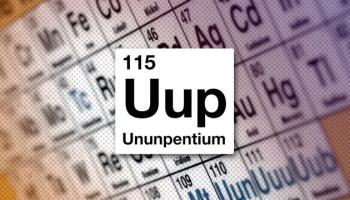
Scientists in Sweden confirm new element 115 after atoms collide. Check out this CNN clip for information about the most recently discovered element #115.