If this is a site all about chemistry teaching, what in the world does a book called "10% Happier" have to do with anything? Let me explain....I'll try the short, condensed, one page executive summary.
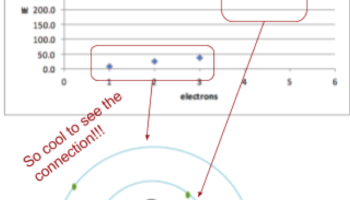
After spending the start of the year using a modified version of the Modeling Instruction curriculum (density and physical properties, followed by gas laws, followed by energy and phase changes), we don’t actually start talking about what’s inside atoms until December.
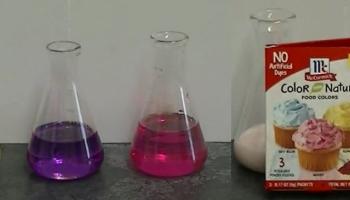
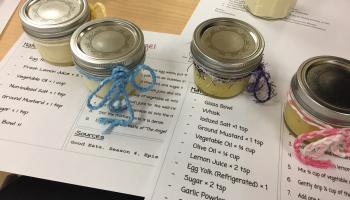
In this post I’ll be sharing a bit about the chemistry of the Berry food color found in McCormick’s Color from Nature food coloring. I will also describe some experiments and demonstrations that can be done using this food color.
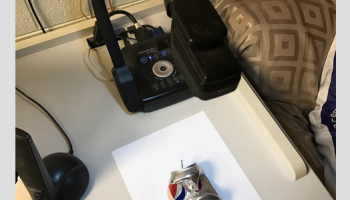
In an effort to better understand my high school students' knowledge of what is happening during phase changes, heating curve calculations, and the ever popular can crush demo, I run them through a series of activities.
Julia Winter has been an energetic and inventive teacher for more than 20 years at Detroit Country Day in Beverly Hills, Michigan. She has always challenged herself to try new things and stay abreast of recent advances in teaching of chemistry. The past few years have been especially exciting.
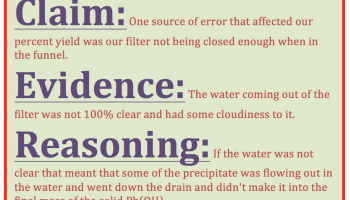
As a science teacher, few things beat a high-quality scientific explanation from a student. However, the frequency of such explanations often seems far and few between.
Over the past few years, consumers have been looking for products containing natural rather than synthetic food dyes.1,2 In response to this trend McCormick & Company, Inc.
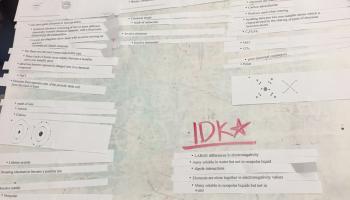
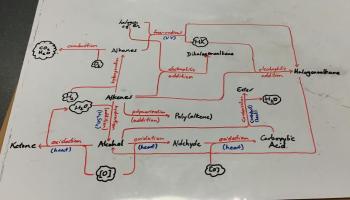
As a teacher, there are certain things I think I do well, and other areas where I think I can improve. One of these areas is helping students make connections between topics - especially at the end of a unit. Can I get students to see the proverbial "Big Picture"?
CHEM Ed 2017 will be in Brookings, South Dakota on the campus of South Dakota State University from July 23 through 27. Currently the conference program directors are accepting abstract submissions through February 28th within the following strands:
Laboratory Instruction