Latest articles, blogs, and events from the chemical education community

microphone image
// Wednesday, July 4, 2018 Deanna Cullen
Are you attending BCCE 2018? Aside from typical presentations and workshops, there are a variety of other events that are well worth considering. There are several Birds of a Feather lunches, Division of Chemical Education meetings and social events. I had some down time this week and used some of it to organize my schedule for the conference.
swimming pool
// Monday, July 2, 2018 Lauren Stewart
I’m going to let you in on a secret about myself, I am a grown woman and I do not know how to swim. I never took lessons as a kid, so I can swim to survive, but it’s not pretty. I decided that this year would finally be the year I learned (mostly because my friend and I have a crazy idea that we are going to compete in a triathlon).
The Chemistry of Outer Space
// Sunday, July 1, 2018 Tom Kuntzleman
By Tom Kuntzleman, Mike Nydegger, and Mike Buratovich During June of 2018, we held our 14th annual science camp at Spring Arbor University (SAU): Over 120 K – 8th grade students enjoyed an entire week of science experiments, demonstrations, and activities!
Materials for oxidation lab
// Thursday, May 31, 2018 Andrea Amato
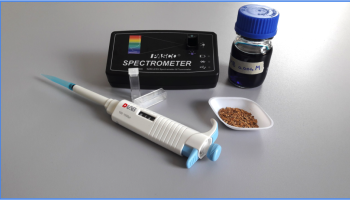
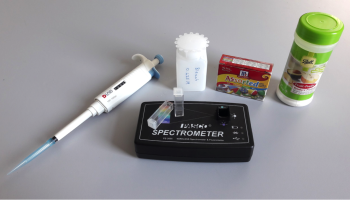
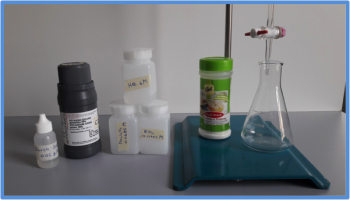
In general, the antioxidant activity of a substance is determined by the DPPH assay, published by Blois in 19581; that procedure involves the use of a stable free radical (​2,2-diphenyl-1-picrylhydrazyl​) whose electron delocalization gives rise to a purple/violet color.
Google Forms Logo
// Thursday, May 17, 2018 Ben Meacham
Part of placing value on the process of learning means giving students multiple opportunities to demonstrate understanding. As a result, retakes are an inevitable part of the process. For many teachers, especially those at larger schools, allowing students to retake assessments is not a philosophical problem, but a logistical one.
Liquid air droplet
// Tuesday, May 15, 2018 Tom Kuntzleman
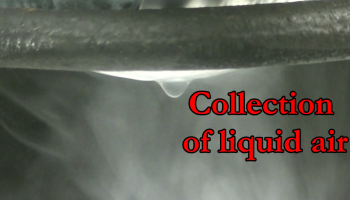
In the January, 2018 issue of the Journal of Chemical Education, Jeffrey Statler describes several experiments that can be conducted with liquid air.1 He demonstrates that liquid air can be easily collected by simply immersing a test tube in liquid nitrogen, which has a