Attention all AP Chemistry teachers!
I wanted to let you know about an opportunity to receive 3 free online prep exams designed to give you feedback on your students' preparation for the AP Chemistry Exam. This is part of a research study occurring through the 2020-2021 year.
As cases due to COVID-19 continue to rise, many schools remain locked in virtual learning formats. Consequently, meaningful laboratory work remains a challenge for many.
Since Covid-19 I've actually had MORE students in office hours than I did before. Now I know most of us are feeling overwhelmed by the workload of teaching in a remote environment and may not want to meet with more students!
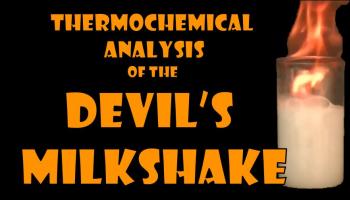
A year ago I stumbled across a fun way to present the reaction between calcium metal and water. Check it out (including a video explanation): The Devil's Milkshake.
Ca(s) + H2O(l) → CaO(s) + H2(g) Equation 1
The Center for Teaching and Learning at the Illinois Mathematics and Science Academy now offers a variety of online professional development opportunities. Among the current selection, there is a chemistry offering titled Gamifying Chemistry.
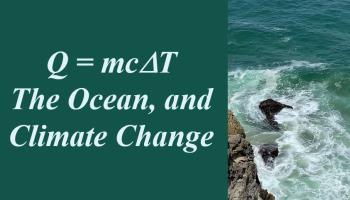
For the past few years when I’ve been covering introductory concepts in thermodynamics, I’ve made a connection to climate change. My students and I calculate the energy that has been gained by Earth’s oceans as heat, using the following equation that is familiar to students of introductory and general chemistry:
Celebrate National Chemistry Week 2020 October 18–24, 2020 with the theme, "Sticking with Chemistry."
Even though the guidelines on social distancing and limitations on gatherings have caused in-person National Chemistry Week (NCW) activities to be cancelled, there are many ideas that can be done in class or virtually. Find something that will fit your situation on the ACS NCW pages.
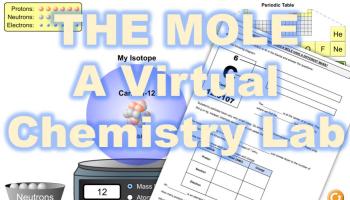
Laboratory work offers students a practical and tangible experience with chemistry concepts.1 Although safety measures due to COVID-19 have limited or even canceled in-person lab work for many teachers; virtual labs present a reasonable alternative.
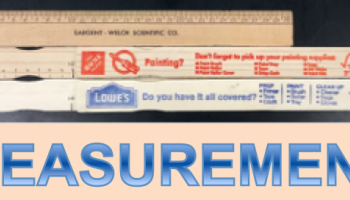
This activity is designed to provide students with many types of scales on measuring devices in order to reinforce the idea that the physical graduations on an instrument determine the number of digits which need to be recorded.
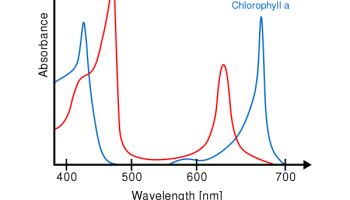
In many chemistry courses, spectroscopy-based experiments are performed in lab. I personally find the overall topic of spectroscopic analysis fascinating and its applications can be found in numerous fields of study.