ACCT

Assessing for Change in Chemical Thinking (ACCT) is an NSF-funded, research-practice partnership focused on fostering chemical thinking in middle school, high school, and undergraduate science classrooms using formative assessment strategies. ChemEd X has partnered with ACCT to disseminate the program materials, as it aligns with their mission of making digital chemistry teaching content and resources accessible. We encourage you to explore the ten session professional development series, (including facilitation guides, slides, and resources). In addition, the blog posts on formative assessments and the core program elements are accessible through the ChemEd X platform, free of charge. For inquiries, please contact ACCT at ACCTProject@umb.edu

Our collection here on ChemEd X includes:

Resources for doing formative assessment in the classroom

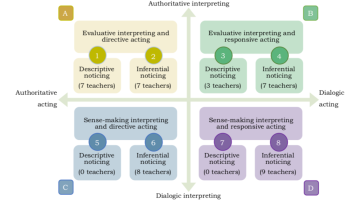
Studying how teachers enact formative assessment

Analyzing how students use chemical thinking

Information about our group

Relevant publications

Together with ChemEd X, we strive to empower teachers of chemistry to Xplore, Xtend, and Xperience.

ACCT
The fire story
// Tuesday, August 11, 2020 ACCT Admin
The fire story formative assessment is used to explore students' thinking about the question "what affects chemical change?" through a real-world problem. This formative assessment specifically probes students' understanding of energy and phase changes. There are several different explanations using different chemistry concepts that could
4 personalities of teachers when noticing student work
// Wednesday, June 10, 2020 ACCT Admin
Formative assessment is an important component of teaching as it enables teachers to enhance student learning. The written work that students produce on formative assessment tasks can be used to uncover student thinking and inform the decisions teachers make on how to support individual student learning. 
green Pringles can
// Monday, May 4, 2020 Scott Balicki
In Chemistry, students learn about combustion reactions and their applications, such as gasoline engines in cars. Students may be asked to imagine how to maximize the output of such a combustion reaction, and how this maximization point would be determined.
orange circle with a square pattern of dots
// Sunday, April 26, 2020 ACCT Admin
How do a material's properties relate to its composition and structure? (the question of Structure-Property Relationships)
// Friday, April 24, 2020 ACCT Admin
Steven Cullipher (PhD Student)
colored spheres connected with lines
// Friday, April 24, 2020 ACCT Admin
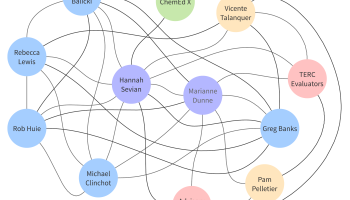
Assessing for Change in Chemical Thinking, which began in 2016, is a partnership between University researchers, Boston Public Schools teachers, and others interested parties from all over the world.