Activities

ChemEd X activities are student-centered resources intended to aid learning chemistry topics.

ChemEd X encourages engaging activities where students (with guidance from the teacher) pose questions, analyze data, and make observations to offer a plausible explanation supported by data and consistent with physical observations.

activity

// Friday, December 12, 2014 Dan Meyers
In a recent post, I indicated that I would make available the Chemical Reactions lab that I modified to meet NGSS guidelines. Enjoy!
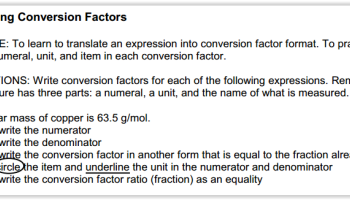
Writing Conversion Factors Preview
// Saturday, November 15, 2014 David Licata
This worksheet is intended to be used as a "Guided Instructional Activity" (GIA). Students read a statement that gives a either a conversion factor or a pair of related measures and then write the information as two equivalent fractions ("conversion factors") and as an equality.
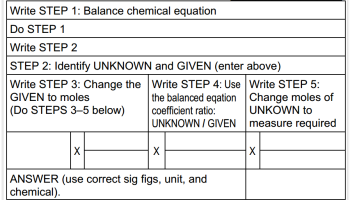
Initial framework for use with stoichiometry GIAs
// Saturday, November 8, 2014 David Licata
This set of three worksheets are intended to be used as collaborative "Guided Instructional Activities" (GIAs). Two students cooperate to complete the steps of a stoichiometry problem, alternately doing parts of the process as they explain what they are doing and evaluate their partner's work.
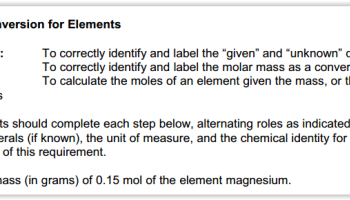
Mole Conversion Guided Instructional Activity Preview
// Friday, November 7, 2014 David Licata
The three "Guided Instructional Activities" in this activity are three cooperative learning pieces in which students are guided through the process of converting from one unit to moles (or moles to a unit) by the method of "unit analysis" (dimensional analysis). Students alternate steps in the process and evaluate the success of each step.
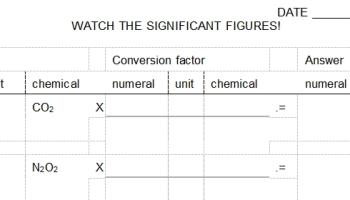
Screenshot of a portion of the worksheet
// Wednesday, November 5, 2014 David Licata
This worksheet asks students to do basic conversions of mass or molecules to moles and vice versa. The worksheet requires students to complete their work in a particular format and to inlcude number, unit, and chemical identity for each item in the "given," in each conversion factor, and in the answer.
Finding and Writing Molar Mass Screenshot
// Tuesday, November 4, 2014 David Licata
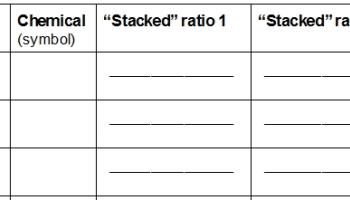
This worksheet is intended to be used as a "Guided Instructional Activity" (GIA). It asks students to find the molar mass of selected elements and write the molar mass as two equivalent fractions ("conversion factors") and as an equality. In each representation, students are forced to give the numeral of the measure, unit, and identity of the chemical.
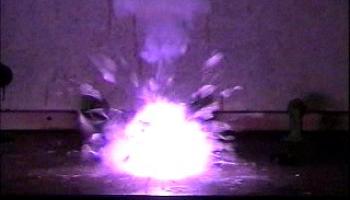
Ignition of sugar and potassium chlorate produces purple flames and sparks.
// Monday, November 3, 2014 David Licata
Given the amount of one reactant, students must use stoichiometry to find the ideal amount of the second reagent to use to create purple fireworks. The teacher ignites each groups' fireworks. Ideal mixture create little or no ash. Student assignment sheet with directions (and different initial amounts) plus teacher information and sample answers are included.
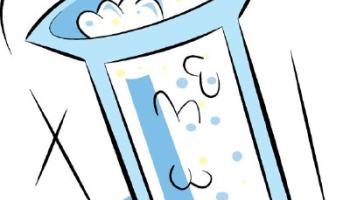
Sodium carbonate reacts with hydrochloric acid producing bubbles
// Wednesday, October 29, 2014 David Licata
OBJECTIVE: To use the principles of stoichiometry to determine the theoretical yield of a simple reaction, measure the actual yield, and calculate the percent yield.
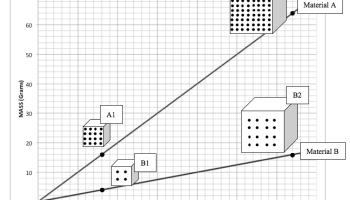
graph of mass vs volume
// Monday, July 14, 2014 Shelly Belleau
Although many students have been exposed to the concept of density before reaching my Chemistry class, I always start the year with this POGIL-like activity. This helps students start on the same page with their density understanding before we dive into more advanced chemistry concepts. It also helps us develop group roles and classroom norms for group work.
candy
// Tuesday, April 29, 2014 Deanna Cullen
Endothermic and exothermic reactions and processes are a common topic in chemistry class. This activity provides examples that can be done with household materials.