General

Items tagged with the safety:general tag have some safety concerns that may be also described more specifically by additional safety terms

Subject

General Safety

For Laboratory Work: Please refer to the ACS Guidelines for Chemical Laboratory Safety in Secondary Schools (2016).  

For Demonstrations: Please refer to the ACS Division of Chemical Education Safety Guidelines for Chemical Demonstrations.

Other Safety resources

RAMP: Recognize hazards; Assess the risks of hazards; Minimize the risks of hazards; Prepare for emergencies
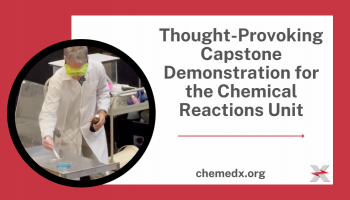
 

text: "Thought-Provoking Capstone Demonstration for the Chemical Reactions Unit" with photo of author performing demo
// Monday, November 6, 2023 Michael Jansen
It is my humble opinion, based on 36 years of teaching high school chemistry, that 11 Chemistry must start with a look at Chemical Reactions, for the simple reason that this begins the student’s formal study of chemistry with an empirical focus.
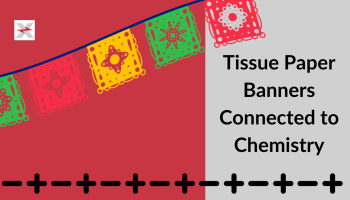
text: "Tissue Paper Banners Connected to Chemistry" with flags and + - symbols
// Sunday, November 5, 2023 Dean Campbell
National Hispanic Heritage Month ran from September 15 to October 15 recently.1 To help celebrate the occasion, students in the Bradley University Chem/Biochem Learning Community put up colorful tissue paper banners.
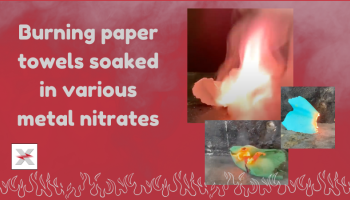
preview image - text: Burning paper towels soaked in various metal nitrates
// Monday, October 16, 2023 Tom Kuntzleman
A classic chemistry experiment1 involves using a concentrated solution of KNO3 to “paint” a design in a continuous line on a piece of paper, allowing it to dry, and then igniting one end of the paper (Video 1).2
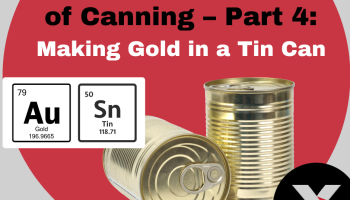
Au & Sn symbols, tin cans with text: Colourful Chemistry of Canning Part 4: Making Gold in a Tin Can
// Friday, August 18, 2023 Iain Smellie
Co-Authored by Iain A. Smellie*, Iain L. J. Patterson* *University of St Andrews, School of Chemistry, North Haugh, St Andrews KY16 9ST, United Kingdom
// Thursday, June 1, 2023 Tom Kuntzleman
An experiment that has always fascinated me is observing what happens when CO2 is bubbled into limewater (which is a saturated solution of calcium hydroxide).1-2 This experiment can be carried out by blowing bubbles of exhaled breath (which contains roughly 4% CO2)3 through a straw into limewater.