Activities

ChemEd X activities are student-centered resources intended to aid learning chemistry topics.

ChemEd X encourages engaging activities where students (with guidance from the teacher) pose questions, analyze data, and make observations to offer a plausible explanation supported by data and consistent with physical observations.

activity
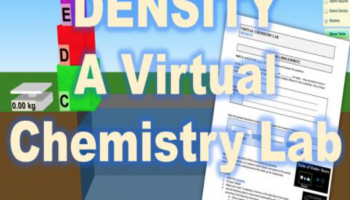
text DENSITY - A Virtual Chemistry Lab
// Wednesday, September 16, 2020 Josh Kenney
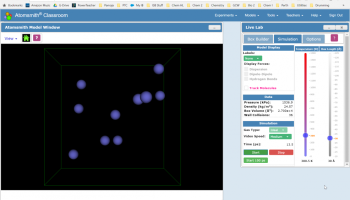
As much of the world remains affected by COVID-19, some schools remain in virtual or hybrid learning structures for the fall semester. These modified learning environments have significantly restricted classroom laboratory work.
screenshot of the Atomsmith live lab simulation tool
// Friday, September 11, 2020 LowellThomson
These activities were originally published in 2018 as a mini-unit on gas laws for IB Chemistry. They have been updated for 2020 since they lend themselves well to an online or flipped format. 
NaCl solubility diagram
// Wednesday, November 13, 2019 Bob Worley
I sometimes wonder why some call precipitation reactions "double decomposition". It is a term I was brought up with in the 1960s. I note that it is still very common in the States. I suppose two (double) salts are sort of splitting apart (decomposing?) and then reforming with other radicals.
rusted nails
// Monday, July 8, 2019 Stephanie O'Brien
When implementing NGSS standards, the science and engineering  practice of argumentation can be seamlessly implemented through the use of formative assessment probes.
students shooting pennies at the whiteboard
// Monday, March 11, 2019 Ben Meacham
Atomic theory is a common topic throughout any introductory chemistry course. Regardless of the depth given to the various models and the evidence that led to their creation, it’s likely that Rutherford’s gold foil experiment gets at least some attention in your course.
periodic trends student materials
// Monday, January 28, 2019 Ann Baxley
Trends related to placement of elements on the periodic table are often taught using diagrams in a textbook. Students often memorize trends, but to get a true grasp of their meaning and what causes certain patterns is best understood when students create their own models and discuss the patterns with others.