The mission of the National Center for Case Study Teaching in Science (NCCSTS) at SUNY-Buffalo is to promote the development and dissemination of materials and practices for case teaching in the science
The Question
When you teach an AP chemistry course and your students are still in school until the first or even second week of June, you are faced with a very popular question and educational dilemma: “What are you going to do with your AP students with another month of school left after the AP chemistry exam?”
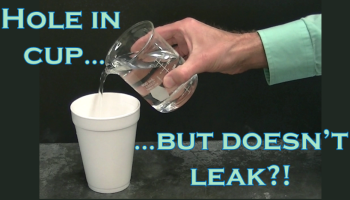
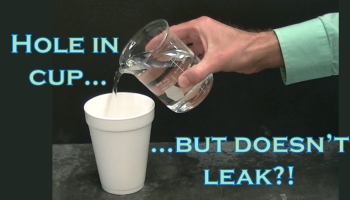
How can water be held in a cup that has a hole in the bottom of it? Watch this video and find out the explanation for Chemical Mystery # 15, The Leaky Cup!
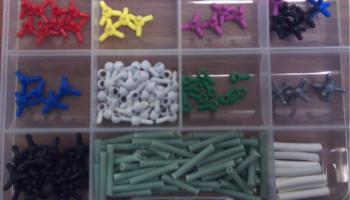
Determination of Lewis Dot structures and visualization of the shapes of molecules using valence shell electron pair repulsion theory (VSEPR theory) is an example of an abstract concept that students often find difficult to learn.
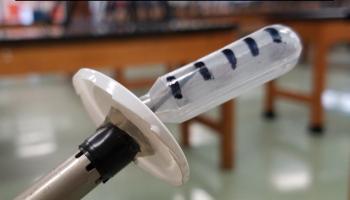
There is a lab that is called something like “The Mole Rocket Lab” or “Micro Rockets”. Some of you may be familiar with the lab, but I wanted to write this post to share it with teachers who may not be aware of it.
"In honor of the International Year of the Periodic Table this series of articles details the Element of the Month project developed by Stephen W. Wright (SWW), Associate Research Fellow at Pfizer Inc., and Marsha R. Folger (MRF), chemistry teacher (now retired) at Lyme – Old Lyme High School in Connecticut.
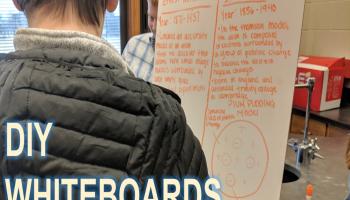
Whiteboards are great learning tools in a science classroom. Not only do students love to write on them, but they also allow for quick formative assessments, and they make collaboration convenient.
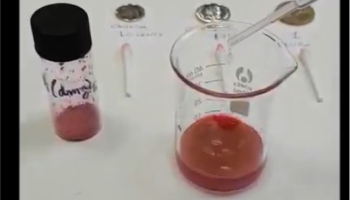
The chelation reaction of nickel ions with the organic bidentate ligand dimethylglyoxime (DMG)1 in an alkaline ammonia medium producing nickel dimethylglyoxime, Ni(DMG)2, a red cherry or raspberry colour precipitate has been known since 1905 when it was discovered by Russian chemist Lev Aleksandrovich Chugaev (see figure 1). I
Bill Hammack- never heard of him, right? I love his videos as he dissects the physics and chemistry of how things work. Nothing fancy or gimmicky. Just good ol' experimentation, acute observation, rational deduction, and contagious curiosity.