Advancements in technology have brought about exciting developments in education. For instance, personalized learning is an approach that optimizes pace, content, and instructional strategies to a student’s unique abilities and interests.
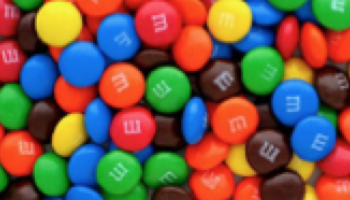
M&M’s (Mars, Inc.) come in a number of colors and sizes. I have found them to be a good visual and kinesthetic model for examining the concept of isotopes and average atomic mass. I use Mega M&Ms, M&Ms minis, and regular M&M’s in this activity. All of these can be purchased in the candy or baking aisles of your local big box store.
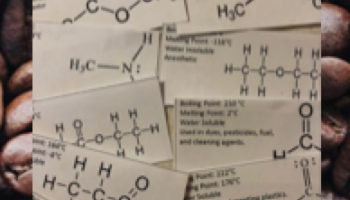
Organic chemistry is not often found in a first year chemistry course in high schools, but it has been a unit in the New York State Curriculum, and it will stay there until the New York State version of NGSS is fully adopted.
Though I have been an educator for seventeen years, I have regularly struggled trying to find the best techniques to help my students learn information.
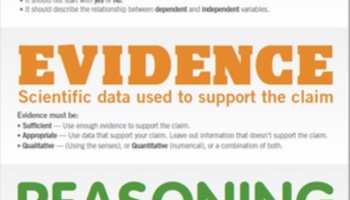
In this activity your students will be introduced to the concepts of claim, evidence and reasoning. The activity is POGIL- like in nature in that no prior knowledge is needed on the part of the students.
The Next Generation Science Standards (NGSS) emphasize a new vision for science education; one that is focused on real scientific inquiry and skills, rather than rote memorization of facts. An essential component of the NGSS is developing and using models to represent concepts.
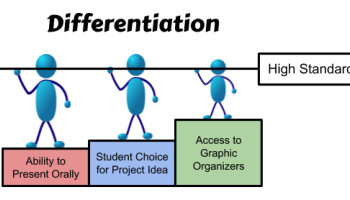
This is Part 3 of a 5-part series on National Board Certification in Adolescent and Young Adulthood (AYA) Science. This post will focus on Component 2 - The Differentiation Portfolio.*
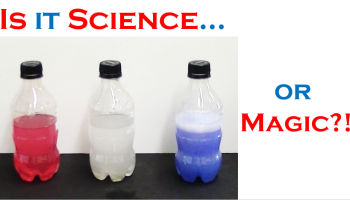
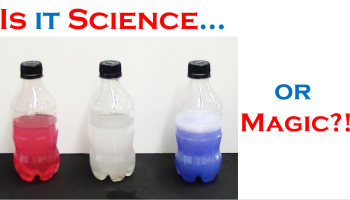
In Chemical Mystery #16 the colors red, white, and blue are all produced from the same solution that is poured into three separate bottles. You can view this experiment and how it is carried out in Video 1.
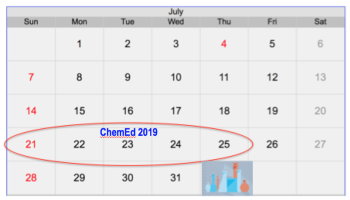
Another school year has come and gone, and summertime is upon us! Soon we’ll all be enjoying cookouts, summer conferences (ChemEd 2019, anyone?), swimming at the beach, and fireworks on the Fourth of July.
Lawrence Technological University’s Marburger STEM Center recently collaborated with students enrolled in the Media Communications Program to develop a new 30-min student film, Women Untold, which celebrates the important contributions of three women of color in STEM (science, technology, engineering and mathematics).
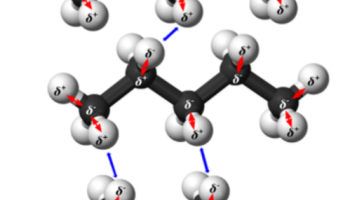
Considering the foundational role intermolecular forces (IMFs) have when trying to explain and understand chemical phenomena, it is likely that this topic is addressed, to various degrees, in the classrooms of many chemistry teachers.