Hello to the ChemEd Xchange community! My name is Phil Root and I am happy to join this community of educators, researchers, and learners this year as two-year college lead contributor.
Structure. Structure. Structure. As we all know as chemistry educators, structure is the 'go to' concept when trying to figure out why molecules do what molecules do.
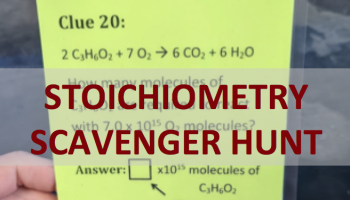
Many of us find stoichiometry to be what I like to think of as “the grind” unit in our chemistry courses. It feels like it never ends and the students can get very burned out with what can feel like repetitive practice. To address this, I designed a stoichiometry scavenger hunt to inject some fun into my stoichiometry unit.
Chemistry is difficult to learn, but it tends to be easier for students who spend more time on consistent problem-solving practice. Many chemistry instructors provide students with practice tests to help guide their problem-solving and prepare for more significant assessments.
We typically teach students to solve qualitative chemical equilibrium problems using an ICE table, where I, C, and E represent [Initial], [Change], and [Equilibrium] concentrations of each reactant and product in units of mol∙L–1.
At the risk of insulting you, I’ll provide an example, liberated from our class textbook:1
I am always looking for little activities to fill those "dead spaces" during the school day like passing times, when some students finish early, or when there is not enough time before the bell to start the next activity.
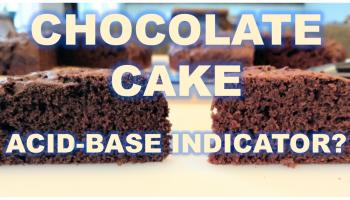
A debate broke out among students about red velvet cake during a recent chemistry class. We were studying natural acid-base indicators, and a student claimed that cocoa powder was an acid-base indicator.