Latest articles, blogs, and events from the chemical education community

Diet Coke and Mentos reaction pencil drawing
// Monday, January 16, 2023 Yvonne Clifford
The Diet Coke and Mentos reaction is a common experiment performed in many science classes. This year, I adapted my somewhat free-wheeling “wing it” approach to this experiment to instead have students research, test, and adapt as needed. The students’ goal is to get the highest possible geyser.

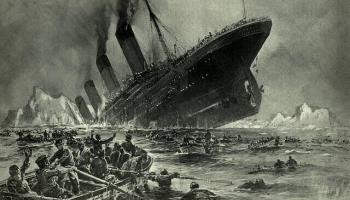
Titanic Sinking, engraving by Willy Stöwer
// Wednesday, January 4, 2023 Tom Kuntzleman
Various items (hot dogs, bananas, flowers, racquetballs, plastic cups) show properties akin to glass when chilled in liquid nitrogen.1-4 Objects such as racquetballs and plastics behave in this manner because they are made of polymers, and polymers can become cooled below what is known as the glass transition temperature (Tg) for t
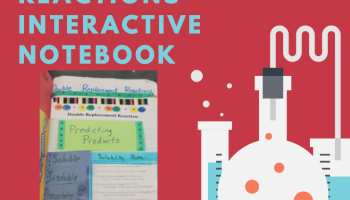
text: Reactions Interactive Notebook (preview image)
// Monday, January 2, 2023 Nora Walsh
Do we all have a unit at the end of the semester that seems to change in depth every year, based on how the rest of the semester has shaken out? In my course progression, that unit is Reactions.
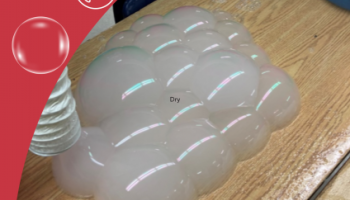
Text: The BCE (“Best Class EVER”) - Dry Ice Day, picture of multiple large dry ice bubbles
// Monday, December 19, 2022 Yvonne Clifford
That it was the “Best Class EVER” seems to be the common refrain every year by most every student for 30 years after the Dry Ice Day and this year was no exception! Dry Ice is an exciting chemical to bring to the chemistry classroom because it affords endless possibilities for fun. I have a few fun activities that I do each year with my grade
123 hybrid dimensions
// Saturday, November 12, 2022 Joseph Lomax
Sometimes the obvious is the most difficult to see. I was dealing with the topic of hybridization using my PowerPoints that you have seen from the Counting Orbitals II: Hybrids blogpost.  N.B: Our book uses steric number to describe the number of Valence Shell Electron Pairs
metals
// Saturday, November 12, 2022 root4asu
Thanks again for spending some time with me in this blog. Over the course of my posts, I will share some ideas (and hoping for feedback) about data-driven instruction in science. So what the heck do I mean when I say "data-driven"?  Or you might be asking, isn't all science instruction data-driven? When posting about data-driven