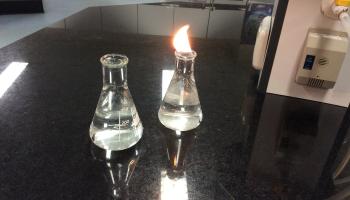
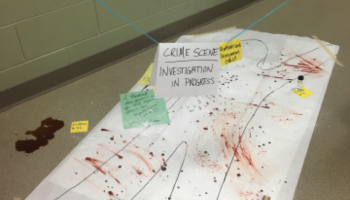
Tom Kuntzleman loves to share chemical mysteries1 and that inspired me to create a list of mysteries that are appropriate for the main topics covered in IB Chemistry.
After receiving positive feedback from Peter Mahaffy, the IUPAC project co-chair of Isotopes Matter, I decided to add an additional component to the original isotope assignment I posted.
The American Modeling Teachers Association has announced a new webinar series to be hosted by experts in the field. The webinars will include a variety of topics and are free to members. Space is limited to the first twenty-three teachers to sign up, but each session will be recorded and made available to wait-listed teachers. The webinars will be hosted on GoToMeeting.
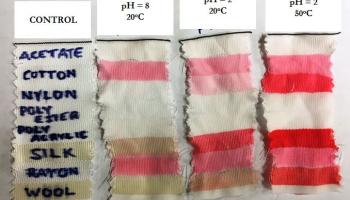
Each year, I try out some experiments that connect to the annual National Chemistry Week (NCW) theme. The theme for NCW this year is “Forensics: Solving Mysteries through Chemistry: Focusing on the chemistry of fibers and forensics”. Based on this description, I decided to spend some time experimenting with dyeing fibers.
If you are familiar with Modeling Instruction in physics, you know there are awesome assessments at the end of units called practicums. First, let me distinguish between practicals and practicums. The purpose of a lab practical typically is to assess a student’s ability to collect and analyze data.
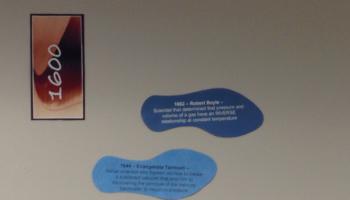
I know that many of you teach chemistry in a traditional order of topics -- atoms, bonding, reactions, stoichiometry, etc. However, I walked away from that order six years ago and started teaching in a chronological order when I began using Modeling Instruction in my classroom. During the second year of "walking in the footprints of the scient
ChemEd X recently made a Call for Contributions soliciting input regarding the big ideas being put forth by organizations like AP. The first thing that came to mind was a lab I modified that is centered around making connections between topics. Admittedly, this lab is not a "big idea" per se.
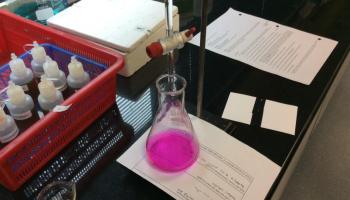
How do teachers encourage building individual lab skills in classes of over 30 students where labs are done in groups of five or six students? My science department collaborates daily, and we have been discussing this concern for a few years now. Many trials and errors have occurred. Here is where we stand today:
College Board offers an excellent online resource for teachers and students. It's not free, but my school district pays the bill. AP Insight provides curriculum outlines, teaching ideas and resources, student handouts, and digitally-graded assessments.