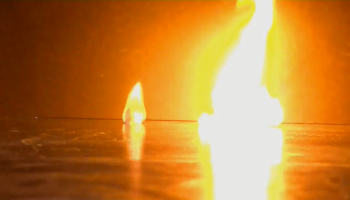
Cellulose nitrate (also known as nitrocellulose or guncotton) is a very flammable substance that is formed by reacting cellulose (also known as dietary fiber) with a mixture of concentrated nitric and sulfuric acids:
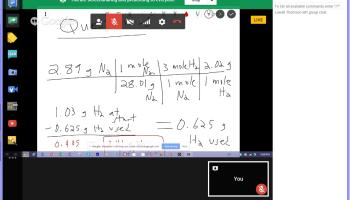
OBJECTIVE: To use the principles of stoichiometry to determine the theoretical yield of a simple reaction, measure the actual yield, and calculate the percent yield.
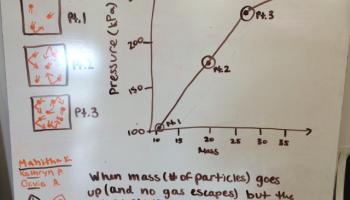
In this post I would like us to consider the ways teachers can help support and scaffold the process of making claims and drawing conclusions on the basis of evidence. Not only is this grounded in the scientific practices addressed in the Next Generation Sci
There have been many conversations within the Chemistry Education community surrounding the revisions to the AP curriculum. Twitter has been buzzing with instructors debating how to implement the changes, conferences and workshops have participants deconstructing the data from last year’s exam, and classroom
Hi everyone, I’ve spent much of my time over the past 10 years since moving from high school to college chemistry teaching thinking about whether I made the right choice in doing so.
My husband and I are both chemists, but in very different capacities. My focus is teaching while he is a lab supervisor. As such, we have very different discussions when we meet with colleagues. Usually. A few weeks ago we attended a meeting together and I felt right at home. The discussion topic was lab audits. This is when fello
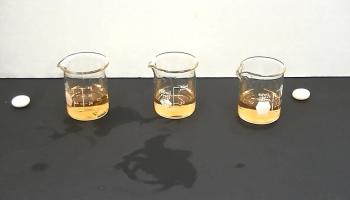
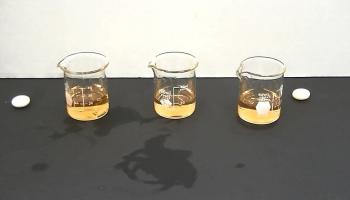
Congratulations to Grazyna Zreda who solved the Chemical Mystery of the Mentos candies! To conduct this trick, two white Mentos candies are placed in separate beakers that both contain universal indicator.
I'm looking for a reliable procedure for an undergraduate organic lab experiment: oxidation of diphenylmethanol to benzophenone. I am updating our lab experiments and was thinking about introducing phase transfer catalysis, linked to a 2-step Grignard synthesis ( bromobenzene --> phenylmagnesium bromide --> diphenylmethanol --> benzo
National Chemistry week 2014 will be upon us in a little over a month. As you may have heard in Erica Jacobsen’s posts, this year’s theme is “The Sweet Side of Chemistry – Candy.”
At the beginning of the school year, I find that I am especially cognitive about my own teaching and learning philosophy and what it means for a student to engage in my science class. I’m certainly aware of and attend to the content standards and preparing students for college.