For the past few years, we have started our organic unit with a card sorting activity meant to introduce students to the relationship between the structure of a molecule and its name.
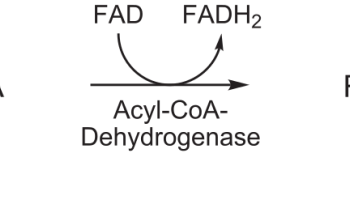
Welcome and thanks for reading. "A bear is wiser than a man because a man does not know how to live all winter without eating anything." Abenaki (People of the Dawn) saying. This is the third post describing the metabolic and nutritional chemistry of bear hibernation.
I came across an interesting Journal of Chemical Education1article that explains how it is possible to crosslink sodium alginate, leading to the formation of calcium alginate beads.
I’ve always been fascinated by advanced polymeric materials; it’s amazing how materials that are generally considered “plastics” have such stunning properties. I recently watched a couple of movies about Batman and it came out that some of his devices and protections are made of advanced polymers. In particular, the suit is almost entirely made of Kevlar.
Are you up for trying an ambitious experiment that combines archeology, instrumental analysis, and a search for patterns in data? Then this activity might fit the bill! I came up with this activity after slipping into one of Kevin Braun’s presentations at the BCCE 2016 in Colorado.
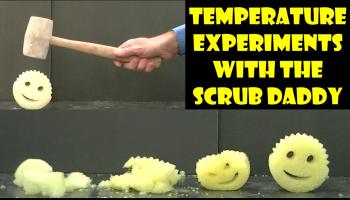
In a previous post, I learned that a Scrub Daddy sponge is mainly comprised of a polymer called polycaprolactone.1 I have continued to gather information on polycaprolactone and also to experiment with Scrub Daddy sponges.
I recently stumbled upon a free App for the iPad that I plan to introduce to my students during our upcoming organic unit. This is just the first topic that I am using the app for. There are many more uses for the App in a number of units.
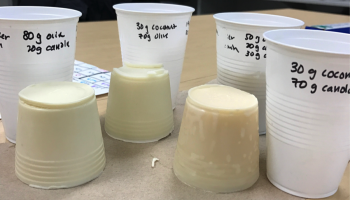
My first year teaching chemistry, I was looking for a soap-making lab or activity that I could run in my chemistry class with 25-30 students working at the same time.
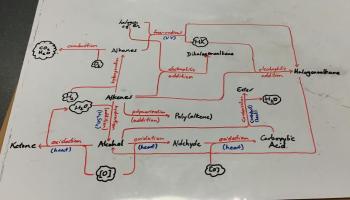
As a teacher, there are certain things I think I do well, and other areas where I think I can improve. One of these areas is helping students make connections between topics - especially at the end of a unit. Can I get students to see the proverbial "Big Picture"?