Dyes / Pigments

Picture Perfect Chemistry title preview image
// Saturday, October 19, 2024 Tom Kuntzleman
Josh Kenney, Melissa Hemling, and I just published an article in the October 2024 Journal of Chemical Education. The article describes inquiry-based activities that highlight the chemistry behind “No-Mess” picture-coloring books.1 Well, it turns out that our timing is impeccable.
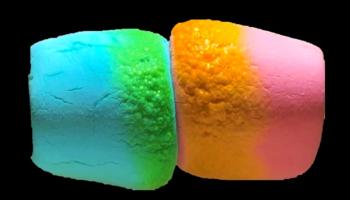
color changing marshmallows
// Wednesday, July 19, 2023 Tom Kuntzleman
Jet-Puffed color changing marshmallows are an interesting new product that is available on the shelves of grocery stores through the end of September.1 The color of these marshmallows changes when exposed to heat: the blue version turns green, while the pink version turns orange.
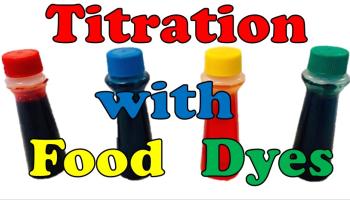
text over bottles of food dye: Titration with Food Dyes
// Sunday, November 28, 2021 Tom Kuntzleman
Recently, Anne Schmidt and I published an article together in the Journal of Chemical Education.1 The article outlines a titration activity that students can carry out at home using only store-bought items. The objective of the activity is to determine the amount of Mg(OH)2 in milk of magnesia.
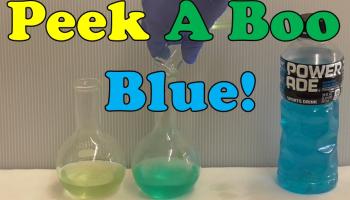
Blue Powerade turning green and yellow
// Wednesday, August 18, 2021 Tom Kuntzleman
In Chemical Mystery #18: Peek A Boo Blue,1 Blue Powerade is observed to change to green, and then to a yellow color. When the yellow-colored solution is disturbed by pouring it, it shifts back to green or blue-green.
white clover and anthoxanthin structure
// Saturday, July 3, 2021 Tom Kuntzleman
Recently as I was mowing my lawn, I noticed that some of the florets on white clover have a slight pink or purple color (Figure 1). Because anthocyanins often impart red, blue, and purple color to plants, fruits, and flowers,1,2 I wondered if these tiny pink florets in white clover contained anthocyanins.
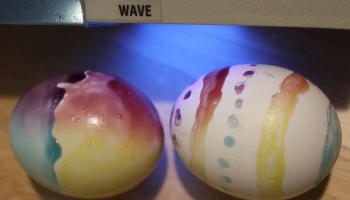
UV light shining on parts of Easter eggs bearing photochromic paint
// Friday, April 2, 2021 Dean Campbell
Spring has arrived and parts of the world are experiencing all sorts of color changes in the landscape as the days get longer, plants grow, and flowers bloom. There is a fantastic amount of amazing biochemistry at work in making those colors.
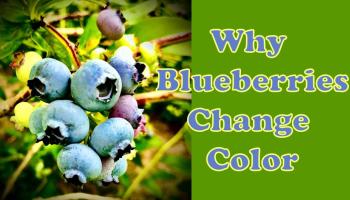
Blueberries with text: Why blueberries change color
// Sunday, January 26, 2020 Tom Kuntzleman
Berries are red, berries are blue…I’ve got a berry surprise for you! DESCRIPTION: I observe a red to blue color change when I rinse my bowl after eating frozen blueberries. Sounds like an acid-base reaction, doesn’t it? Read on to learn about the blueberry surprise!
Chemical Kinetics with a Smartphone
// Monday, November 25, 2019 Tom Kuntzleman
An article recently published in the Journal of Chemical Education by Ruth E. Nalliah1 describes a great experiment for studying chemical kinetics that is extremely simple to set up and carry out. The experiment involves monitoring the reaction between blue food dye and hydrogen peroxide in the presence of base: