Articles

ChemEd X articles address topics in chemical education ranging across the entire spectrum of the chemical sciences.

Articles are contributed by the community and are open for comments. Please see our Contribution Guidelines for information about contributing to ChemEd X. To contribute an article, use our contribution form to describe the nature of the article you intend to submit. A ChemEd X editor will respond with further instructions.

article
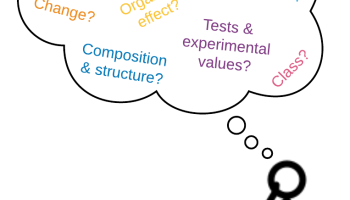
stick man with thought bubbles outlining all 8 ways from article
// Tuesday, April 14, 2020 ACCT Admin
Answering “What is this substance?” is part of nearly every problem that chemistry is used to solve. We identify substances by classifying them and by differentiating them from each other.
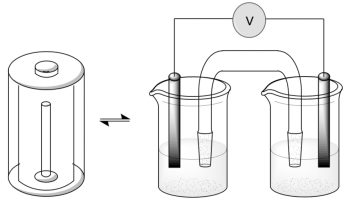
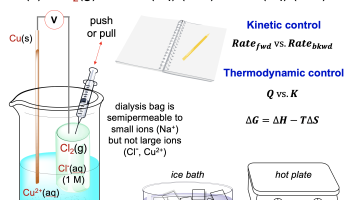
electrolysis set up using beakers
// Tuesday, April 14, 2020 ACCT Admin
“What are the effects of using and producing different matter types?” is a question of consequence evaluation, because chemistry depends on context and affects the human experience. The life cycles of materials, including production, consumption, and disposal, have benefits, costs, and risks in many dimensions.
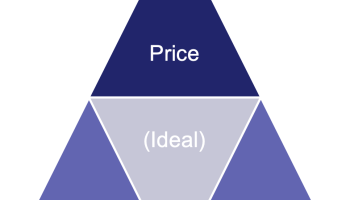
diagram in form of a triangle made up of 4 smaller triangles to outline factors used to control reactions
// Tuesday, April 14, 2020 ACCT Admin
“How can the effects be controlled”? Is a question that involves making choices about which internal and external parameters to modify to maximize benefits and minimize costs and risks.
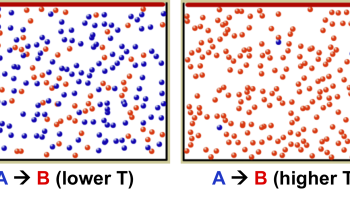
particulate level model of example of chemical change
// Tuesday, April 14, 2020 ACCT Admin
“How can chemical changes be controlled?” is a question that involves understanding how changes in conditions affect the relative stability of the species involved in a chemical process.
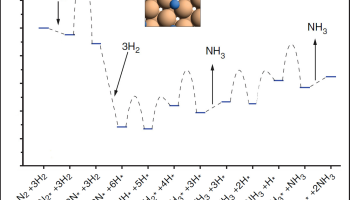
pictorial diagram showing how to perform reaction
// Tuesday, April 14, 2020 ACCT Admin
“What affects chemical change?” is a question of identification of internal and external variables that affect the extent and rate of chemical processes.
// Tuesday, April 14, 2020 ACCT Admin
“What interaction patterns are established?” is a question that involves selecting which classification systems and models are most relevant to understanding chemical processes for a particular purpose. Chemical reactions exhibit patterns that allow us to classify them in different groups to facilitate prediction, explanation, and control.
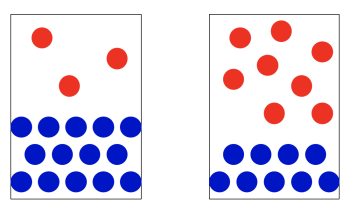
particulate level model of example chemical change
// Tuesday, April 14, 2020 ACCT Admin
“What determines the outcomes of chemical changes?” is a question of dynamic behavior and probability. When the particles that make up different substances interact with each other, their interactions may lead to a variety of structural changes (e..g., some atoms may change positions or separate from a molecule).
// Tuesday, April 14, 2020 ACCT Admin
“What drives chemical change?” is a question of why chemical processes happen. Chemical reactions occur to different extents and at different rates.
// Tuesday, April 14, 2020 ACCT Admin
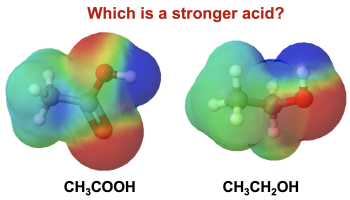
“How does structure influence reactivity?” is a question of connection between chemical structure and behavior. The specific ways in which the submicroscopic particles of matter interact with each other and are transformed into different chemical species depend on their atomic composition and molecular structure.