Latest articles, blogs, and events from the chemical education community

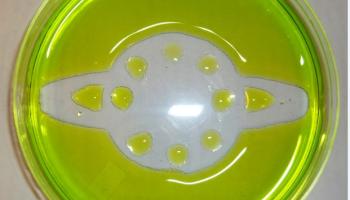
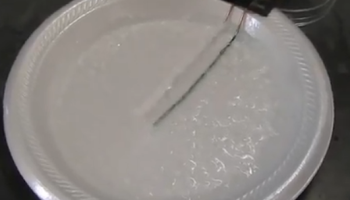
plastic plate with sodium polyacrylate solution and electrolytic set up
// Thursday, August 15, 2013 Tom Kuntzleman
Looking for an easy, hands-on experiment to use in your classroom at the beginning of the school year? In the June, 2013 issue of the Journal of Chemical Education, Isao Ikemoto and Kouichi Saitou describe a simple experiment to demonstrate the electrolytic dissolution of copper ions from a copper electrode.
// Saturday, July 27, 2013 Tom Kuntzleman
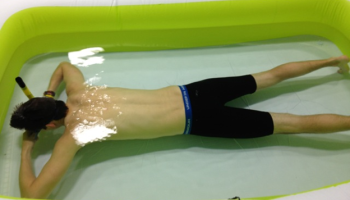
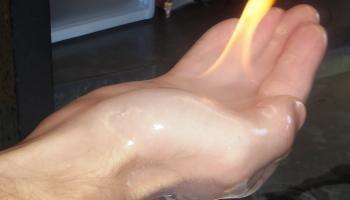
Some students of mine and I have published two papers1,2 in the Journal of Chemical Education that describe how stunt people use chemistry to safely set themselves ablaze while filming action movie scenes. The secret behind this stunt lies in the use of superabsorbent polymer (SAP) gels.
// Sunday, May 19, 2013 Tom Kuntzleman
I’d like to report on one of the end-of-year research projects that two of my general chemistry students completed during class this year. If you’d like read more about these end-of year research projects in general, click here.
// Monday, May 13, 2013 Tom Kuntzleman
Wow! Talk about an interesting idea! A very neat experiment, called “Hydroglyphics”, has been published by Philseok Kim, Jack Alvarenga, Joanna Aizenberg and Raymond Sleeper in the Journal of Chemical Education.
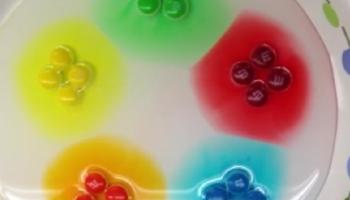
M&Ms in water on a plate
// Saturday, May 4, 2013 Tom Kuntzleman
I came across a simple, yet interesting experiment that was first described by Elizabeth Sumner Walter in 2001. She merely had students pour water into a dish containing some Gobstoppers candies.
// Tuesday, April 16, 2013 Doug Ragan
In her blog Stoichiometry Resources Deanna Cullen mentions using PhET simulations based out of the University of Colorado at Boulder.
// Sunday, April 7, 2013 Deanna Cullen
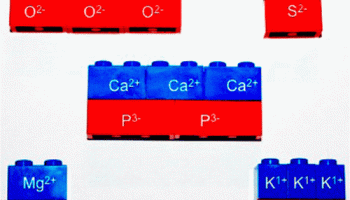
This activity is used as a reinforcement activity following my use of JCE Classroom Activity #113: An Interlocking Building Block Activity in Writing Formulas of Ionic Compounds. It could be used as a stand alone activity to support writing ionic formulas and names.
// Wednesday, March 13, 2013 Tom Kuntzleman
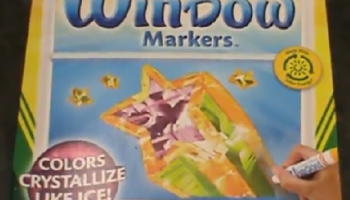
Have you seen the new Crayola Crystal Effects Window Markers? You can draw on windows with these markers. Better yet, you can use these markers to teach students some chemistry! After drawing on a window with these markers and waiting a little while, the marker ink appears to crystalize! Check out the video below to see how they work.
// Tuesday, February 26, 2013 Tom Kuntzleman
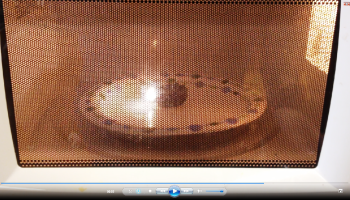
Have you ever cooked a marshmallow in a microwave? In case you are not familiar with this experiment, when a marshmallow is heated in a microwave, gases trapped in the marshmallow expand and escape. When the gas molecules escape from the marshmallow, they push against the marshmallow, causing it to expand. To see this experiment, play the video below.
ChemAppLite
// Friday, February 8, 2013 Doug Ragan
Allow me to introduce myself, my name is Doug Ragan and I have been a high school chemistry teacher for fourteen years.  Three years ago, I was approached by my high school principal and the conversation went like this, Principal:  "You are one lucky guy." Me:  "Really, why?"
// Saturday, February 2, 2013 Tom Kuntzleman
You may have read Sarah Kong's recent blog post on inquiry on this site. I thought I would give a description of one way I incorporate inquiry learning into one of the chemistry courses I teach. 
Trendsetter Lab
// Wednesday, October 10, 2012 Deanna Cullen
Students will proceed through a pre-lab engagement activity, organize element cards based on similarities & trends, discuss trends with the class and then produce a periodic table that includes the trends discussed within the lab. The teacher will check for student understanding at specific points as groups work together.