Authors: Katherine A. Bussey, Annie R. Cavalier, Samantha A. Moorhead, Erin F. Reinhart, and Kayode D. Oshin.Department of Chemistry and Physics, Saint Mary’s College, Notre Dame, Indiana 5 46556, United States
The “Elephant Toothpaste” experiment is a very popular, albeit messy chemistry demonstration. To carry out this experiment, place a 250 mL graduated cylinder on something that you wouldn’t mind getting messy.
Haber is a name that is heard often in chemistry class because of the Haber process of producing ammonia which earned Fritz Haber a Nobel Prize. Students may not always hear about the other parts of Haber's career and life.
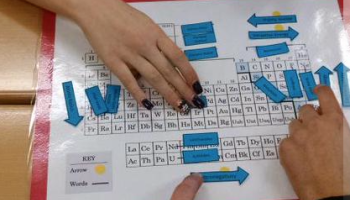
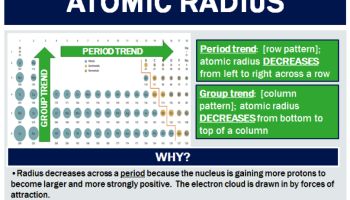
During our “Periodic Table and Periodicity" unit, we take about 3 days to learn the content and another 3-4 days to practice the content (more for Chemistry 1, less for Honors). One way that I have my students review the content is by playing a board game that I recreated from an NSTA conference a few years ago.
In this age of scientific inquiry, molecular modeling, digital classrooms, and differentiation, I felt downright guilty about any teacher-centered time. My classroom is flipped after all. I’m not supposed to be lecturing, right?
A fun experiment to conduct when discussing phase diagrams is the melting of solid carbon dioxide (dry ice). To perform this experiment, place small pieces of dry ice (carbon dioxide) in a plastic pipette, seal with a pair of pliers, and position the bulb of the sealed pipette in a beaker of water. Then sit back and watch what happens!
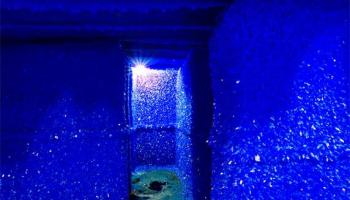
Last year I came across a link on Twitter regarding an art installation by Roger Hiorns in England titled “Seizure.” Some of you may have seen it too – a condemned flat in London was essentially sealed off and filled with more than 75,000 L of supersaturated copper sulfate solution.
I teach AP chemistry and general chemistry at Hudsonville High School in the Grand Rapids area. I applied for the HACH grant last spring and was very excited when I was one of the recipients that was accepted. The process of applying is very easy.
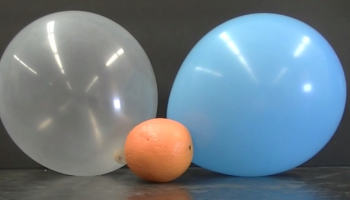
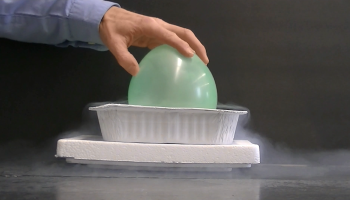
Did any of you guess what was going on in Chemical Mystery #4: The Case of the Misbehaving Balloon? In this experiment, several balloons were placed in liquid nitrogen. Most of these balloons shrunk tremendously – to almost zero volume – when cooled