This year was so atypical for most educators; teaching in different formats, some face to face, some hybrid, some completely virtual. My school typically offers honors, a regular level, and a more supported level chemistry track for students. Due to the constraints of scheduling in a Covid climate, this past year students were all grouped in one class.
When the COVID pandemic of 2020/2021is eventually eradicated and more colleges resume in-person laboratory instruction again, many instructors will face the daunting reality that students entering upper-level chemistry classes may have little or no actual hands-on college lab experience having completed their general chemistry laboratory sequence throug
A case study is a guided inquiry activity that embeds problem-solving within a simulated real-world context. Case studies tend to be more challenging than traditional word problems because they are presented in a longer form, commonly as a story.
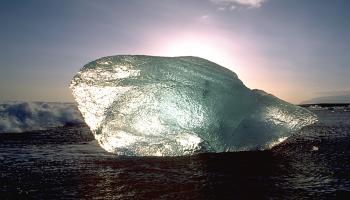
The most common examples of freezing point depression referenced in GChem 1 or Introductory Chemistry (a survey course for non-majors or requirement/recommendation for allied health students such as nursing or radiology) are liquid automobile antifreeze, or road salting during winter.
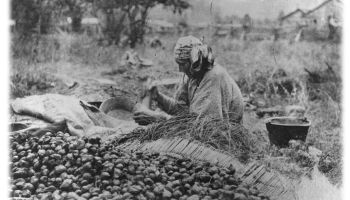
On a recent trip to Wyoming I eagerly paid a visit to Fort Bridger State Historic Park. In the main museum (the former barracks) an interpretive timeline display summarizing the history of (dishonored and broken) treaties and chronic conflict between the US government and western Native Americans captivated me.
Last summer, I attended a workshop from my college offered through the Center for Career Connections for faculty, staff, and administrators. The workshop was about storytelling.
The landing of the Perseverance rover and the flights of the Ingenuity helicopter on Mars1,2 have again turned people’s attention to that red planet and to space exploration in general.
I was mesmerized the first time I saw the quantum levitation (also known as quantum locking) experiment, in which a disk containing a superconductor hovers above some magnets. The superconductor can even glide freely over a track of magnets – even upside down (VIDEO 1).