Latest articles, blogs, and events from the chemical education community

// Tuesday, February 11, 2025 Shifra Yonis
In the January 2025 APTeach presentation, we explored how to address common student misconceptions related to chemical equilibrium as well as ideas for engaging activities and labs to strengthen student comprehension. View the video summary and the presentation slidedeck.
// Monday, January 13, 2025 Shifra Yonis
The December 2024 APTeach presentation explored common misconceptions and student stumbles in Thermodynamics. View the video summary and the presentation slidedeck.
Teaching metric system with climate change
// Sunday, January 12, 2025 Tom Kuntzleman
There’s some recently published research on climate change1 that you can easily incorporate into your next lesson on metric conversions and unit analysis. The article gives a report on ocean heat content (OHC) measurements.
preview image: text: "Passing the Torch" and image of torch
// Saturday, January 11, 2025 Deanna Cullen
Dear Colleagues and Readers, As we step into 2025, I find myself updating my professional tagline to include "former" ChemEd X high school editor. This change comes with mixed emotions, as it was not an easy decision to step away from a role that has been such a significant and rewarding part of my career.
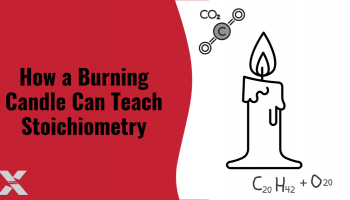
How Burning Candle can teach stoichiometry preview image with candle & flame
// Friday, January 10, 2025 Todd Hollis
In 1848 Michael Faraday presented his Christmas Lectures entitled “Chemical History of a Candle” (Hammack and Decoste, 2016).
preview image with snowflakes and text: "The Diamonds of Winter"
// Thursday, January 9, 2025 Tom Kuntzleman
Would you like to take a walk with me through the chemical winter wonderland of snowflakes? Well, we chemists know that the stunning six-sided symmetry of snowflakes (Figure 1) results from repeated arrangement of water molecules into a hexagonal crystal structure (Figure 2).
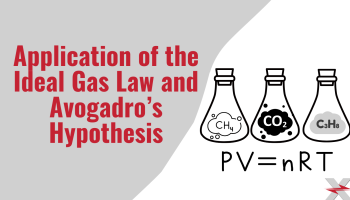
preview image: Application of the Ideal Gas Law and Avogadro's Hypothesis with 3 flasks
// Monday, December 30, 2024 Michael Jansen
I teach the Gas Laws as the final topic in students’ first Chemistry course.1 The KMT, Avogadro’s Hypothesis, the Combined Gas Law, and the Ideal Gas Law take three 70-minute class periods at most.
title preview image text over molecules: Apply to the 2025 VisChem Express Institute
// Friday, December 13, 2024 Ellen Yezierski
In this one-day, remotely delivered, immersive, and interactive mini-institute, participants will learn how to use the VisChem Approach.
// Tuesday, December 10, 2024 Shifra Yonis
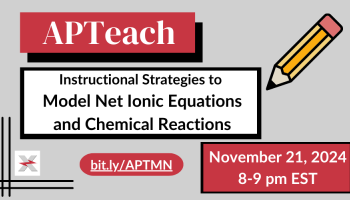
The November 2024 APTeach presentation outlined instructional strategies to model net ionic equations and chemical reactions using particulate models, chemical symbols, and observations to support students’ understanding of how chemicals react and interact at the particle level.
text: "Planning a Bonding Unit with resources from ChemEd X" over woman writing at desk
// Monday, November 25, 2024 Nora Walsh
If it's time for you to do some planning for a unit on bonding and/or nomenclature, this post if for you. To help with the planning of this unit, I have pulled together a list of posts to provide a bonding and nomenclature springboard. There is much more that can be found, but think of this as a really good starting point.
Storylines: What are they and how do they work? preview image
// Saturday, November 23, 2024 Shifra Yonis
Storylines seem to be the new buzzword in chemistry education. Biology teachers have had access to storyline curriculums since the early 2000s, but chemistry (and physics) have only had wholly developed (and widely available) storyline curricula since 2019. Since then, the number of free, widely available curriculums has grown.