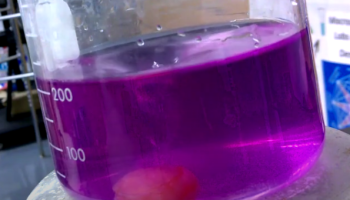
An experiment that has always fascinated me is observing what happens when CO2 is bubbled into limewater (which is a saturated solution of calcium hydroxide).1-2 This experiment can be carried out by blowing bubbles of exhaled breath (which contains roughly 4% CO2)3 through a straw into limewater.
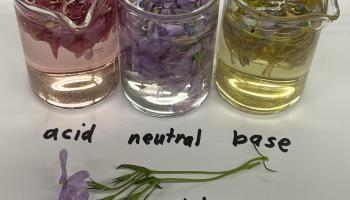
Acid base chemistry is always a popular topic. The struggle with this topic is that there is always so much a teacher can demonstrate. Demonstrations are great but it is tough at the end of the year when students are tired and time is precious. I did a couple of these demonstrations that students seemed to enjoy. I like these demonst
Well, we’ve reached the end of the line – this is my last interactive notebook unit to share. I hope that you’ve found them helpful. Don’t worry – I’m not done sharing about my interactive notebooking journey because for me, it truly is a journey.
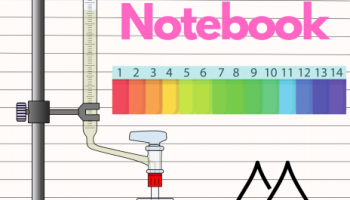
We’re coming close to the end of our Interactive Notebooking journey – this is my second to last unit – Acids and Bases. As a continuing theme from earlier, I am moving to focus more on particle view diagrams in combination with symbolic representations and macroscopic observations.
As we approach Graduation season, I’ve been considering all the new teachers we will have joining our schools in the very near future, and thinking back to my first year as a Biology and Chemistry teacher in 1997. There are many skills and techniques that may not be formally taught to preservice teachers, no matter if they go through alternative ce
Short, vertical format videos are all the rage right now. On average, young people spend five hours on apps like TikTok, Instagram, Snapchat, and YouTube, swiping through endless hours of content.
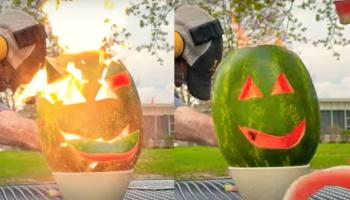
The chemistry demonstration called the self-carving pumpkin1 is a blast (no pun intended) to conduct around Halloween. To prepare this experiment, a jack-o-lantern face is carved into a pumpkin, but the eye, nose, and mouth pieces are saved. These pieces are then gently placed back into the holes in the pumpkin.