Chemical Reactions is a topic that unites a number of skills from formula writing, balancing equations, predicting products and solubility to name a few.
Classroom demonstrations have long been an approach used to convey information in chemistry courses. The intent is to help student learning by providing physical examples to illustrate concepts described in class.
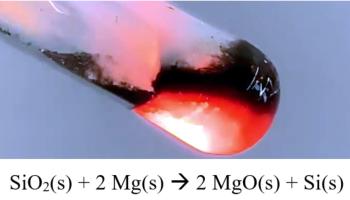
Introduction: Did you know that sand can be converted into a mixture of gases that spontaneously ignites in air? The procedures involved are relatively simple to perform, spectacular to observe, and relate to a rich assortment of chemical principles.
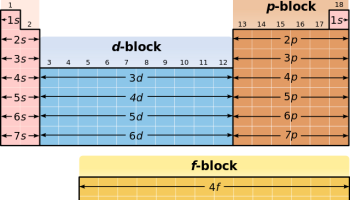
Each year I am truly excited when my honors classes are ready to learn the Quantum Mechanical Model (QMM) because this lesson was a crucial reason why I decided to become a chemistry major when I was in high school. I have always been in love with the periodicity of the elements and how clean and organized it all seems.
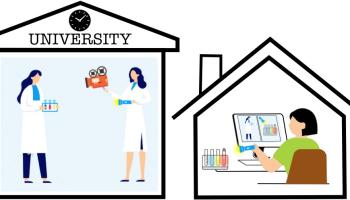
Introduction: Starting from 2018-2019, the third year of the Bachelor of Science in Primary Teacher Education at the University of Bologna underwent a strategic reorganization of the study plan.
Gas Laws are an essential and easily accessible area of chemistry to understand. They can be an excellent foothold into the inner workings of chemistry.
After taking two courses with American Modeling Teachers Association (AMTA) I gained more insight and appreciation for evidence driven teaching. In the AMTA curriculum students are provided ionization energy values to help them construct Bohr diagrams and explain why multiple energy levels are required in the Bohr model.
Iain A. Smellie*, Iain L. J. Patterson*, Isobel Everest***University of St Andrews School of Chemistry, North Haugh, St Andrews, United Kingdom, **Bedford Girls’ School, Bedford, United Kingdom
Recently, Anne Schmidt and I published an article together in the Journal of Chemical Education.1 The article outlines a titration activity that students can carry out at home using only store-bought items. The objective of the activity is to determine the amount of Mg(OH)2 in milk of magnesia.