HS-PS4-4: Frequencies of Electromagnetic Radiation

Students who demonstrate understanding can Evaluate the validity and reliability of claims in published materials of the effects that different frequencies of electromagnetic radiation have when absorbed by matter.*

*More information about all DCI for HS-PS4 can be found at https://www.nextgenscience.org/topic-arrangement/hswaves-and-electromagnetic-radiation.

Summary

Students who demonstrate understanding can Evaluate the validity and reliability of claims in published materials of the effects that different frequencies of electromagnetic radiation have when absorbed by matter. 

Clarification

Emphasis is on the idea that photons associated with different frequencies of light have different energies, and the damage to living tissue from electromagnetic radiation depends on the energy of the radiation. Examples of published materials could include trade books, magazines, web resources, videos, and other passages that may reflect bias.

Assessment Boundary

Assessment is limited to qualitative descriptions.
Synonyms
frequencies of electromagnetic radiation
PS4-4
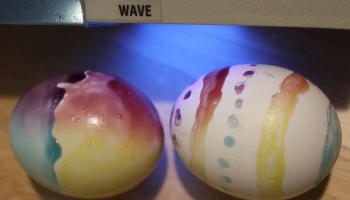
UV light shining on parts of Easter eggs bearing photochromic paint
// Friday, April 2, 2021 Dean Campbell
Spring has arrived and parts of the world are experiencing all sorts of color changes in the landscape as the days get longer, plants grow, and flowers bloom. There is a fantastic amount of amazing biochemistry at work in making those colors.
Cool Earth, Hot Earth
// Tuesday, March 26, 2019 Tom Kuntzleman
With Earth Day approaching, you might want to try out the experiment published in the Journal of Chemical Education.1 It outlines a fantastic way to demonstrate the warming influence that atmospheric CO2 has on our planet. I followed the procedure and offer a video of the results.2
Blue Morpho Butterfly Wings
// Monday, January 28, 2019 Tom Kuntzleman
The June, 2018 issue of the Journal of Chemical Education contains an article tha
// Sunday, February 4, 2018 Tom Kuntzleman
For a few years now, I have been using a simple laboratory experiment that allows students to calculate the wavelength of various colors of light. I use the activity near the beginning of the semester, when students are first learning about measurement, unit conversions, and significant figures.