Online Teaching

Content useful for instructors teaching online whether full time or in a hybrid setting.

materials for antacid kitchen chemistry
// Wednesday, October 5, 2022 Michael Garoutte
This is a procedure for a titration experiment suitable for use both at home and in supervised high school or first-year college laboratory settings. Other than an inexpensive pH meter, all materials should be easily available for students to purchase at local stores.
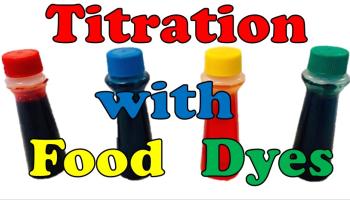
text over bottles of food dye: Titration with Food Dyes
// Sunday, November 28, 2021 Tom Kuntzleman
Recently, Anne Schmidt and I published an article together in the Journal of Chemical Education.1 The article outlines a titration activity that students can carry out at home using only store-bought items. The objective of the activity is to determine the amount of Mg(OH)2 in milk of magnesia.
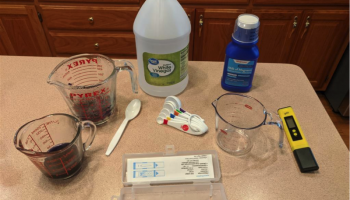
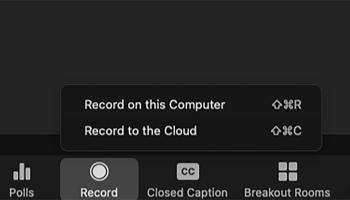
image of zoom screen with option for recording session to cloud or on computer
// Friday, October 8, 2021 Melanie Harvey
FERPA allows me to record class meetings and share them with students registered in that section of the course, but that doesn't mean I should. At this point, most of us have done some remote teaching using Zoom or something similar.
male student looking at laptop screen
// Wednesday, May 5, 2021 Michael Jansen
​Good day, gentle readers: I’ll be honest. In spite of the Pollyanna-ish pronouncements of education gurus—and the shareholders of Zoom—online Chemistry teaching is far less than ideal. I get it: we’re doing our best inside a set of rules that none of us asked for. What can we do? A lot.
chemistry online worth it
// Saturday, April 3, 2021 Francisco Villa
Back when I started teaching college courses (late 2000s/early 2010s) I was pretty involved in the development of biology and chemistry content for introductory sciences courses that could be used in online, hybrid, and in-person modalities.
text: "Collisions - Chemistry Learning Games for High School and College Students"
// Monday, March 29, 2021 Deanna Cullen
Collisions is a system of eight digital games, grounded in the rules of chemistry, that can be used to introduce, teach, and review more than 50 key concepts in your chemistry classroom. Collisions makes abstract concepts tangible by allowing students to visualize and manipulate the building blocks of matter, while providing a safe space to ma