Blogs

ChemEd X contributors offer their ideas and opinions on a broad spectrum of topics pertaining to chemical education.

Blogs at ChemEd X reflect the opinions of the contributors and are open to comments. Only selected contributors blog at ChemEd X. If you would like to blog regularly at ChemEd X, please use our Contribution form to request an invitation to do so from one of our editors.

blog
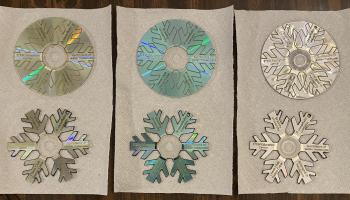
CDs cut and engraved by laser into snowflake shapes
// Wednesday, March 8, 2023 Dean Campbell
by Dean J. Campbell*, Thomas Kahila*, Kaitlyn Walls*, Q Ott* *Bradley University, Peoria, Illinois
// Tuesday, February 28, 2023 Tom Kuntzleman
On February 3, 2023, a train derailed in the town of East Palestine, Ohio.1-2 Five of the train cars were carrying vinyl chloride (Figure 1), a compound that is mostly used to make PVC.
// Monday, February 27, 2023 Josh Kenney
In a classic demonstration of energy conservation, smashing two large steel ball bearings generates sufficient heat to burn a hole through a piece of paper.
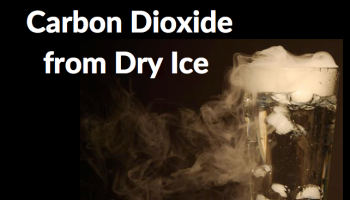
text: Obtaining Liquid Carbon Dioxide from Dry Ice
// Tuesday, February 21, 2023 Michael Jansen
I enjoyed reading Yvonne Clifford’s piece, The Diet Coke And Mentos Reaction – Having A Literal Blast!, regarding the sublimation of dry ice, CO2(s).
// Tuesday, January 24, 2023 Josh Kenney
Flipped and blended classrooms integrate online instructional videos with traditional classroom activities. Sometimes, students watch videos for homework before engaging more deeply with the content during class. YouTube, which launched in 2005, is the most common video sharing app because teachers can create and upload custom instructional videos.
Titanic Sinking, engraving by Willy Stöwer
// Wednesday, January 4, 2023 Tom Kuntzleman
Various items (hot dogs, bananas, flowers, racquetballs, plastic cups) show properties akin to glass when chilled in liquid nitrogen.1-4 Objects such as racquetballs and plastics behave in this manner because they are made of polymers, and polymers can become cooled below what is known as the glass transition temperature (Tg) for t