The Empirical Formula of Magnesium Oxide Lab: A Successful Failure, Next Steps—and an Important Lesson
PART 1: Why this lab is no good
For many years I was troubled by this commonly used, straight-forward, interesting-to-carry-out, and engaging experiment1. This analytical, mole concept-based activity can be found in pretty much any chemistry lab manual, from Grade 11 to first-year university.
Procedure-wise, students set out to quantitatively combust a piece of magnesium ribbon in a covered crucible, over a rip-roaring Bunsen burner flame to produce magnesium oxide. A typical apparatus is illustrated in figure 12. During the “cooking”, after the bottom of the crucible becomes red-hot, I visit each student-station, carefully admitting a small quantity of air to the crucible as required for combustion, while simultaneously allowing minimal loss of smoke, which is, after all, magnesium oxide.
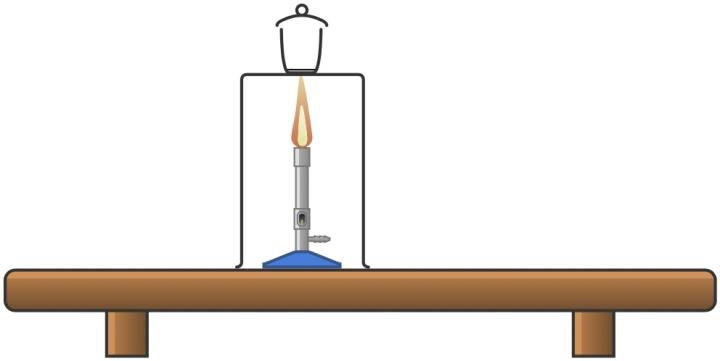
Figure 1: The apparatus for the determination of the empirical (simplest) formula of magnesium oxide (image created using Chemix).
Some lab manuals talk about only the reaction of magnesium with oxygen3:
Mg(s) + O2(g) à MgxOy(s) (1)
More advanced instructions discuss the reaction of magnesium with N2(g), which comprises 78% (v/v) of the earth’s atmosphere4, to produce magnesium nitride, and the subsequent decomposition of Mg3N2 to give magnesium oxide5:
Mg(s) + N2(g) + O2(g) à MgO(s) + Mg3N2(s) (2)
MgO(s) + Mg3N2(g) + H2O(l) à MgO(s) + Mg(OH)2(s) + NH3(g) (3)
MgO(s) + Mg(OH)2(s) à MgxOy(s) + H2O(g) (4)
No matter how I’ve had students analyze their experimental data, results were invariably lack-lustre, with just enough decent values for the simplest formula of magnesium oxide to keep this activity on the roster.
Video 1: Reaction of Magnesium with Oxygen (derived from Jerrold J Jacobsen and John W. Moore. Chemistry Comes Alive! Vol. 3: Abstract of Special Issue 23 on CD ROM. Journal of Chemical Education 1997 74 (5), p 607-608. DOI: 10.1021/ed074p607), ChemEd Xchange on Vimeo. (accessed 8/12/21)
Several years ago, I was hit by multiple (figurative) lightning bolts:
As part of a pre-lab discussion/demonstration, I burn a piece of magnesium. Students conclude that both the pure white smoke and the pure white ash are magnesium oxide6. This shows the importance of not allowing smoke to escape during the combustion. We’re collecting magnesium oxide quantitatively, after all.
a) The “magnesium oxide” produced in the crucible is not pure white—it is grey7. The typical procedure generally notes that the formation of the grey powdery substance signals that the reaction is complete and directs students to cool and weigh the crucible.
b) Magnesium reacts with carbon dioxide to produce carbon and magnesium oxide8:
2 Mg(s) + CO2(g) à 2 MgO(s) + C(s) (5)
The Mg in the crucible is bathed in CO2(g) from the combustion products of methane, used to fuel the Bunsen burner.
CH4(g) + 2 O2(g) à CO2(g) + 2 HOH(g)9 (6)
This explains the grey product—it’s a mixture of MgO and C.
Video 2: Reaction of Magnesium with Carbon Dioxide (derived from Jerrold J Jacobsen and John W. Moore. Chemistry Comes Alive! Vol. 3: Abstract of Special Issue 23 on CD ROM. Journal of Chemical Education 1997 74 (5), p 607-608. DOI: 10.1021/ed074p607), ChemEd Xchange on Vimeo. (accessed 8/12/21)
See reaction 5 in the Chemistry Comes Alive #3 video from our ChemEd X video collection above10. Reaction (5) is also beautifully demonstrated by Sir Professor Doctor Martyn Poliakoff’s people in the Periodic Table of Videos clip on Carbon Dioxide (Part II)11. The simultaneous production of magnesium oxide and carbon is apparent when magnesium is burned in a dry ice “sandwich”12. In a less spectacular, but equally effective demonstration, I simply lower a piece of burning magnesium into a 2-L beaker full of CO2(g)13. After the reaction, white MgO and black C are apparent.
As for Mg3N2, it is a greenish-yellow powder14, which I have not, in over 30 years, observed with the naked eye in the reaction products. To be fair, it’s not a vibrant color; perhaps there isn’t enough of it to see.
To sum-up, this activity does not produce what it claims to produce. The empirically observed result—MgO and C—does not line-up with the expected product—pure MgO.
PART 2: Use this experiment as a successful failure
The fact that the “MgO” produced (grey) does not resemble pure MgO (white) is an eye-opener. I’m not proud to say that it took me over 25 years to interpret the plain-as-day empirical evidence. It was, after all, in the lab manual—it had to be true.
In the “Make Lemonade from Lemons” department, I continue to use this experiment—as a successful failure. It is an important teachable moment; I milk it for everything it’s worth.
This is Chemistry, for Pete’s sake—AN EMPIRICAL SCIENCE!!!!!
A favourite post-lab question, which I use as a “soft introduction”15 to stoichiometry, asks students to calculate the total mass of MgO and C produced when 1.00 g of Mg reacts 50/50 by mass in each of reactions (1) and (5).
PART 3: And then . . .
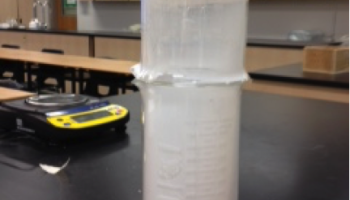
a) I don’t stop there. I ask students how we could modify this experiment. After some back-and-forth, I reveal a combustion chamber (figure 2) that I built by taping two 2-L beakers together, with the “lips” of the beaker co-incident, to create a small opening.
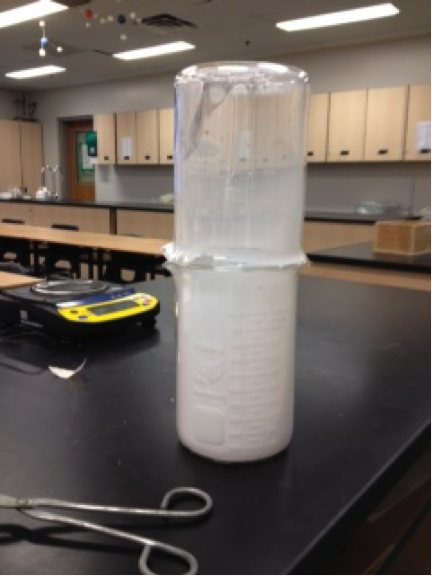
Figure 2: The magnesium combustion chamber
I don’t discard the MgO and C from the failed experiment. In a future experiment, I have students gravimetrically analyze the MgO/C mixture. Students can determine the % C in the mixture of MgO and C.
I ignite a weighed piece of Magnesium, which I hold with tongs, and insert it, without delay, into the weighed, empty combustion chamber. If all goes well—inserting the burning magnesium into the opening is tricky—we wait for the magnesium oxide “smoke” to settle before recording the final mass of the combustion chamber.
If I’m not able to accomplish this task after a few attempts, I simple refer my students to the data in Table 1.
Table 1. Reaction of Mg(s) + O2(g) à MgxOy(s)

In this experiment, it is obvious that the pure white product is indeed magnesium oxide; data support the formula of MgO.
b) I don’t discard the MgO and C from the failed experiment. In a future experiment, I have students gravimetrically analyze the MgO/C mixture. When excess 2.0 mol/L HCl(aq) is added, the MgO reacts as follows:
MgO(s) + HCl(aq) à MgCl2(aq) + HOH(l) (7)
Mercifully, C does not react, and so after filtering off the aqueous magnesium chloride, and drying and washing, the C collected in the filter paper can be weighed. This can be used to determine the % C in the mixture of MgO and C.
PART 4: Next Steps
After this experiment and the post-lab work, I have students carry out a separate determination of the empirical formula of zinc chloride, according to the reaction:
Zn(s) + 2 HCl(aq) à ZnCl2(aq) + H2(g) (8)
In the fumehood, students react a weighed piece of clean zinc with a slight excess of concentrated (12 mol/L) HCl(aq) in a weighed beaker atop a hot plate. The H2(g) and unreacted HCl(aq) exit via the chimney. Students simply weigh the dried product, which is ZnCl2. Student results support the accepted formula.
This experiment may not be appropriate for your students: At Crescent School we have plenty of fumehood space; students wear lab aprons and nitrile gloves. I’m okay with letting them use a wee bit of 12 mol/L HCl. If that’s not an option for you, a teacher demonstration might be a good idea.
PART 5: The most important part
It is the zenith of irony when an empirical formula experiment is empirically bogus.
This may sound like it belongs in the “Department of Redundancy Department”, but a post-lab discussion MUST include the essential ingredient of science: EMPIRICAL EVIDENCE.
Now, more than ever, students—everyone—must be made aware:
Just because an experiment “looks good” or is widely accepted doesn’t make it good.
Just because an experiment “looks good” doesn’t mean it’s carried out properly.
And just because an experiment “looks good” doesn’t mean that it is interpreted properly.
We must teach the importance of asking questions. Questions are more important than answers. I want my students to question everything I do or say. Sometimes—okay, many times—I don’t know the answer; sometimes the explanation will take too long; and sometimes the answer is “because I said so”. The point is—they need to ASK QUESTIONS16.
May peace be with you.
- https://uwaterloo.ca/chem13-news-magazine/april-2015/feature/vive-scien…
- https://edu.rsc.org/experiments/the-change-in-mass-when-magnesium-burns…
- McGraw-Hill Ryerson chemistry text, 2011
- https://en.wikipedia.org/wiki/Nitrogen
- https://www.webassign.net/question_assets/ucscgencheml1/lab_2/manual.ht…
- https://en.wikipedia.org/wiki/Magnesium_oxide
- http://www.dynamicscience.com.au/tester/solutions1/chemistry/moleandemp…
- Yehoshua Sivan, “Burning magnesium in a Bunsen blame and other flame experiments”, Chem 13 News, February 2015, pages 12 – 13
- One of my many quirks as a Chemistry teacher is to write the formula for water as HOH, rather than H2O, to emphasize the bonding order of the atoms. I do not compel my students to adopt this irregular approach. (Be thankful you don’t live with me . . . )
- https://vimeo.com/419694043
- https://www.youtube.com/watch?v=0dSMzg0UPPo&t=332s
- https://pubs.acs.org/doi/pdf/10.1021/ed055p450.2
- I prepare the CO2 by reacting HCl(aq) with NaHCO3(s)
- https://en.wikipedia.org/wiki/Magnesium_nitride
- I’m a big fan of “foreshadowing” or “soft launching” concepts. See https://uwaterloo.ca/chem13-news-magazine/february-2017/pedagogy-opinio…
- An upcoming test question will present some information: a table or a graph or something. Students will be required to ask an intelligent question.

Michael Jansen
Academic background: BSc (Chemistry), University of Toronto; MSc (Physical Organic Chemistry), Concordia University, Montreal; BEd/OCT, University of Toronto.
Comments
4Use crown bottle tops! And make the experiment work
Michael
Go to https://microchemuk.weebly.com/3-blog-is-this-supposed-to-happen/it-is-… and see how you can get this experiment to work every time(as reactions should). It is so easy and enjoy collecting the bottle tops. There is an old CLEAPS video here Finding the formula of magnesium oxide. If you have not got the small pipe clay triangles, then place the bottle tops on the gauze section of the gauze, not the ceramic centre.
As well as MgO there is Mg₃N₂. To note its presence, place the product, in a vial, add hot water, and put moist red litmus over the top and it goes blue with the ammonia Note I only use 0.12 to 0.2g of magnesium ribbon, coiled around a pencil so it fits in the bottle top sandwich.
Cheers
Bob Worley in the UK.
Share Your Thoughts