Articles

ChemEd X articles address topics in chemical education ranging across the entire spectrum of the chemical sciences.

Articles are contributed by the community and are open for comments. Please see our Contribution Guidelines for information about contributing to ChemEd X. To contribute an article, use our contribution form to describe the nature of the article you intend to submit. A ChemEd X editor will respond with further instructions.

article

head shots of Werner & Jorgensen
// Tuesday, November 24, 2020 mamorgan@me.com
I have long felt that teaching directly to the test is not the best way to approach education. Therefore I often include topics in my AP Chemistry classes that are not directly tested on the exam. More complex topics often help my students with building their grasp of fundamental ideas and leads to a better ability to understand simple and complex theories.
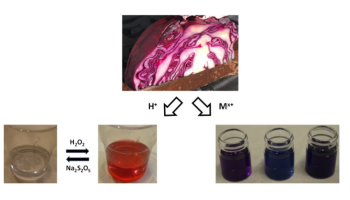
cabbage juice indicator use
// Wednesday, September 2, 2020 Iain Smellie
Co-Authored by Iain A. Smellie*, Iain L. J. Patterson*, Adrian Allan**, Bob Worley***    *University of St Andrews, School of Chemistry, North Haugh, St Andrews, United Kingdom, **Dornoch Academy, Evelix Road, Dornoch, Sutherland, United Kingdom, ***CLEAPSS, Brunel Science Park, Uxbridge, United Kingdom
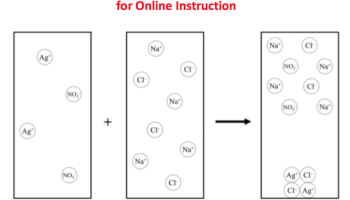
particle diagrams of reactants and products
// Monday, August 31, 2020 Michael Farabaugh
You don't have to be a Modeler (i.e., a teacher who practices Modeling Instruction) to appreciate the utility of particle diagrams. Many chemistry teachers use models and diagrams to help students describe how matter behaves at the particle level.
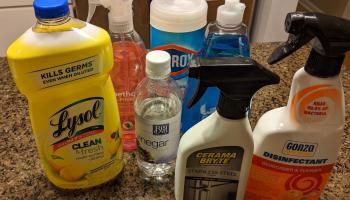
assorted containers of household cleaning products
// Wednesday, August 12, 2020 ACCT Admin
In “Comparing household chemicals” students discover the effects of using different types of household chemicals and determine if they are really all so different. This formative assessment targets the question “What are the effects of using and producing different matter types?” This is important because students should understand the types of pro
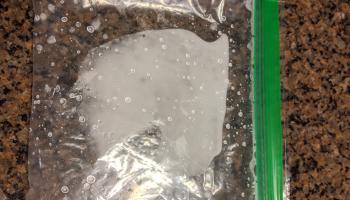
clear plastic sandwich bag with white powder inside
// Wednesday, August 12, 2020 ACCT Admin
In the “Airbag challenge” the students are tasked with developing a safe airbag for a car company. This formative assessment explores students’ thinking about the question “How can chemical changes be controlled?” The central concept in this challenge is the application is stoichiometry.
salt vs. sugar
// Wednesday, August 12, 2020 ACCT Admin
This formative assessment looks at two household chemicals (table salt and sugar) and compares their properties while looking at how they dissolve in water. The “Salt vs.
clear glass bottle labeled as "vinegar"
// Wednesday, August 12, 2020 ACCT Admin
In “How strong an acid is vinegar?” the students explore the nonlinear relationship between the concentration of a weak acid and the pH of the solution.
clear glass cup half full of milk & two chili peppers next to it
// Wednesday, August 12, 2020 ACCT Admin
This formative assessment was designed to target students’ thinking around the structure-property relationships in an accessible, real-world context. This is done through targeting noncovalent interactions. The understanding of this topic is critical for students’ reasoning about observable properties of matter.
Frying ice
// Tuesday, August 11, 2020 ACCT Admin
In the Frying Ice formative assessment students explore the three phases of matter.