The Periodic Table- Economic Elixir and Agent of Destruction
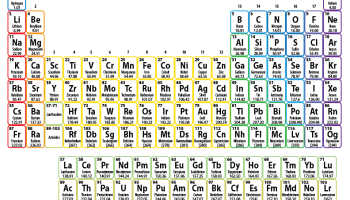
The history of the world is joined at the hip to the elements comprising the periodic table. The rise and fall of geopolitical empires, the quest to colonize new lands, the ballerina of regional and global nation-state diplomacy, the relentless exploitation of the natural landscape, and the driving force of world commerce past, present, and future- and not to mention what's in your refrigerator, pantry, on your person, and in your garbage can- all have the same starting point- the periodic table.
The pedestrian rectangular collection of rows and columns and the one or two lettered symbols inside each square can rightly be argued to be the powerful and invisible force that has shaped humanity's past and will shape its future- the good, the bad, and the ugly of it all. The purpose of this post is perhaps entice you- if you don't do it already in your classes- to get students to think about what those elements in the periodic table are used for in the comings and goings of daily life and on a larger scale how extraction of and access to these mostly silvery colored elements drive current and future regional, national, and global events. Of course, the elements are neither good nor evil. But what we humans do with them and how we go about mining them is oftentimes a moral question and with tragic results. Additionally, because of the uneven distribution of elements the world over, the periodic table is a great teacher of geography. Perhaps then not only will your students learn chemistry but also world geography.
This post is organized around links to articles and/or web links that deal with the issue of critical minerals and metals. The links show the interdisciplinary relationships that exist among science, economics, trade, government policy, geography, and consumerism. Hope they prove beneficial as a useful starting point to augmenting what students learn in your chemistry classroom. Cheerio...SJD
Presidential Executive Order 13817
Tracking the Global Supply of Critical Minerals (Source: American Geosciences Institute)
Underpinning Innovation: The Science and Supply of America's Critical Minerals (Source: American Geosciences Institute)
Click here to watch the ACS webinar video below and to download the presentation slides.

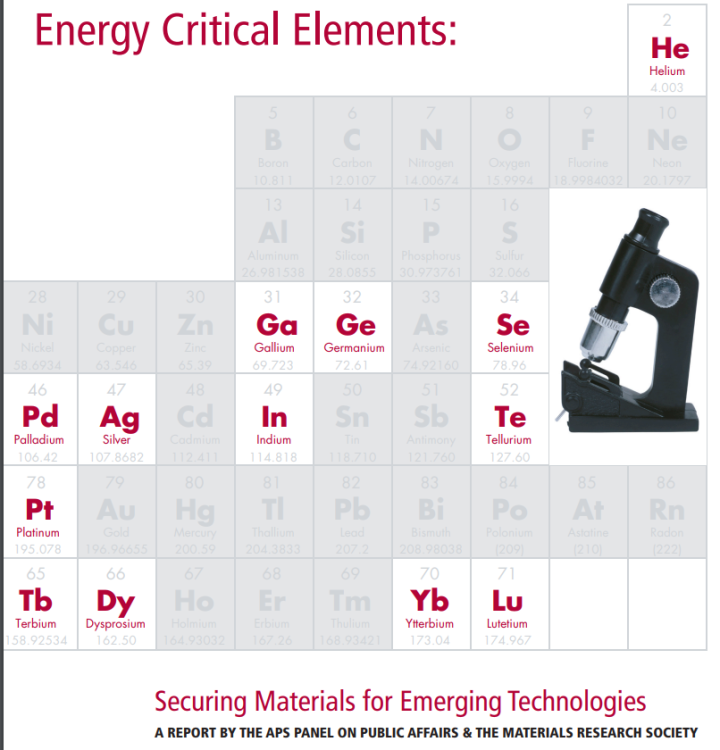
Energy Critical Elements (2011 report from American Physical Society; dated but still lots of useful information)
Net import reliance (NIR) refers to the percentage of a mineral commodity used by the United States that must be imported from another country. For example, according to the bar chart below (where import reliance decreases top to bottom) the US has a 100% import reliance on ARSENIC (trioxide) down to the period 4, group 5 transition metal VANADIUM. Farther down the chart the US has a 61% import reliance on the period 4, group 9 transition metal COBALT.
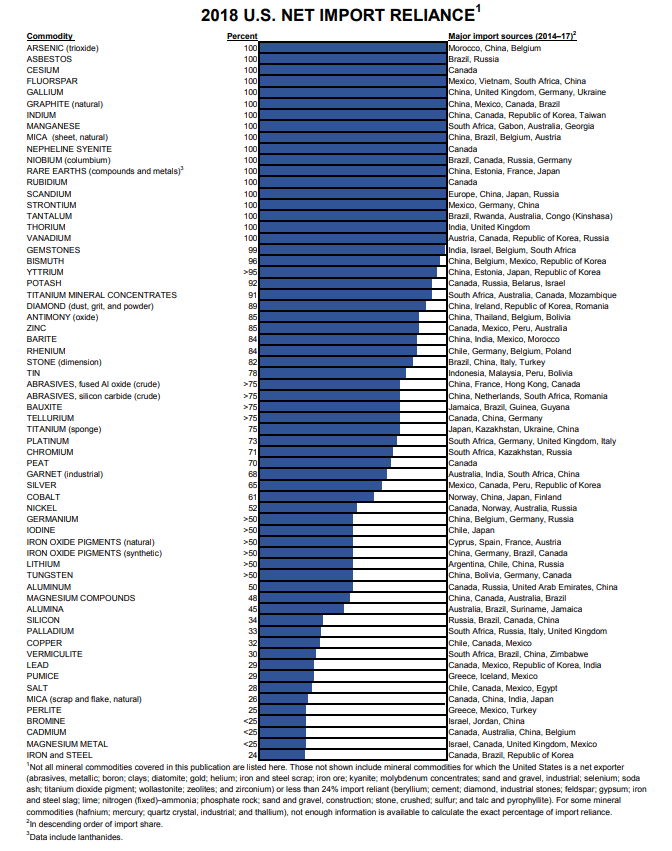
Image source: USGS (United States Geological Survey), Mineral Commodity Summaries 2019 (page 6)
Below- Percent Global Production of Select Metals, 2017
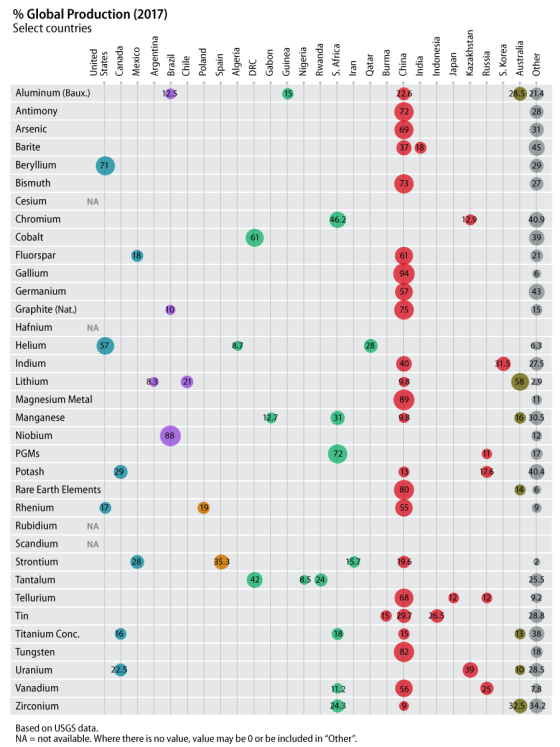
Image source: Critical Minerals and US Public Policy, CRS (Congressional Research Service), R45810 (R = report), page 17; June 28, 2019
Below- Critical Minerals: Net U.S. Import Reliance
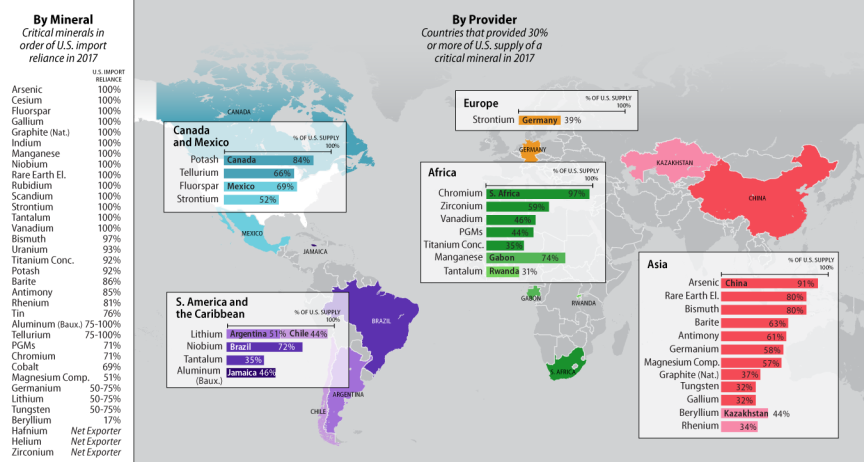
Image source: Critical Minerals and US Public Policy, CRS (Congressional Research Service), R45810, page 33; June 28, 2019
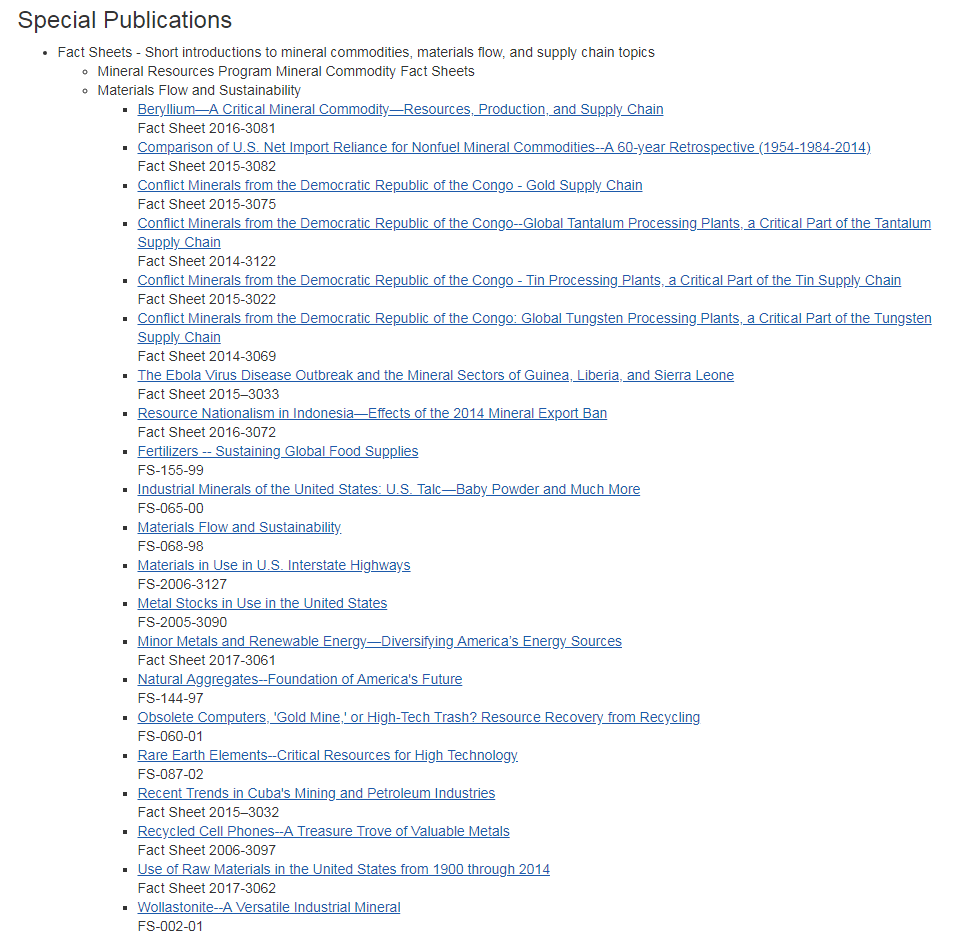
The USGS contains a staggering wealth of information about metals and minerals. Below are two links.
Link #1: National Minerals Information Center (NMIC)
Note: Links in Special Publications image below are not active as this is a screenshot image. Click on NMIC link above to access files listed below.
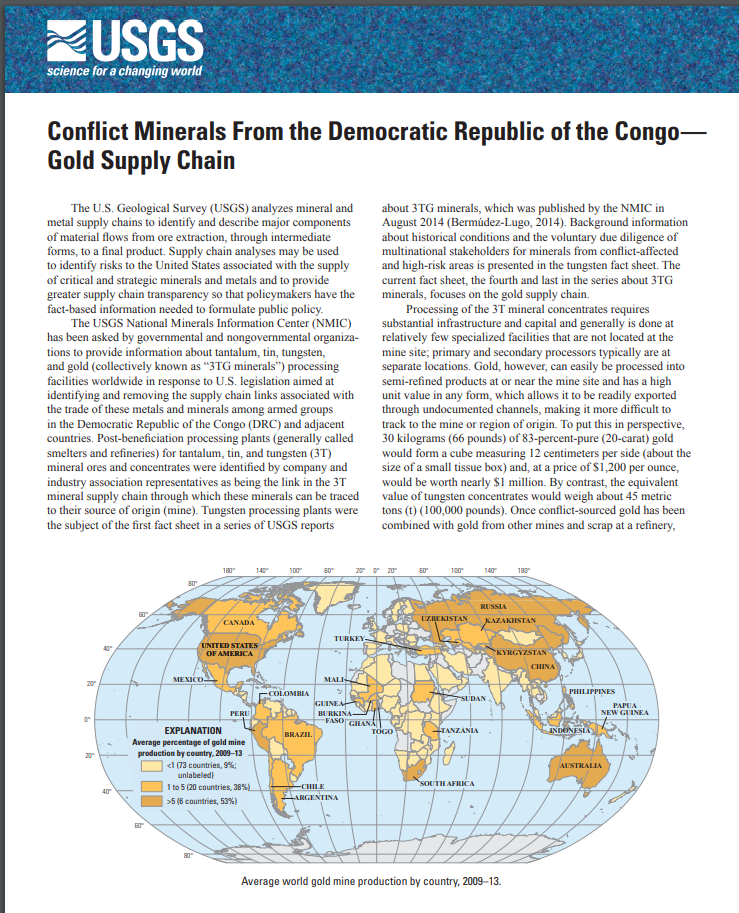
Link #2: File from the list above (partial screenshot; page 1 of 3). To access this file click here.
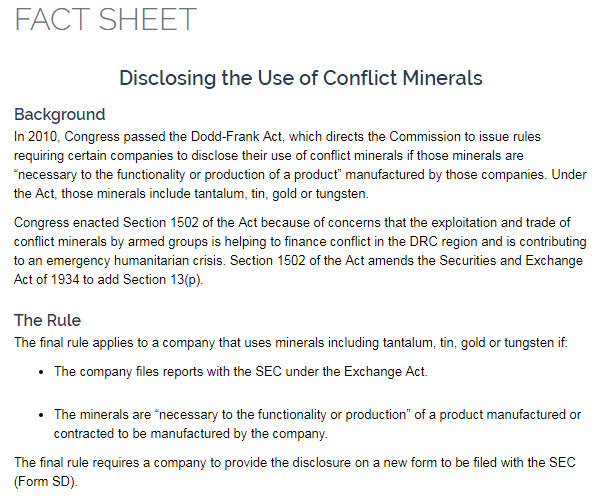
Conflict Minerals and the Dodd-Frank Act fact sheet from the U.S. Security and Exchange Commission (partial screenshot below). Metals included- Ta, Sn, Au, and W. Below, DRC = Democratic Republic of the Congo
Article source: https://www.bbc.com/news/business-44732847 (news article on Co)
Pick Information