Picks

ChemEd X contributors and staff members are continually coming across items of interest that they feel others may wish to know about. Picks include, but need not be limited to, books, magazines, journals, articles, apps—most anything that has a link to it can qualify.

Many Picks can be purchased from Amazon. Using the Amazon links on those pages help to support ChemEd X.

pick
Gizmos Logo
// Friday, November 18, 2016 Dan Meyers
This week I had the opportunity to attend part 2 of a 3 day PD for Gizmos, courtesy of a district grant working with ExploreLearning. In a room full of middle school science colleagues (half of whom I knew), I was able to glean a ton of great information.
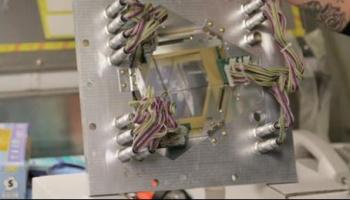
 Lawrence Berkeley National Lab
// Saturday, November 5, 2016 Michelle Okroy
In July of 2016 we learned the names of the four new elements that were confirmed in January; Nihonium (Nh), moscovium (Mc), tennessine (Ts) and oganesson (Og). Although the newest superheavy elements complete the seventh period of the Periodic Table, curiosity has been reignited in our classrooms as students ask, what’s next?
Stepping Stones
// Wednesday, November 2, 2016 Catelyn Tweeten
In the case of scientific exploration in the classroom, the word “misconception” tends to relate to ideas that are inconsistent with scientific evidence. Generally, misconceptions are recognized as a negative aspect of the classroom environment.
LightBuckets.com
// Tuesday, October 25, 2016 Chad Husting
Most chemistry teachers I know do flame tests with their students. It ties in well with many topics, is colorful and the kids enjoy seeing the colors and burning stuff. There are many applications. For years I always mentioned that astronomers use the idea of the flame test.
Haiku Learning
// Monday, August 15, 2016 E Posthuma
ActiveGrade has been a favorite among practitioners of Standards-Based Assessment.  It's intuitive interface and elegant data displays helped teachers, students, and parents have meaningful conversations about student progress and assessment.
molview
// Monday, August 8, 2016 Michelle Okroy
What is the best way for students to visualize compounds? From the traditional physical ball and stick models to the various online simulations the objective for all of these tools is to provide one with a visual for the different structures and patterns.
miracle berries
// Wednesday, August 3, 2016 Linda Ford
If you teach the chemistry of foods, I encourage you to purchase some Miracle berries from Amazon. These berries are really miraculous! After chewing a berry, you can bite directly into a lemon wedge, and it will taste like lemonade! YES! A component of the berry masks some of your taste buds to sweeten the experience.
// Thursday, July 14, 2016 Hal Harris
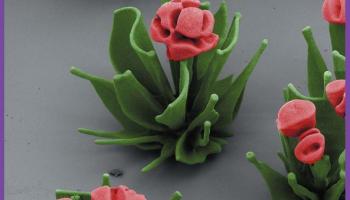
The beautiful photographs in this publication just make you itch to go into the lab and try to reproduce them.  The structures appear to be ideal for lawn ornaments - delicate, colorful and very attractive.  Furthermore, they can be made with easily available materials, just sodium metasilicate, barium chloride, a flat piece of metal-coated glass, and carb