When describing abstract concepts like chemical bonding, it always seems to feel far too easy for both teachers and students to resort to the “wants” and “needs” of atoms. After all, we understand what it means to want, need, or like something, so it often feels appropriate (and easier) to use a relatable metaphor or subtly anthropomorphize these a
I first saw the Diet Coke and Mentos experiment during a science fair at an elementary school in 2005, and I was instantly hooked! To perform this experiment, Mentos candies are dropped into a bottle of carbonated beverage; Diet Coke tends to be the beverage of choice. In the video below you can see this experiment play out in slow motion.
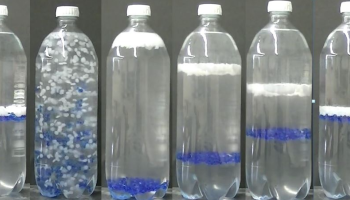
Are you familiar with the dynamic density bottle experiment? This interesting experiment was invented by Lynn Higgins, and is sold by various science supply companies.1,2 Two immiscible liquids (usually salt water and isopropyl alcohol) and two different types of plastic pieces are contained within a dynamic density bottle.
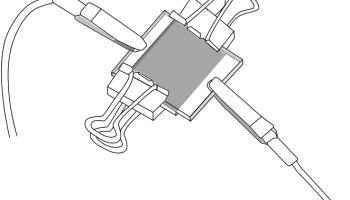
Not sure what to do after the AP chemistry exam? Have you considered having your students make solar cells? If your AP kids can understand batteries, solar cells are a logical next step.
I found a version of this demonstration online a couple of years ago. I admit, when I first tried it with my class it was mostly for a crowd pleaser to demonstrate the activity series of metals, but I then became very intrigued by the processes occurring.
A few months ago I was searching the internet, looking for a better way to teach stoichiometry to my pre-AP chemistry students. While my methods of dimensional analysis “got the job done” for most students, I would still always lose students and many lacked true understanding of what was happening in the reaction.
On April 22, 2017, people all over the world will be coming together to stand up for science. The March for Science is a part of a global movement by scientists, science-enthusiasts, and evidence-based policy makers to celebrate the integral role science plays in all our lives. The March will serve to further several goals, I encourage you to read about them.
In this post I will explore the chemistry of the Sunflower dye found in McCormick’s Color from Nature food dyes. This is the last in a three-part series in which several experiments and demonstrations that can be done with Color from Nature food dyes are described.