Latest articles, blogs, and events from the chemical education community

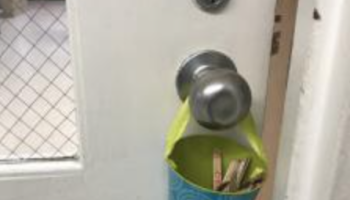
can of popsicle sticks hanging on classroom doorknob
// Wednesday, February 12, 2020 Ariel Serkin
My school just started second semester on February 3 and I needed to shake things up. My students didn’t like the new vocational classes they had been assigned, everyone was still stressed about grades from the previous term, and some students still needed to make up midyear exams. This malaise was not new.
clock face with text: Time to Renew
// Sunday, February 9, 2020 Melissa Hemling
I achieved National Board certification in December 2017. My certification expires in 2022. The year 2022 seems like a long way off, but it is coming up sooner than I would like! I have done a little digging into the renewal process to see what comes next.
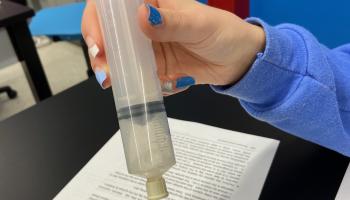
student holding a syringe, reaction inside producing gas.
// Sunday, February 2, 2020 Chad Husting
“What are we doing to help students achieve?” I have always struggled as a teacher to find a good limiting reagents lab and activity that can be put into the hands of my students. Thanks to Dr. Bruce Mattson, I think I have found a winner I would like to share.
empty classroom tables with window in background
// Thursday, January 30, 2020 Lauren Stewart
For the past three years, I have been fortunate enough to work with an intervention specialist teaching inclusion sections of ninth grade physical science (half chemistry, half physics). My co-teacher and I instruct classes with students ranging in ability from intellectual disability to gifted.
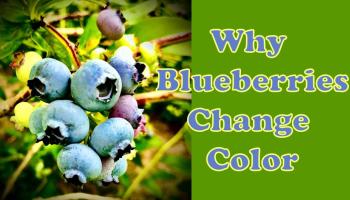
Blueberries with text: Why blueberries change color
// Sunday, January 26, 2020 Tom Kuntzleman
Berries are red, berries are blue…I’ve got a berry surprise for you! DESCRIPTION: I observe a red to blue color change when I rinse my bowl after eating frozen blueberries. Sounds like an acid-base reaction, doesn’t it? Read on to learn about the blueberry surprise!
Pencils / Erasers
// Saturday, January 25, 2020 Michael Farabaugh
There are a variety of types of assessment, including diagnostic, formative, and summative. The results from assessments have the potential to give teachers and students valuable feedback about progress toward learning objectives.
// Thursday, January 23, 2020 Scott Donnelly
Welcome and thanks for reading. "A bear is wiser than a man because a man does not know how to live all winter without eating anything." Abenaki (People of the Dawn) saying. This is the third post describing the metabolic and nutritional chemistry of bear hibernation.
// Tuesday, January 21, 2020 Francisco Villa
Up to this point, I imagine we are confident assessing students by means of homework, in-class activities, exams, essays, etc. But what about our own assessment? What is in place to grade the performance of faculty colleagues and ourselves? Is the 'tool' in place accurate, objective, fair?
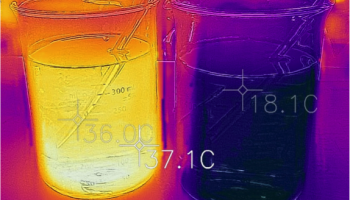
infrared image of the process of dissolution
// Wednesday, January 15, 2020 Ben Meacham
One of the inherent challenges of teaching chemistry is to make the invisible, visible. Often, we try to overcome this barrier by getting creative with a variety of models, animations, and simulations to help students think about chemistry in a way that is easier to conceptualize.
text: Reflective Practice Using Student Evaluations
// Wednesday, January 15, 2020 Josh Kenney
Reflective practice is an integral part of teacher education programs, and it is becoming a more routine in-service professional development strategy.1 Although it takes many forms, reflective practice can be defined simply as a process of thinking about one's teaching.
// Wednesday, January 15, 2020 Scott Donnelly
Conference homepage: https://sites.google.com/view/2yc3rctc2020 Contacts: Heather Sklenicka: heather.sklenicka@rctc.edu Jason Jadin: jason.jadin@rctc.edu Teri Hill: teri.hill@rctc.edu