Get More Empirical Mileage from the Gummy Bear Demonstration

Introduction
The thermal decomposition of potassium chlorate, KClO3, is represented by:
KClO3(s) → KCl(s) + 3/2 O2(g) eqn 1
This reaction is demonstrated dramatically by heating several grams of KClO3 (or NaClO3) in a large test tube. Potassium chlorate melts at 356°C, and decomposes at 400°C, temperatures easily reached with a laboratory (Bunsen) burner.
Note: Take all necessary safety precautions, including: Wear appropriate PPE. Perform this demonstration behind a safety shield. Once the gummy bear is added to the tube, shut off the Bunsen burner. Try the demonstration yourself without students present.
Once the potassium chlorate has begun to decompose, add a gummy bear. You will see the vigorous combustion of the sucrose in this tasty treat as shown in this video, and in Figure 1.
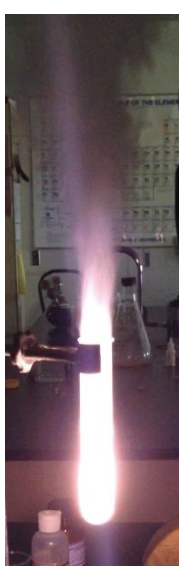
Figure 1. Witness the exothermic combustion of the gummy bear in the presence of oxygen gas, furnished by the thermal decomposition of KClO3. The beautiful pink-purple color indicates that potassium is present.
When the reaction is over and the tube allowed to cool, we typically observe:
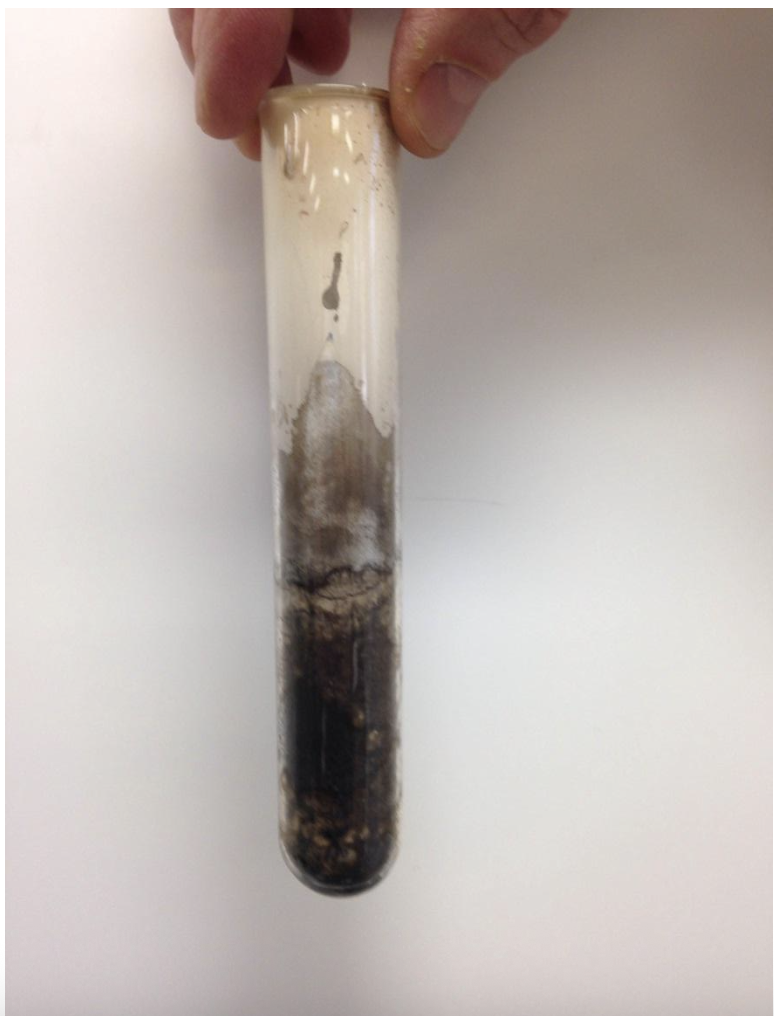
Figure 2. The large test tube and its contents after the demonstration. Note the two principal products.
The following thought-provoking questions should be answerable by Grade 11 (Honors) Chemistry students:
1. a) What is the black product at the bottom?
b) What reaction is responsible for its production?
2. a) What is the white-ish powder?
b) What reaction is responsible for its production?
c) Using two qualitative tests, how could we prove this?
Discussion
1. The black product is amorphous Carbon, produced by the incomplete combustion of sucrose, represented by:
C12H22O11(s) + O2(g) → CO2(g) + HOH(g) + CO(g) + C(s) eqn 2
Needless to say, to ensure incomplete combustion, make sure that you use a large-enough gummy bear.
2. The white-ish compound is (impure) KCl, produced by the thermal decomposition of potassium chlorate (eqn 1). Using a wetted wooden splint, remove some of the powder. Perform a flame test to reveal a purple colour, indicating the presence of potassium.
Next, dissolve some of the white powder in a few milliliters of water. Add several drops of AgNO3(aq). You will see the formation of a white precipitate of silver chloride, represented by:
KCl(aq) + AgNO3(aq) → AgCl(s) + KNO3(aq) eqn 3
These qualitative tests support the conclusion that the principal products in theis demonstration are carbon and potassium chloride.
Conclusion
The empirically based, thought-provoking examination of the products of the reactions adds considerable value to an already visually stimulating—and memorable—demonstration.
General
Items tagged with the safety:general tag have some safety concerns that may be also described more specifically by additional safety terms
General Safety
For Laboratory Work: Please refer to the ACS Guidelines for Chemical Laboratory Safety in Secondary Schools (2016).
For Demonstrations: Please refer to the ACS Division of Chemical Education Safety Guidelines for Chemical Demonstrations.
Other Safety resources
RAMP: Recognize hazards; Assess the risks of hazards; Minimize the risks of hazards; Prepare for emergencies
Pick Information
Provided by author, M. Jansen

Michael Jansen
Academic background: BSc (Chemistry), University of Toronto; MSc (Physical Organic Chemistry), Concordia University, Montreal; BEd/OCT, University of Toronto.