Making Natural Acid Base Indicators
I remember one of my closest friends in college telling the story of her mother and cabbage soup. When her parents were first married, her mom made a recipe for cabbage soup which they loved. She wanted to make it again, but couldn’t find green cabbage so she made it with red. To their surprise, it turned out bright blue. And while it tasted the same, they couldn’t eat it. This became an oft-told chemistry story in their family and also my favorite story to tell when teaching acids and bases. Red cabbage is a natural acid base indicator and it changes color depending on the acidity of the substance.
This semester I have been fortunate to teach a food chemistry elective with a student teacher. There is no set curriculum so we design the course as we see fit. It is a small class of students with varying levels of science experience. Some students need my class to graduate high school, others have taken upper level chemistry and science courses. Students find this project and lab based course engaging and a fun way to start their day,
The current unit, “SOUR” focuses on acids and bases. We began the unit with pH testing of common food items and decided to make and test natural acid base indicators.
I looked at Flinn Scientific’s Natural Acid Base Indicator Lab to generate ideas and I quickly ran to the bodega across the street from school and picked up
- a very sad looking beet
- a container of blueberries
- a container of strawberries
- one red apple
- a bag of red grapes
- a small bag of red radishes
- one red onion
I grabbed some turmeric from the culinary department, and some red cabbage extract, red hibiscus raspberry tea from my house, and did a quick order for some butterfly pea flower tea.
In class, students carefully cut, squished, and diced the different fruits and vegetables, transferred them to 100 mL beakers, and added 10mL of isopropyl alcohol (see figure 1).
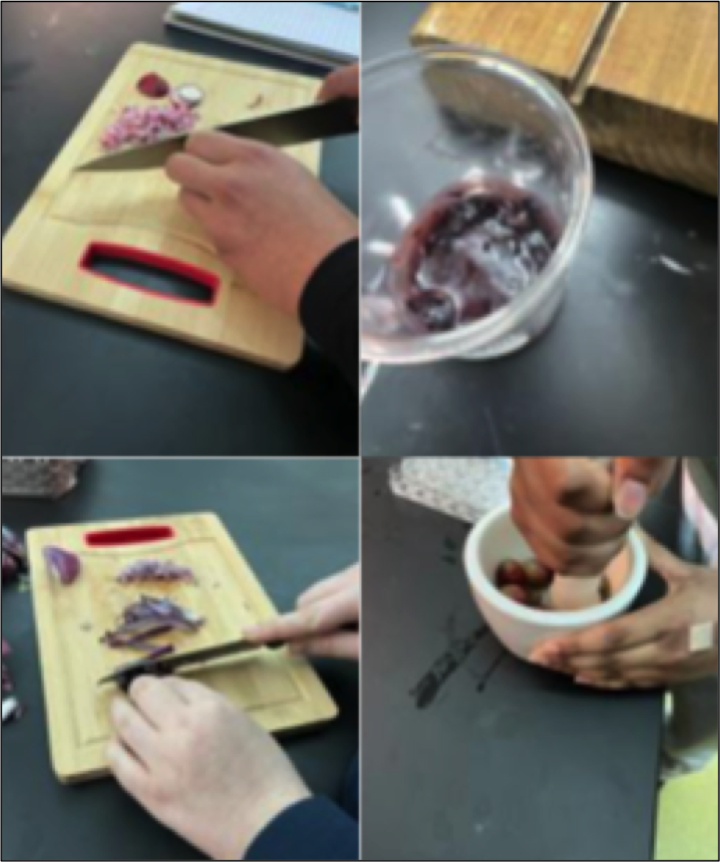
Figure 1: Preparing fruits and vegetables to make indicators.
After cleaning up, they covered the beakers with parafilm and set them aside for the next class (see figure 2).
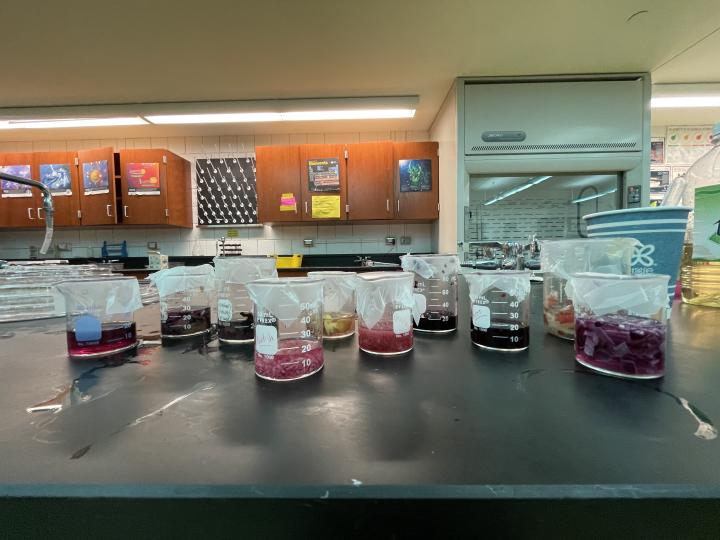
Figure 2: Range of student created natural acid base indicators prepared.
Before the next class, I made mugs of hibiscus tea, butterfly pea flower tea, dissolved the turmeric in hot water, and filtered the indicators for use (see figure 3). In truth, I was rushing in the morning and didn’t read the labels carefully and accidentally mixed in some beet with the blueberry and possibly the strawberry with the radish.
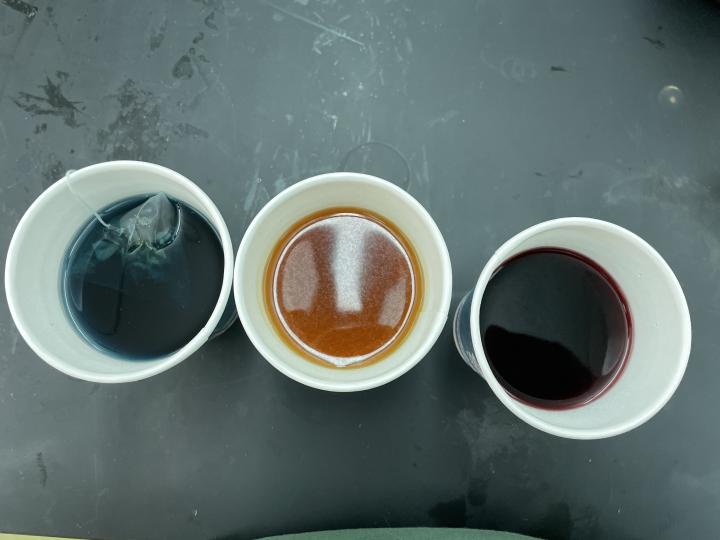
Figure 3: Left to Right: butterfly pea flower tea, turmeric in water, red raspberry hibiscus tea
My student teacher and I contemplated how best to have my students test the indicators. Should we have students test the indicators with common foods? Should we just gather lab and household chemicals in a range of pHs to test the full range of indicators?
In the end we decided to have students test the range of pH with the following chemicals.
- HCl
- H2SO4
- CH₃COOH/vinegar
- Lemon juice
- H₂O
- Sprite
- NaHCO₃
- hand soap and water
- NH₃
- Na₂CO₃
- NaOH
- Bleach
Students put a piece of white paper or a coffee filter under their reaction well and added the chemicals before adding the indicators.
Some students were excited about the range of colors they saw with their indicators, others were disappointed, students discovered a color that was new to them (periwinkle), and the students asked questions (see figure 4).
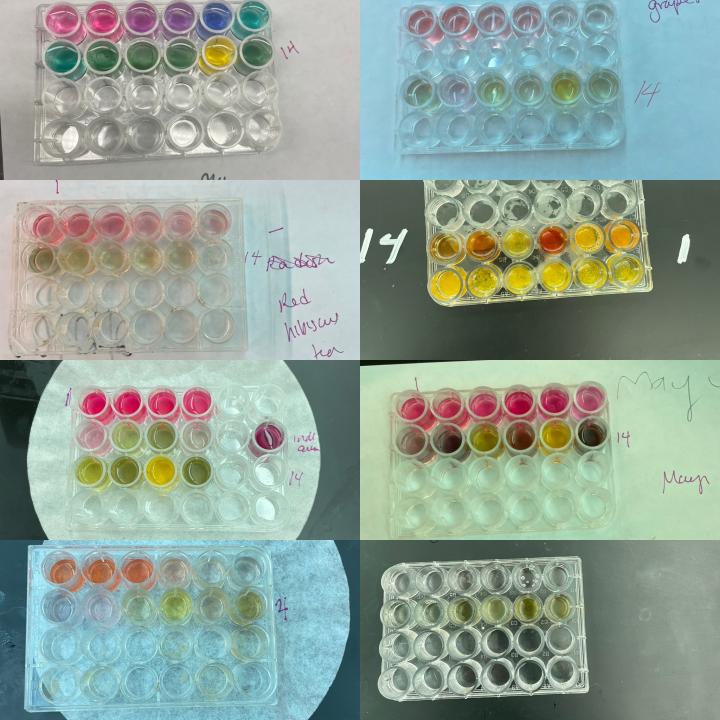
Figure 4: Left column - butterfly pea flower tea, red hibiscus tea, red onion, radish. Right column: grape, turmeric, blueberry, red apple.
I began the next class having students list as many questions as they could for two minutes and then share out. Their thoughtful insights set the stage for class.
K - Why did the sprite turn periwinkle? (butterfly pea flower tea)
S - Is it effective in acidic substances? (red apple - only changed color in basic substances)
S - Why did the apple indicator turn green?
J - If the skin is reddish, how did it get so many colors?
L - Why does color ID the pH?
M - What are the qualities that make something a good indicator?
M - What chemicals make the turn the most vibrant?
A - Why did the NaOH regularly turn yellow with the addition of indicators when everything else was in the red/purple range?
A - Why did the ammonia turn gray with the beet?
A - Why weren’t some indicators as visually effective?
R - Why did hers turn immediately blueish gray when the indicator was added?
Z - Why did I choose only clear chemicals to test?
J - Why were there so many different pigments?
ChemEd X has many other posts related to acid base indicators and anthocyanins including
-Food Dyes as Acid-Base Indicators
For a more extensive list, search Acid-Base Indicators or Anthocyanins.
From here we talked a little about anthocyanins focusing on the molecular structure and what happens to cause the color shift in acidic or basic solutions.
Without any prompting, the students then proposed experiments they could conduct.
- What if we cold brewed the tea?
- What would happen if students had a reaction well with only one substance and just looked at the different indicators?
- What would happen if the soda was flat?
- Could we separate the colors?
- What would happen if we changed the temperature of the chemicals or the indicators?
- What if each student had a reaction well and only put one chemical in it and used different indicators to look how the different indicators reacted to that pH?
Then the students immediately started applying what they learned to their own lives:
- What causes the soil in the same yard to have different pH levels?
- Can we make our own dyes?
- Can these be used as inks?
Before long, class ended and we had a series of further tests we might experiment on including chromatography of the indicators.
Though I’ve been teaching chemistry for a while, teaching this class has enabled me to think about questions that I had never previously considered such as why are aldehydes often used as food preservatives or, in this case, what is it about anthocyanins that cause a color change. Just as I explore things I hadn’t known, my students also ask questions to which I have the freedom to respond “I’m not sure, let’s try it and see what happens”. Students enjoy the freedom to experiment and learn together.

Comments
5Making Natural Indicators
Love this, Ariel. I am doing a food and chemistry class next year and this will definitely be on my radar. By the way, in the interest of time, canned blueberries can be used and just strain off the juice in a fine sieve.
Thanks, Aimee - it also might be fun to look at fresh, frozen, and canned fruit to see if the anthocyanin concentration differs.
Share Your Thoughts