
Ice Bomb
A cast iron bomb is completely filled with ice water, then placed into a dry-ice/acetone slush and covered with a wooden box. When the water in the bomb freezes, the cast iron bomb explodes, breaking into several pieces, and destroying the box in which it was placed.
(106 )
Keywords
density, solid state structure, descriptive chemistry - water, hydrogen bonding, safety, phase changes, physical properties, bonding, solids and liquids, ice
Multimedia
 _Play
movie (1 minute 12 seconds, 4.3 MB)
_Play
movie (1 minute 12 seconds, 4.3 MB)
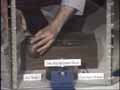
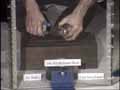
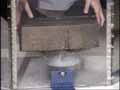
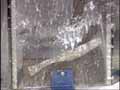
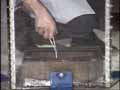
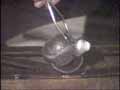
The ice bomb illustrates the fact that the volume of ice is greater than the volume of an equal mass of liquid water.
Some cold water is poured into a cast iron bomb, and a threaded plug is screwed into the bomb so that the bomb is tightly sealed. The bomb is then placed into a dry ice acetone slush, which is at -77 oC, and will cause the water inside the bomb to freeze. A wooden box is placed over the top of the bomb and slush bath.
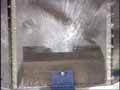
It takes a short time for the water to freeze. When it does, the bomb explodes.
Some of the dry ice acetone slush is blown onto the explosion shield. Little bits of the cast iron bomb are left. When the water freezes, tremendous pressure is produced. The pressure is enough to cause this cast iron bomb with more than 1/8" thick sides to burst.
Discussion
Additional still images for this topic
Demonstration Notes: Warnings, Safety Information, etc.
Exam and Quiz Questions
1. What happened to the water-filled bomb when it froze? Why?
2. Which of the following properties of the water in the bomb changed when the water froze? (Circle all that apply.)
a. density
b. mass
c. molar mass
d. volume