
Liquids
Distilled Water
 Play movie (13 seconds, .8 MB)
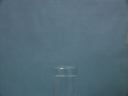
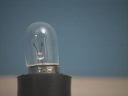

When wires connected to a light bulb and battery are placed into distilled water, the bulb does not light. Distilled water is a liquid covalent compound and does not conduct electricity.
(33)
Ethanol
 Play movie (8 seconds, .5 MB)
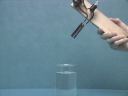
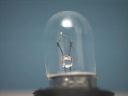

When wires connected to a light bulb and battery are placed into ethanol, the bulb does not light. Ethanol does not conduct electricity.
(33)
Ethylene Glycol
 Play movie (9 seconds, .6 MB)

When wires connected to a battery and light bulb are placed into liquid ethylene glycol, the bulb does not light. Ethylene glycol does not conduct electricity.
(33)
Molten Candle Wax
 Play movie (12 seconds, .7 MB)
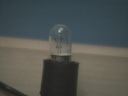

When wires connected to a light bulb and battery are placed into molten candle wax on a hot plate, the light bulb does not light. Molten wax does not conduct electricity.
(33)
Molten Sugar
 Play movie (13 seconds, .8 MB)
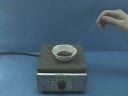
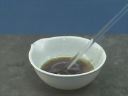
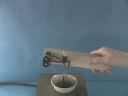

When wires connected to a light bulb and battery are placed into sugar melted on a hot plate, the bulb does not light. Molten sugar does not conduct electricity.
(33)
Molten Salt
 Play movie (10 seconds, .7 MB)
When wires connected to a light bulb and battery are placed into a sample of salt that has been melted by heating with a burner, the light bulb lights, showing that molten salt conducts electricity.
(33)
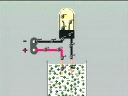
Picture from earlier Animation (a salt)
© 1997 Division of Chemical Education, Inc., American Chemical Society. All rights reserved.