
Solids
Aluminum
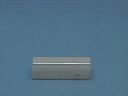
Movie
 Play movie (9 seconds, .6 MB)


When a piece of solid aluminum metal completes the electrical circuit, the light bulb lights brightly.
(33)
Zinc
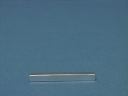
Movie
 Play movie (9 seconds, .5 MB)

When a piece of solid zinc metal completes the electrical circuit, the light bulb lights brightly.
(33)
Sulfur
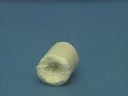
Movie
 Play movie (8 seconds, .5 MB)
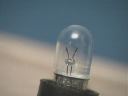

When the nonmetal sulfur touches wires connected to a battery and light bulb, the bulb does not light. Sulfur is not a conductor.
(33)
Sodium Chloride Crystal
Movie
 Play movie (8 seconds, .5 MB)



When a sodium chloride crystal touches wires connected to a battery and light bulb, the bulb does not light. It is not a conductor.
(33)
Wax
Movie
 Play movie (10 seconds, .6 MB)

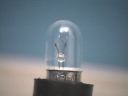

When a sample of wax touches wires connected to a battery and light bulb, the bulb does not light. Wax is not a conductor.
(33)
Iodine Granules
Movie
 Play movie (12 seconds, .7 MB)
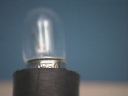

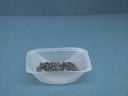
When wires connected to a battery and light bulb touch granules of solid iodine, the bulb does not light. The nonmetallic iodine does not conduct electricity.
(33)
Granular Zinc
Movie
 Play movie (11 seconds, .7 MB)
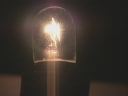
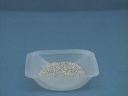
When wires connected to a battery and light bulb touch granular zinc, the bulb lights brightly. Metallic zinc conducts electricity.
(33)
Granular salt
Movie
 Play movie (8 seconds, .5 MB)

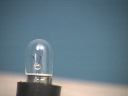

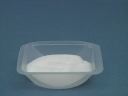
When wires connected to a battery and light bulb are placed into granular sodium chloride, the bulb does not light. It does not conduct.
(33)
Granular Sugar
Movie
 Play movie (10 seconds, .6 MB)

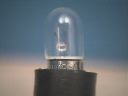

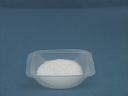
When wires connected to a battery and light bulb are placed into granular sugar, the light bulb does not light. Solid sugar does not conduct electricity.
(33)
© 1997 Division of Chemical Education, Inc., American Chemical Society. All rights reserved.