
Electrical Properties of Matter
Electrical Conductivity
Introduction (mostly animations)
The apparatus shorted out
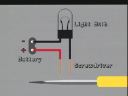
A battery and a light bulb are connected in an electric circuit; when a screw driver touches two wires and completes the circuit, the light bulb lights up.
Movie
 Play movie (11 seconds, .7 MB)
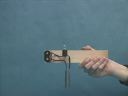
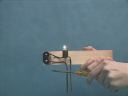
This movie shows a battery and a light bulb connected in an electric circuit. When a screw driver touches two wires and completes the circuit, the light bulb lights up.
(33)
Introductory picture to the animation
Animation
 Play movie (12 seconds, .7 MB)



This animation shows that the metal shaft of the screw driver allows a stream of electrons to flow through the circuit, causing the light bulb to light.
(31)
Weak Electrolyte
Picture 2
Movie
 Play movie (42 seconds, 2.5 MB)
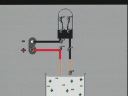
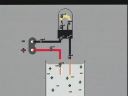
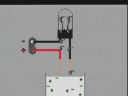
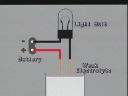
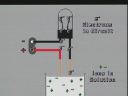
This animation shows that when the circuit is completed by a solution of a weak electrolyte there are ions in the solution that transfer charge to the wires and allow the light bulb to light dimly. The bulb does not light brightly because the number of ions per unit volume of solution is small. Movement of positive and negative ions in solution transfers electricity from one wire to the other, causing electrons to flow through the circuit and the light bulb to light.
(33)
Strong Electrolyte
Picture 2
Movie
 Play movie (21 seconds, 1.2 MB)
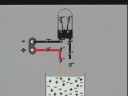
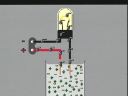
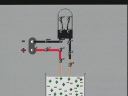
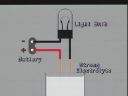
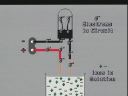
This animation shows what happens when the wires connected to a battery and light bulb are placed into a strong electrolyte solution. There are many ions per unit volume of solution, so a great many electrons flow through the circuit. This allows the light bulb to light very brightly.
(33)
Liquid Salt
Picture 2
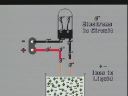
Movie
 Play movie (22 seconds, 1.3 MB)
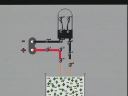


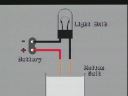
Here is what happens when the wires connected to the light bulb and battery are placed into molten salt. There are many ions and they allow charge to be transferred through the liquid salt by moving toward one or the other electrode. This completes the electrical circuit and the light bulb lights brightly.
(33)
© 1997 Division of Chemical Education, Inc., American Chemical Society. All rights reserved.