
Electrolysis of Aqueous Solutions
Part 1 of 3
Two "lead" pencil electrodes connected to a small battery are dipped into a variety of solutions. When the apparatus is dipped into solutions of HCl, NaOH and NaCl, bubbles are observed at each of the electrodes, and an indicator is used to test the acidity near each of the electrodes. When the apparatus is dipped in distilled water, no reaction is observed. The electrodes are then dipped into a variety of metal nitrate solutions. In every case, oxygen is generated at the anode. In some cases hydrogen is produced at the cathode, while in others metal deposits form. In a few cases, both gas bubbles and solid deposits are observed. The reactions at the cathode correlate pretty well with the reduction potentials of the metal ions.
(148 )
Keywords
acids/bases, decomposition reaction, descriptive chemistry, electrical conductivity, electrochemical (electrolysis) cells, electrode potentials, redox reaction
Multimedia
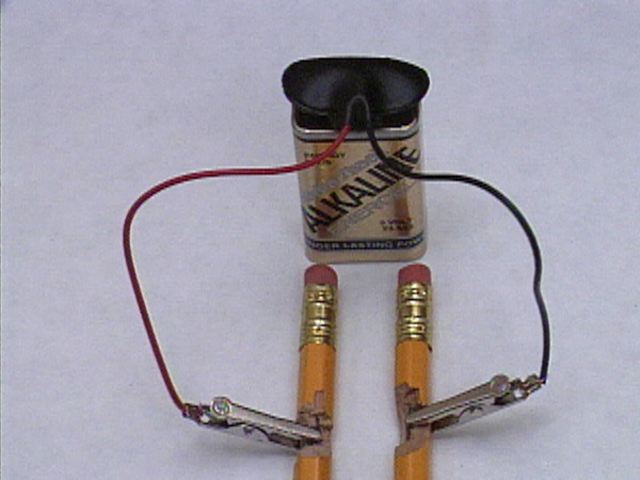 The apparatus. |
 The anode and cathode. |
Electrolysis of Aqueous Hydrochloric Acid
 Play movie
(QuickTime 3.0 Sorenson, duration 8 seconds, size 570 K)
Play movie
(QuickTime 3.0 Sorenson, duration 8 seconds, size 570 K)
Electrolysis of a hydrochloric acid solution produces oxygen at the anode and hydrogen at the cathode.
HCl
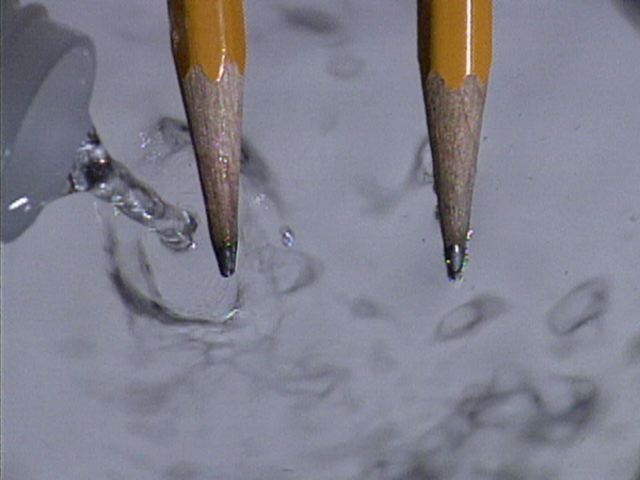 |
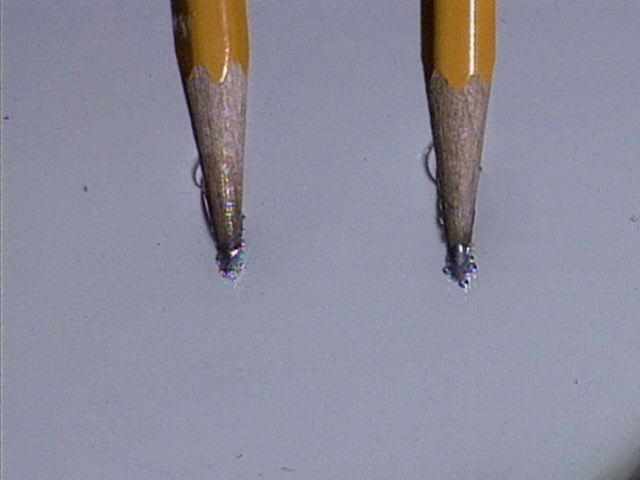 Oxygen at the anode and hydrogen at the cathode. |
Test of Hydrochloric Acid with Acid-Base Indicator
 Play movie
(QuickTime 3.0 Sorenson, duration 10 seconds, size 790 K)
Play movie
(QuickTime 3.0 Sorenson, duration 10 seconds, size 790 K)
In aqueous hydrochloric acid, the electrolyzed solution is acidic at both electrodes.
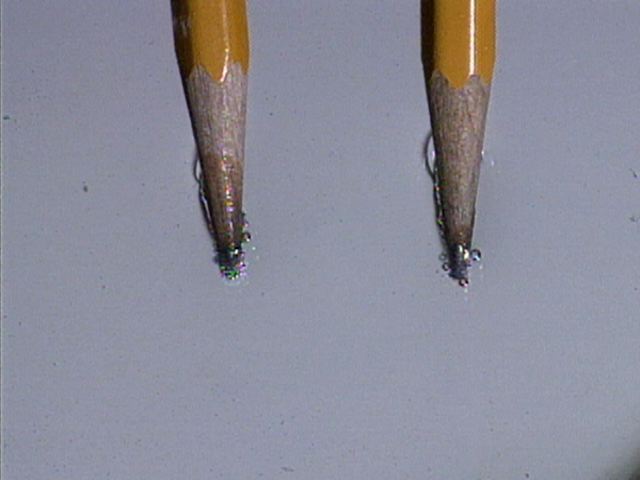 |
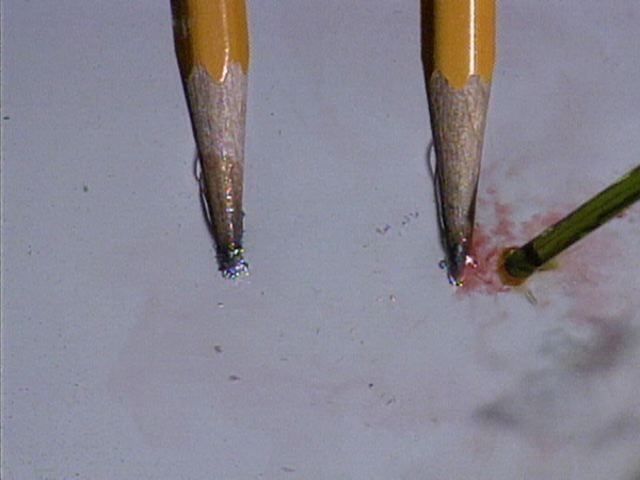 the electrolyzed solution is ... |
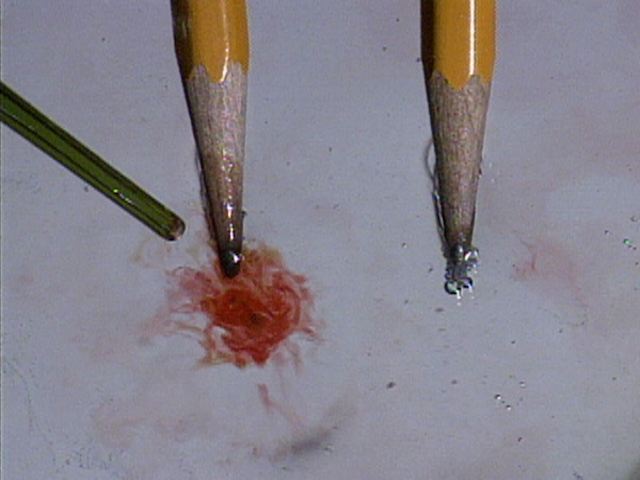 ... acidic at both electrodes. |
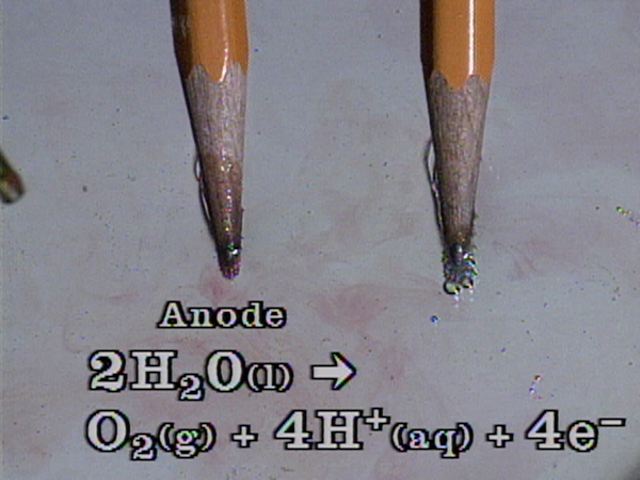 Half reaction at the anode. |
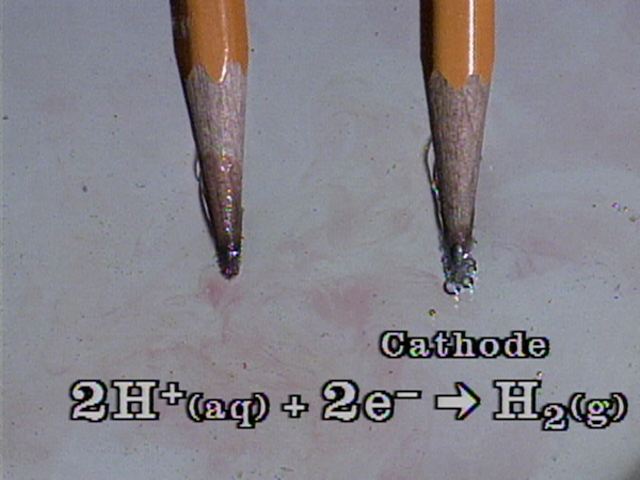 Half reaction at the cathode. |
Electrolysis of Aqueous Sodium Hydroxide
 Play movie
(QuickTime 3.0 Sorenson, duration 8 seconds, size 580 K)
Play movie
(QuickTime 3.0 Sorenson, duration 8 seconds, size 580 K)
Electrolysis of a sodium hydroxide solution produces oxygen at the anode and hydrogen at the cathode.
NaOH
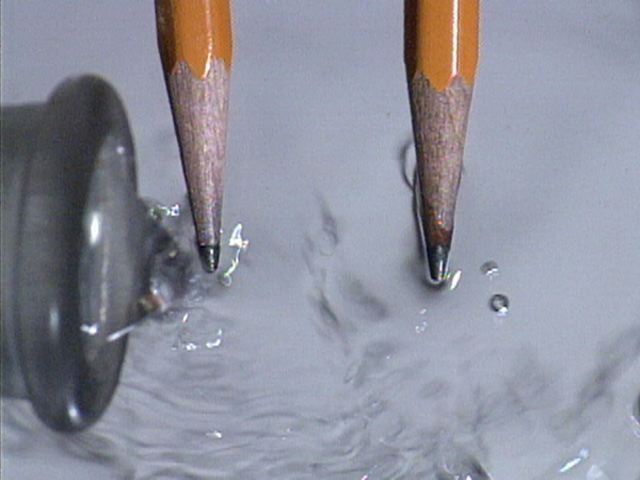 |
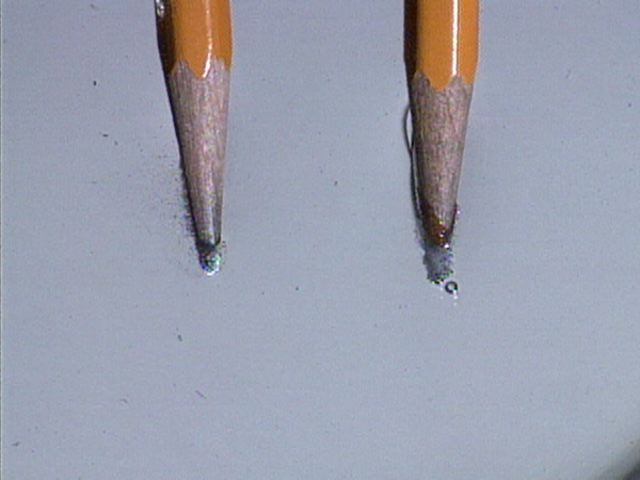 Oxygen at the anode and hydrogen at the cathode. |
Test of Sodium Hydroxide with Acid-Base Indicator
 Play movie
(QuickTime 3.0 Sorenson, duration 15 seconds, size 1.1 MB)
Play movie
(QuickTime 3.0 Sorenson, duration 15 seconds, size 1.1 MB)
In aqueous sodium hydroxide, the electrolyzed solution is basic at both electrodes.
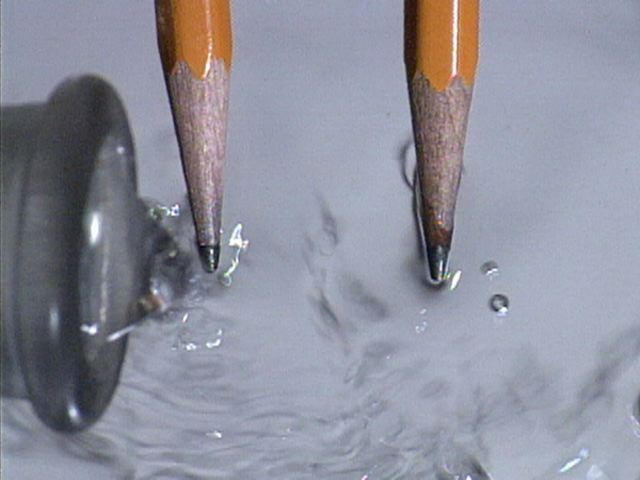 |
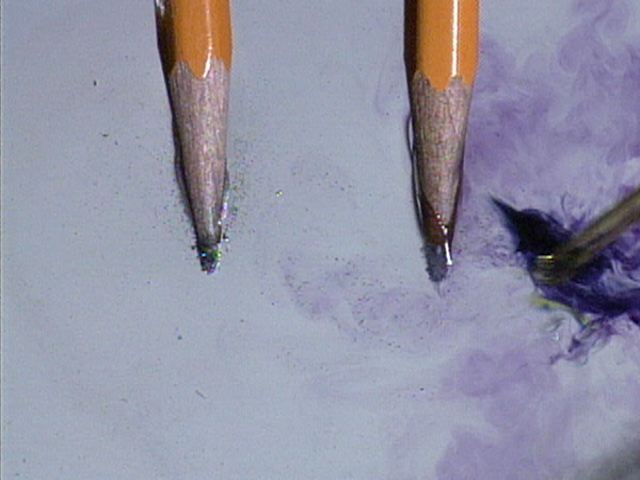 the electrolyzed solution is ... |
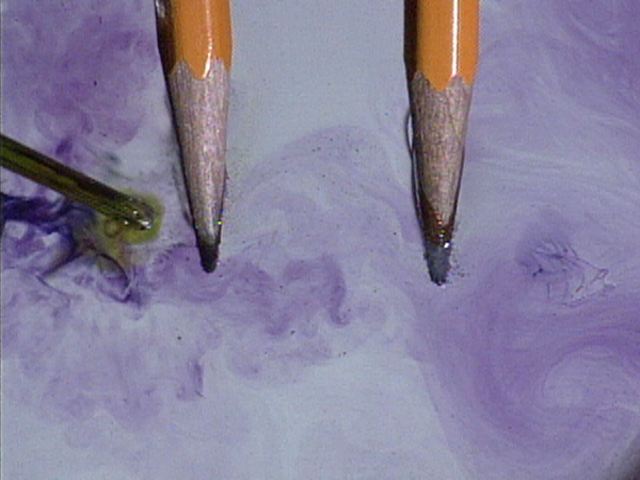 ... basin at both electrodes. |
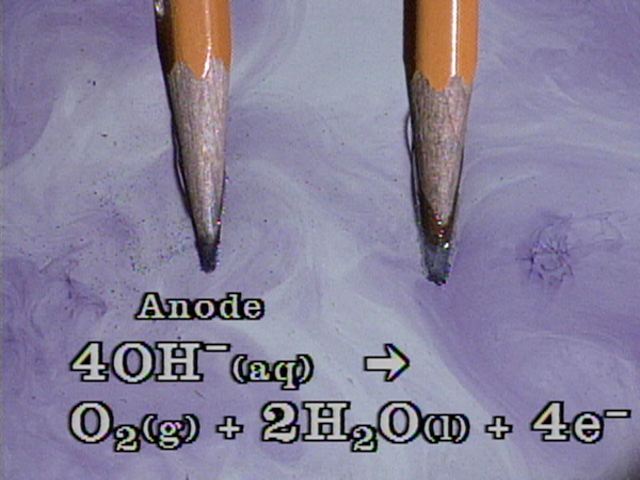 Half reaction at the anode. |
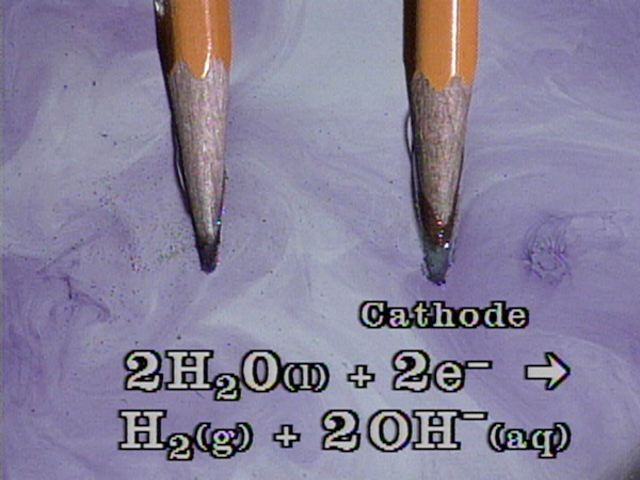 Half reaction at the cathode. |
Electrolysis of Aqueous Sodium Chloride
 Play movie
(QuickTime 3.0 Sorenson, duration 8 seconds, size 580 K)
Play movie
(QuickTime 3.0 Sorenson, duration 8 seconds, size 580 K)
Electrolysis of a sodium chloride solution produces oxygen at the anode and hydrogen at the cathode.
NaCl
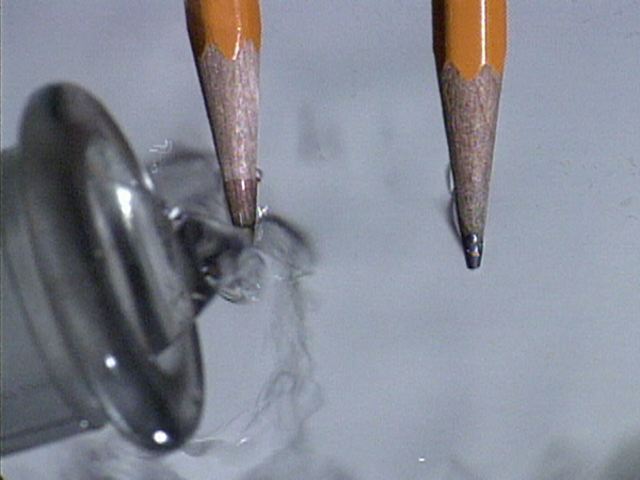 |
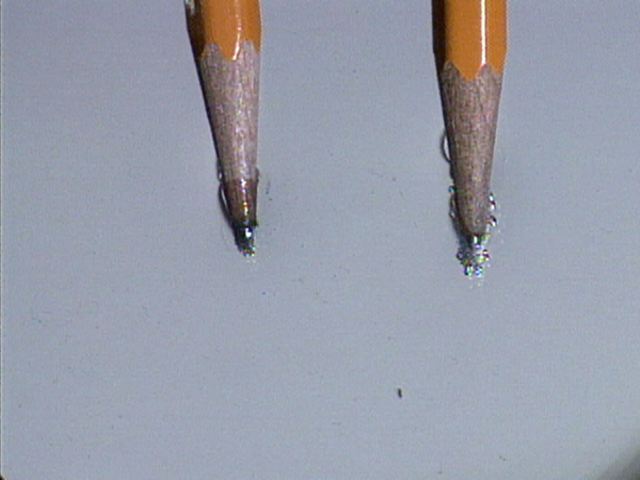 Oxygen at the anode and hydrogen at the cathode. |
Test of Neutral Sodium Chloride with Acid-Base Indicator
 Play movie
(QuickTime 3.0 Sorenson, duration 8 seconds, size 540 K)
Play movie
(QuickTime 3.0 Sorenson, duration 8 seconds, size 540 K)
In neutral sodium chloride, base is produced at the cathode and acid at the anode.
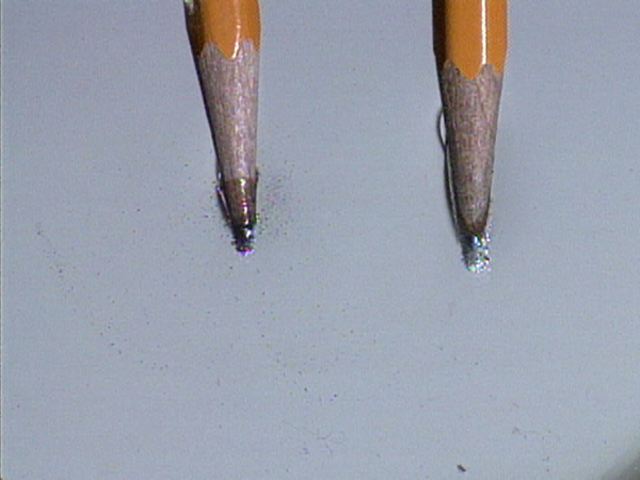 |
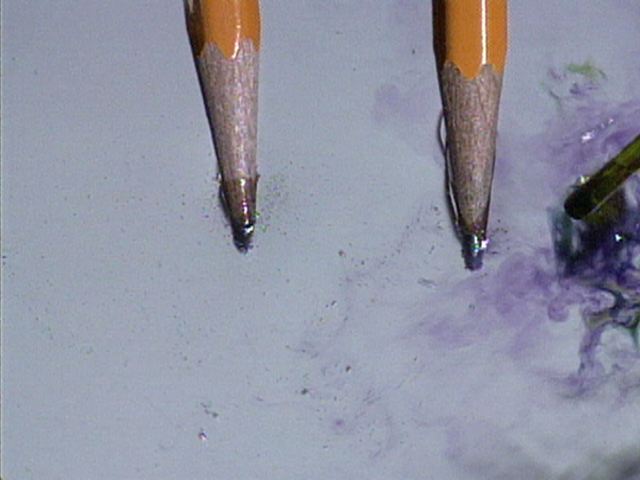 Base is produced at the anode. |
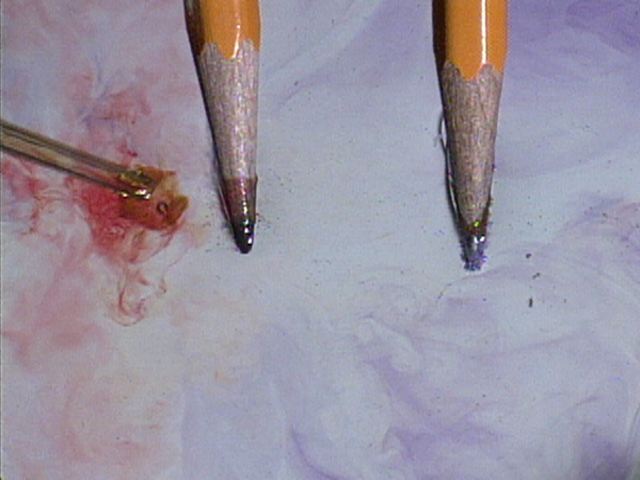 Acid is produced at the cathode. |
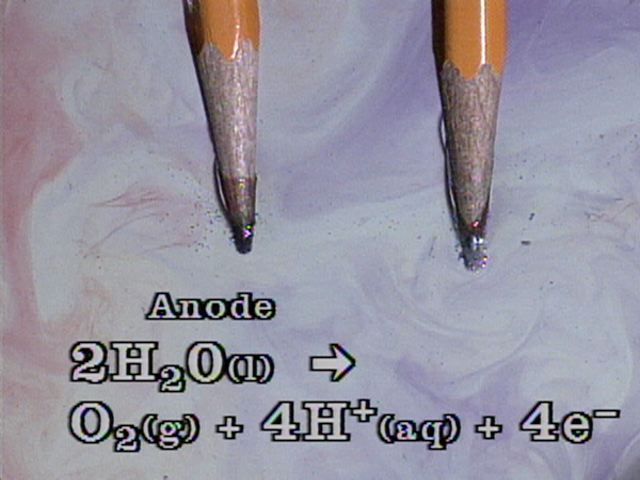 Half reaction at the anode. |
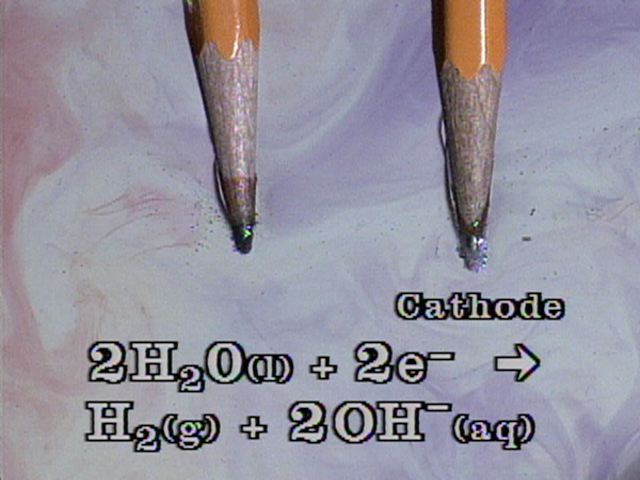 Half reaction at the cathode. |
Electrolysis of Distilled Water
 Play movie
(QuickTime 3.0 Sorenson, duration 8 seconds, size 540 K)
Play movie
(QuickTime 3.0 Sorenson, duration 8 seconds, size 540 K)
In the absence of dissolved electrolytes, water will not conduct electricity, so no electrolysis occurs.
H2O
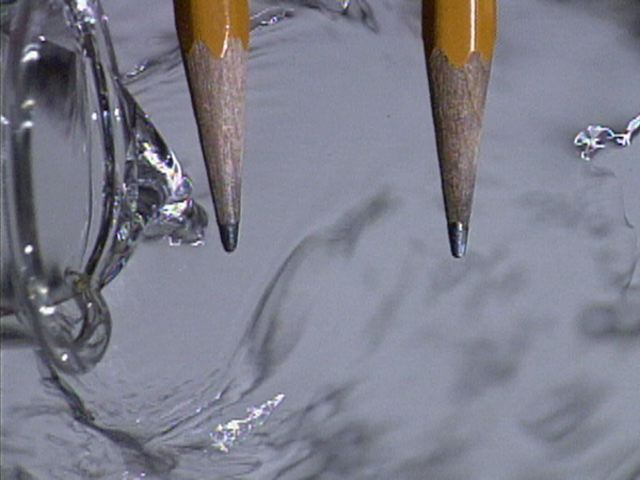 |
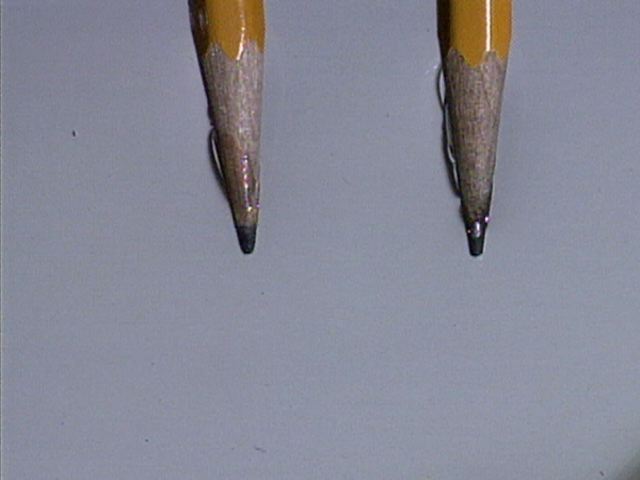 |
Discussion
With the exception of aqueous NaOH, the half-reaction producing oxygen at the anode (the electrode at the left) is that shown in the still images for the NaCl solution (see above). Similarly, the half-reaction for the production of hydrogen at the cathode is that shown for aqueous NaCl, with the exception of the HCl solution.
As stated in the introduction, most reactions at the cathode correlate well with the standard reduction potentials. Only hydrogen is produced from the electrolysis of alkali metal, alkaline earth and aluminum nitrates. Only the metal is produced from the electrolysis of SnCl2 or the nitrates of copper(II), silver and lead(II). The electrolysis of aqueous Co(NO3)2 and Ni(NO3)2 produces the metal as well as hydrogen. The puzzling (and unexplained) anomaly is Zn(NO3)2,
where zinc metal rather than hydrogen gas was obtained. Electrolysis of aqueous SnCl4 gives hydrogen but no metal. Since the reduction potential of Sn4+ to Sn2+ is +0.15 V, while the reduction potential of Sn2+ to tin metal is only -0.137 V, this is not surprising. Presumably, Sn2+ as well as H2 is produced during the electrolysis of SnCl4, but its concentration is too small to allow for the reduction to the metal.
Demonstration Notes, Warnings, Safety Information, etc.
Exam and Quiz Questions
1. Write balanced chemical equations for the electrolysis of aqueous hydrochloric acid, sodium hydroxide, and sodium chloride. Be sure that your equations are consistent with the colors of the indicator at the two electrodes.
2. From the colors of the indicator, at which electrode was hydrogen produced during the electrolysis of aqueous sodium chloride? Explain.
3. Why was no reaction observed when an attempt was made to electrolyze pure water?
4. Electrolysis of some solutions produced only hydrogen at the cathode. Some produced both hydrogen and metal deposits, while still others produced only metal deposits. Classify each metal as reactive (no metal produced), moderately reactive (metal and hydrogen produced) or unreactive (only metal produced). How well does your classification scheme match the values of the reduction potentials of the metal ions? Are there any discrepancies?
5. Reduction potentials of Sn4+ --> Sn2+ and Sn2+ --> Sn are +0.15 V and -0.14 V, respectively. Explain why tin metal deposited during the electrolysis of aqueous SnCl2 but not during the electrolysis of aqueous SnCl4. What was happening at the cathode during the electrolysis of the SnCl4 solution?